
 English
 Español
 русский
News
Home / News / Industry News / What Does the Titanium Forging Process Involve? Steps, Temperatures & Equipment
A titanium alloy (TC4) forged flange for a marine drive system landed on the inspection bench with a forging specification that allowed only a 15°C deviation in billet temperature during a two-hour soak. That kind of tolerance is not exceptional in titanium forging; it is normal operating discipline. Because titanium’s final microstructure, mechanical properties, and cost are largely determined in the forge, any buyer or engineer who specifies a titanium forging should understand exactly what the process involves.
The titanium forging process involves heating a titanium billet or ingot to a precise temperature—typically between 850°C and 1,050°C depending on the alloy—then plastically deforming it under controlled strain rate with a hydraulic press or hammer, followed by controlled cooling, heat treatment, and machining.
Unlike steel, titanium alloys offer a narrow deformable temperature window. If the workpiece exceeds the β-transus, coarse β grains can form and cannot be refined by subsequent heat treatment. If it is too cold, flow stress rises sharply and cracking may occur. This is why titanium forging requires closed-loop furnace control, digital pyrometry, and presses capable of exact ram speed regulation.
Beta transus: the temperature at which a titanium alloy becomes 100% β phase. For Ti-6Al-4V, the β-transus is approximately 995°C. Forging above this point is called β forging; forging below it is α-β forging.
Titanium forging is first and foremost a thermal-control task. The correct processing temperature differs by alloy class, but every titanium alloy has one hard boundary: the β-transus.
For α-β alloys such as Ti-6Al-4V, α-β forging is carried out 30–80°C below the β-transus, typically at 900–980°C. This produces a bimodal microstructure with good elongation and fatigue resistance. β forging, above the transus, yields higher creep resistance but lower tensile ductility and is chosen only for specific rotating parts in jet engines or power turbines.
Heating must be uniform. Titanium’s thermal conductivity is roughly one-third that of steel, meaning thick sections can show severe temperature gradients. Soak time is usually set at 1 minute per 25 mm of cross-section, followed by thermocouple verification in production forging.
A typical open-die or ring-rolling titanium forging cycle follows six repeatable phases, each with its own failure risks.
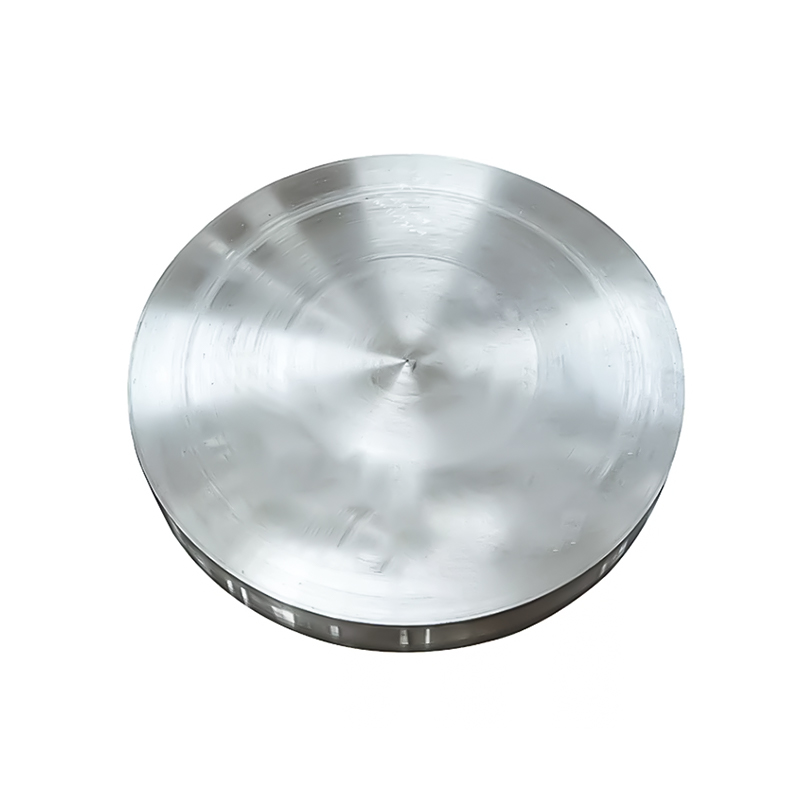
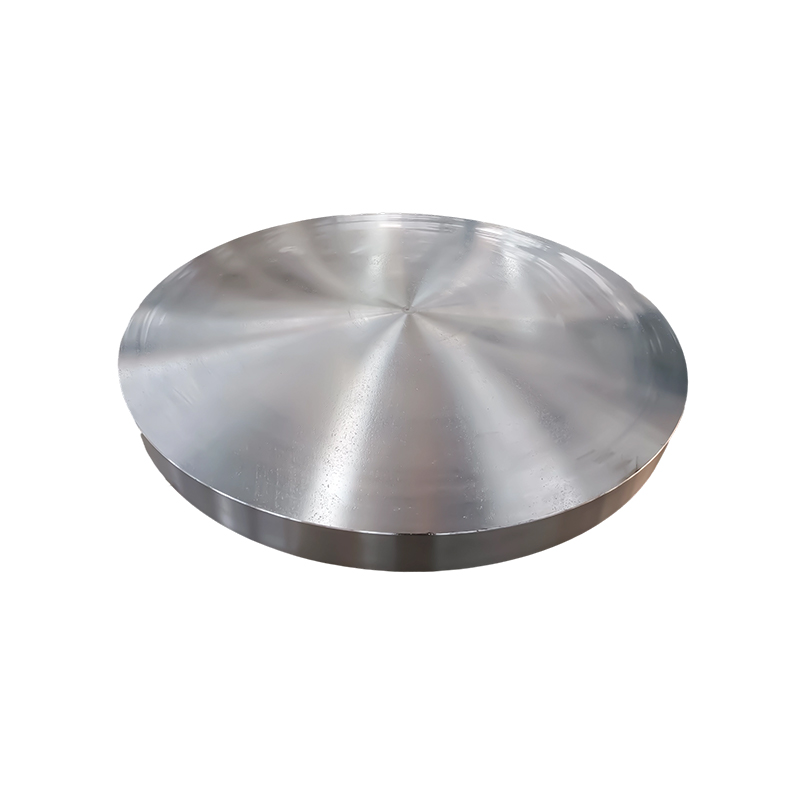
A 400 mm TC4 disc forging typically requires 15–20% excess material to compensate for scale formation, die mismatch, and final machining, compared with 5–10% for steel.
Presses, not hammers, are the primary equipment for titanium open-die forging movement control. A press can hold a slow, constant ram speed, while a hammer imparts high strain-rate impacts that may trigger adiabatic shear bands in titanium.
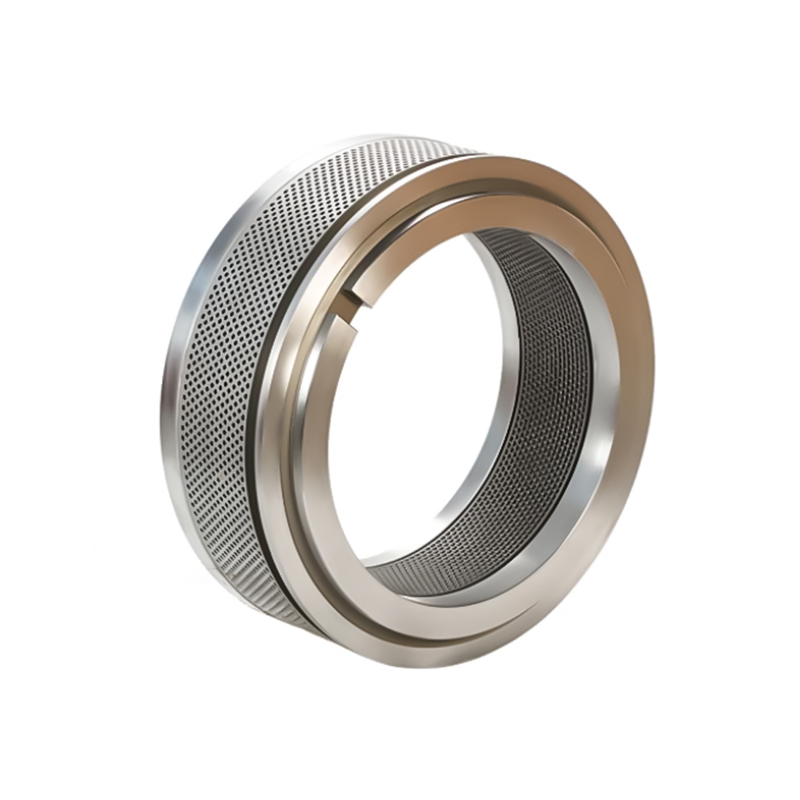
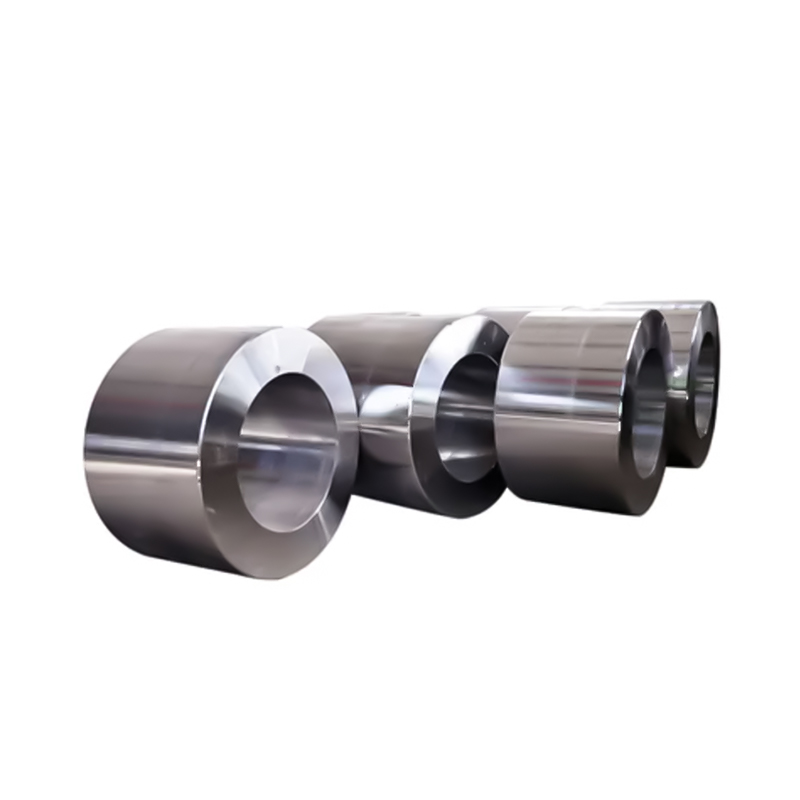
At Maiterio Intelligent Equipment, open-die forging lines use hydraulic presses with ram speeds below 10 mm/s for titanium. For ring-shaped titanium parts, ring rolling mills produce seamless rolled rings with better grain flow than machined bar stock. The choice between press, hammer, and ring roller affects microstructure—slow deformation promotes globular α, while fast deformation risks cracking at grain boundaries.
Maiterio’s open-die forging lines have been handling titanium and other high-temperature alloys for demanding customers, often paired with in-house rough machining to control tolerances.
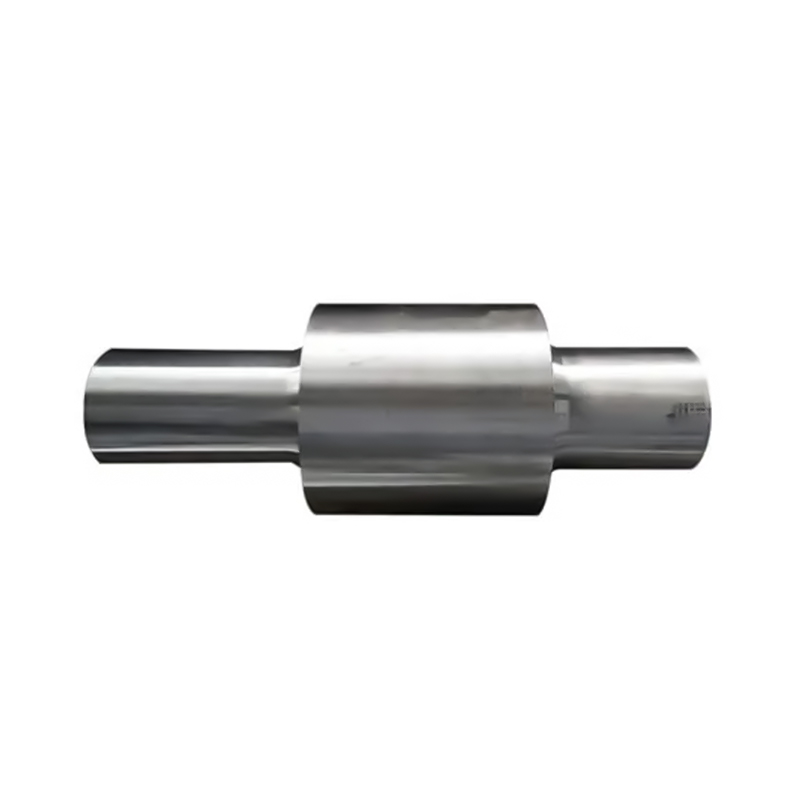 Open-Die Forging Parts for Titanium and High-Temperature AlloysThis factory supplies open-die forged shafts, gears, discs, and cylinders for metallurgical, energy, mining, and construction equipment, with in-house rough machining to control tolerances.View Product →
 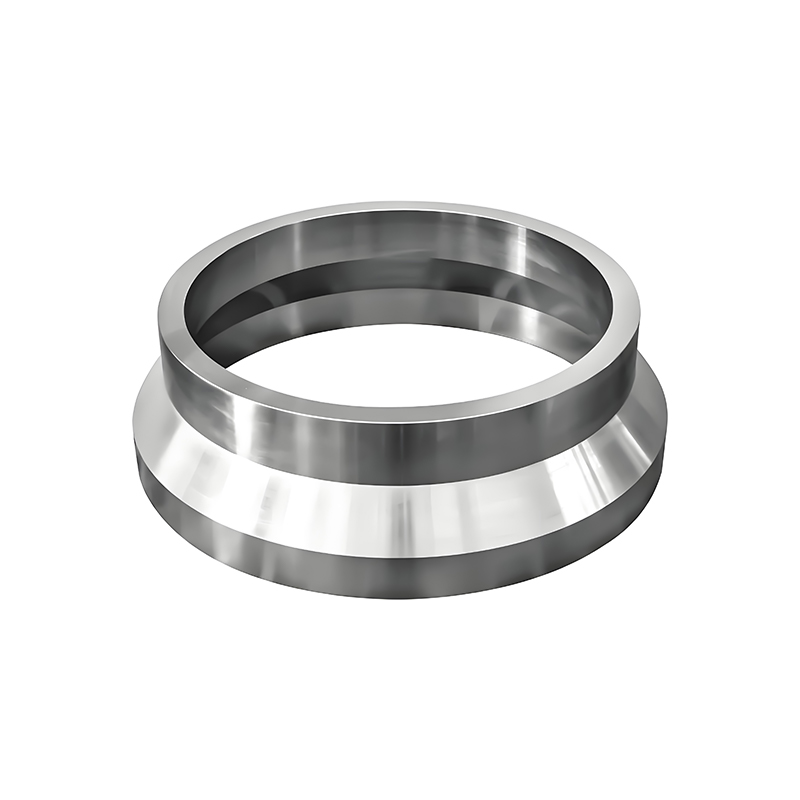 Special Material Forgings in Aluminum and Stainless SteelExplore custom forgings made from grades like 6061, 7075, 5083 aluminum, and 304, 316, 17-4PH stainless steels, suited for demanding high-temperature alloy applications.View Product →
After forging, titanium parts are not quenched like steel. They are cooled in still air, then subjected to a specific heat treatment cycle based on the alloy and desired strength class.
For Ti-6Al-4V, annealing is performed at 700–850°C, followed by air cooling. Solution treatment and aging at 900–960°C then 480–600°C produce higher strength at some sacrifice in fracture toughness. Because titanium reacts with oxygen above 650°C, any heat treatment must be done in a controlled atmosphere or with protective coatings. A scale-free surface preserves the material’s fatigue strength.
Machining titanium forgings also differs from steel. The metal’s low thermal conductivity concentrates heat at the cutting edge, leading to rapid tool wear. Carbide tools with high-pressure coolant and slow spindle speeds are standard. Maiterio’s CNC vertical turning lathes and horizontal lathes are routinely used to finish titanium rings and shafts to a surface roughness of Ra 0.8 µm or better.
Final acceptance of a titanium forging depends on three independent controls: microstructure, ultrasonic soundness, and mechanical properties.
Microstructure evaluation uses metallographic sections etched with Kroll’s reagent to verify that α-β processing did not cross the β-transus. Ultrasonic testing detects internal voids, inclusions, and cracks that are invisible to the naked eye. Tensile, impact, and hardness tests confirm that the strength and ductility match the order specification. In addition, a fully documented traceability chain from ingot melt to final machining is required for aerospace and energy applications. Maiterio’s quality management system follows ISO 9001 and 14001, with in-house testing routines for high-alloy materials.
The single most frequent cause of titanium forging rejection is overheating across the β-transus. That is why every reliable titanium forging process includes a thermocouple-verified soak and a written furnace log.
Titanium forging requires a narrower temperature range, slower deformation speeds, preheated dies, and stricter furnace atmosphere control. The β-transus is a hard upper limit for most α-β alloys, whereas steel has no equivalent grain-coarsening boundary for ordinary carbon and alloy steels.
β-transus is the temperature at which a titanium alloy becomes entirely β phase. Exceeding it by even 10°C during forging can produce a fully β structure that transforms into coarse α plates, lowering ductility and fatigue life. Process engineers measure the actual transus for each batch via differential thermal analysis.
Yes. Titanium seamless rings are ring-rolled on radial-axial mills. The process uses the same thermal controls as open-die forging, but the deformation mode imparts circumferential grain flow, which is beneficial for bearing races and flanges subjected to hoop stress.
Grinding removes the oxygen-enriched α case, and machining removes any remaining scale or decarburization. Parts are then heat treated, straightened if needed, and examined by dye penetrant or ultrasonic testing before acceptance.

No.1317 Gangcheng Road, Daxin Town, Zhangjiagang, Jiangsu, China
WhatsApp:+86-151 5156 6388 Terry Huang
+86-151 5156 6388 Terry Huang
+86-138 1299 2607 Maggie Xia
Terry Huang -VP of Sales
[email protected]
Maggie Xia -VP of Sales
[email protected]

 Previous