
 English
 Español
 русский
News
Home / News / Industry News / Which Industries Use Aluminum Forgings the Most? Aerospace vs. Automotive vs. Marine
Aerospace and defense is the largest aluminum forging market by value, absorbing roughly 34 percent of global demand. The concentration is structural, not incidental. Airframe forgings work in tension, bending, and torsion across millions of load cycles, which makes metallurgical soundness mandatory. Forged 7075-T6 and 7050-T7451 parts replace much heavier steel assemblies in bulkheads and wing-root fittings, with a weight saving of around 40 percent at equivalent strength.
Landing-gear structures also use large high-strength aluminum forgings on many narrow-body and business aircraft programs. Engine mounts, flap tracks, cockpit window frames, and seat tracks are conventionally forged rather than cast, because defects that could initiate cracks are not acceptable in those positions. Certification requires fully traceable material provenance, so OEMs audit suppliers against AS9100 and Nadcap-style process requirements and rarely substitute materials once a part has been qualified.
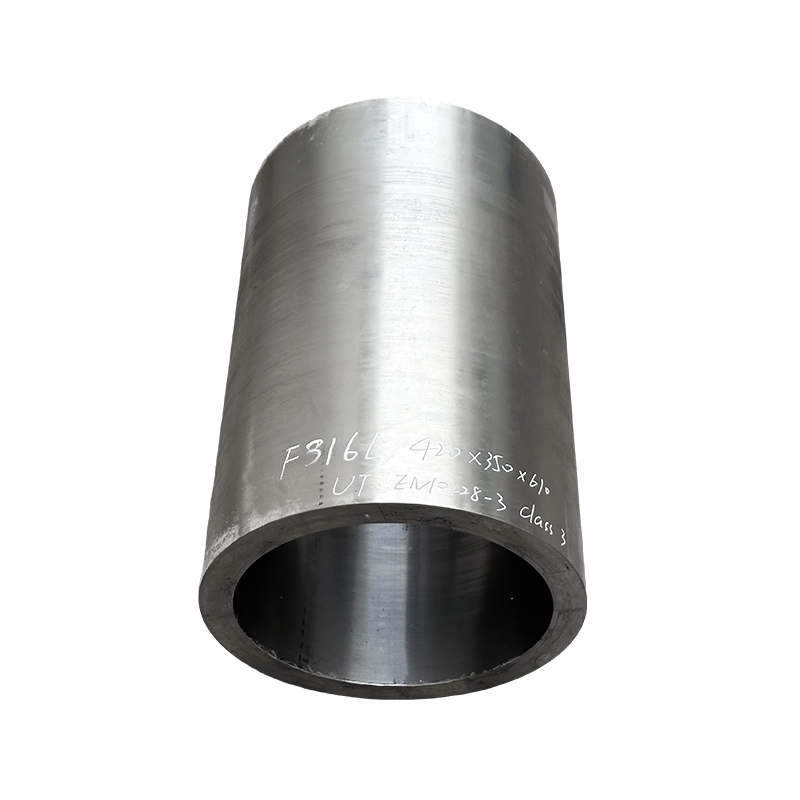
 7075 Aluminum Alloy Forgings for High-Stress Aerospace ComponentsThis 7075 alloy forging grade offers among the highest strength in aluminum alloys through age hardening, making it suited for critical aerospace and defense parts that require traceable material provenance and strict forging control.View Product →
Automotive is the highest-volume consumer of aluminum forgings, even though its dollar share trails aerospace. A modern light vehicle built in Europe or North America contains roughly 5 to 10 kg of forged aluminum in suspension and chassis systems: control arms, steering knuckles, stabilizer-bar links, engine cradles, and EV battery support frames.
The shift to battery-electric platforms is accelerating demand. Every kilogram of unsprung mass saved extends range and reduces component wear, which is why forged steering knuckles, lower A-arms, and subframe members appear on the latest EV platforms. Typical forged-and-T6 6061 delivers about 290 MPa tensile strength with good weldability and corrosion resistance, making it the default choice for structural and suspension parts.
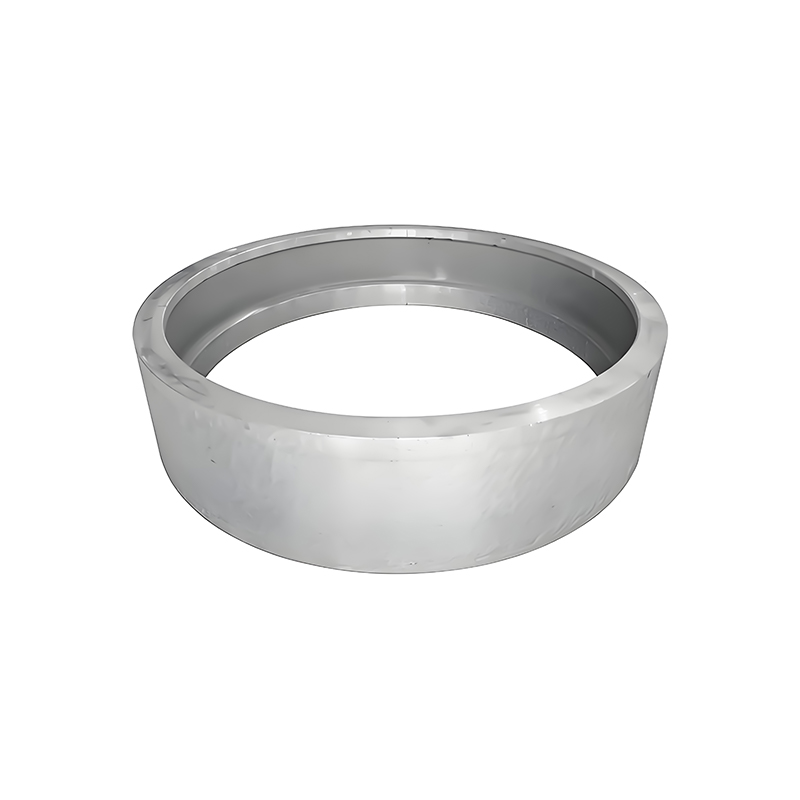
 6061 Aluminum Alloy Forgings for EV Suspension and Structural PartsWith a balanced combination of strength, weldability, and corrosion resistance, 6061 forgings in T6 temper are a default choice for EV steering knuckles and subframe members, reducing unsprung mass and extending range.View Product →
Marine, rail, and heavy transport operators are the next major buyers, selecting aluminum forgings mainly for saltwater corrosion resistance and fatigue performance in continuous cyclic service. Shipbuilders use aluminum forgings for shaft couplings, rudder-stock collars, hull stiffener brackets, and deck fittings. Alloys with high magnesium content such as 5083 and 5086 retain strength in welded assemblies and resist pitting in seawater.
Rail vehicles employ forged aluminum draw hooks, bogie-frame brackets, and gearbox housings in positions where steel would add hundreds of kilograms of unsprung mass. Heavy trailers use forged aluminum landing-gear brackets, suspension pistons, and fifth-wheel reinforcement plates for the same reason: corrosion resistance plus a density one-third that of steel.
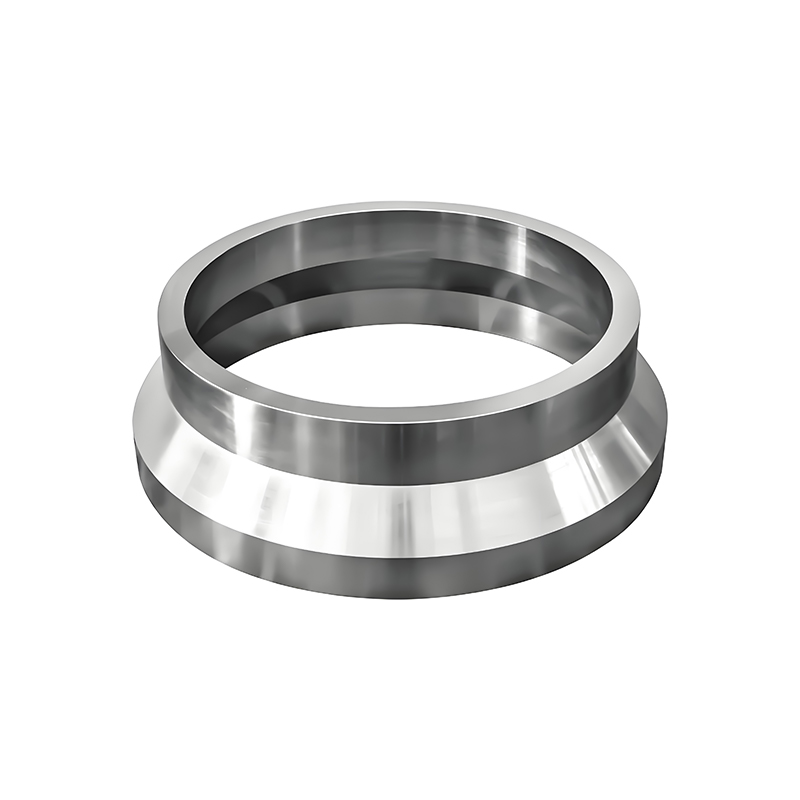
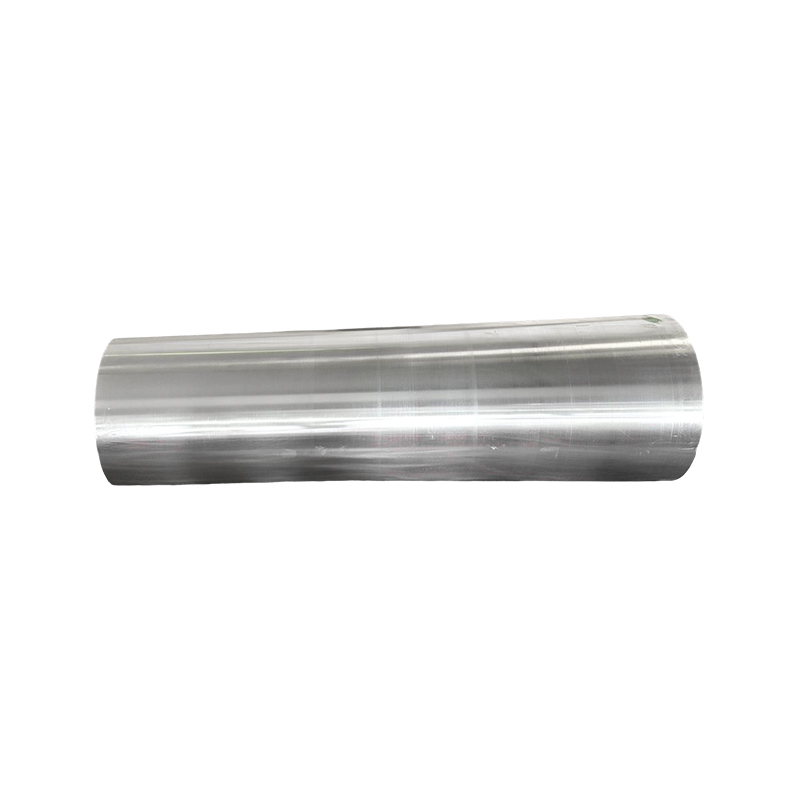 5083 Aluminum Alloy Forgings for Marine and Pressure ApplicationsThis non-heat-treatable, high-magnesium alloy provides excellent seawater corrosion resistance and retained strength in welded assemblies, making it ideal for ship fittings, pressure vessels, and offshore equipment.View Product →
Energy and general machinery represent the next tier, where aluminum forgings are selected for pressure service, weight savings, and thermal conductivity. In oil and gas applications, forged aluminum is used for valve bodies, instrument flanges, and connector rings on offshore platforms and LNG facilities, especially where chloride stress-corrosion cracking rules out higher-strength steels.
Power-transmission clamps, conductor fittings, and heat-exchanger components rely on forged aluminum plates for conductivity and ease of machining. Automation and robotics suppliers use forged aluminum arms and feed components to keep moving mass low. The practical engineering boundary is clear: aluminum forgings are rarely substituted for steel above roughly 130 MPa allowable stress or above about 150 degrees Celsius of continuous operating temperature, which is why steel retains its dominance in high-temperature and heavy-load parts.
Global aluminum forging consumption is concentrated at the top. The chart below shows the estimated share of demand by end-use industry, based on published production statistics and industry analyst estimates.
| Industry | Typical forged parts | Dominant alloys | Main demand driver |
| Aerospace and defense | Bulkheads, landing-gear parts, engine mounts, flap tracks | 7075, 7050, 2024 | Strength-to-weight and fatigue |
| Automotive | Knuckles, control arms, wheel hubs, EV battery frames | 6061, 6082, 7075 | Lightweighting and vehicle range |
| Marine and rail | Shaft couplings, deck fittings, bogie brackets, draw hooks | 5083, 5086, 6082 | Corrosion and fatigue |
| Energy, oil and gas | Valve bodies, instrument flanges, conductor clamps | 6061, 6063 | Pressure service and conductivity |
| Industrial machinery | Arms, feed components, connector rings | 6061, 7075 | Moving-mass reduction |
Sourcing decisions start with the alloy, but a successful audit ends with process control and traceability. The same aluminum forging supply chain that serves aerospace can serve automotive and marine, provided the supplier demonstrates control over billet sourcing, heat treatment, forging temperature, and non-destructive examination.
Maiterio Group, operating as Maiterio Intelligent Equipment (Zhangjiagang) Co., Ltd., produces aluminum alloy forgings in 2A12, 5083, 5A06, 6061, and 7075 across a facility of more than 50,000 square meters, with annual forging output above 150,000 tons and ISO 9001, 14001, and 45001 management systems. The same plant also runs carbon, alloy, stainless, and nickel-alloy steel forging lines, which matters when an assembly mixes aluminum and steel components.
Aerospace and defense uses the most aluminum forgings by value, with an estimated 34 percent share of global demand. Automotive uses the most by physical volume, close to 31 percent, driven by suspension and EV structural parts.
Aircraft parts need predictable fatigue life and crack resistance, not just static strength. Forging aligns the grain structure of the billet with the part contour, and alloys such as 7075-T6 achieve a strength-to-weight ratio that reduces structural weight by roughly 40 percent against equivalent steel parts.
6061-T6 is the most common general-purpose aluminum forging alloy because it combines about 290 MPa tensile strength, weldability, corrosion resistance, and moderate cost. For aerospace and other high-performance applications, 7075 and 7050 are specified where strength matters more than weldability.
Choose forging when the part is safety-related or fatigue-loaded, when verified mechanical properties are required, or when the production volume justifies dedicated tooling. Choose casting for complex geometries, thin walls, and lower duty cycles. The mechanical-property priorities of both routes are compared in our forging versus casting guide.

No.1317 Gangcheng Road, Daxin Town, Zhangjiagang, Jiangsu, China
WhatsApp:+86-151 5156 6388 Terry Huang
+86-151 5156 6388 Terry Huang
+86-138 1299 2607 Maggie Xia
Terry Huang -VP of Sales
[email protected]
Maggie Xia -VP of Sales
[email protected]

 Previous