
 English
 Español
 русский
News
Home / News / Industry News / Forged Titanium vs. Cast Titanium – Which Is Stronger? The Real Answer
A chemical plant in Rotterdam discovered the brute-force difference between forged and cast titanium when a cast titanium flange on a high-pressure acid line began weeping after 14 months. The forged replacement has run for 38 months without a single inspection note. This direct experience mirrors what laboratories have measured for decades: forged titanium is stronger than cast titanium in nearly every mechanical property that matters for load-bearing and pressure-holding components.
The reason is not simply the hammer or the press. Forging at high temperature closes internal voids, breaks up coarse columnar grains, and aligns the microstructure with the primary load path. Casting, by its very nature, allows gas porosity, shrinkage cavities, and large grain boundaries to remain. The strength gap is not a theoretical nuance; it is a measurable, procurement-shaping advantage.
The strength advantage of forged titanium comes from three metallurgical mechanisms that casting cannot replicate: void closure, grain refinement, and flow-oriented texture.
During hot working, the material’s initial cast structure is broken down. Large, equiaxed or dendritic grains are replaced by a fine, stable matrix. Fine grains increase the resistance to dislocation movement, raising yield and ultimate tensile strength. Additionally, the deformation path stretches any remaining inclusions along the forging flow lines, preventing them from acting as crack initiators in the direction of load.
Cast titanium, even when hot isostatic pressed (HIP) is applied, retains a coarser grain size and occasional micro-porosity. HIP closes voids, but it does not refine the grain structure. Therefore, the cast product remains inherently weaker in static strength and significantly weaker in dynamic loading.
Core concept – Forged strength premium: The combination of fully dense structure, fine grain size, and optimised grain orientation gives forged titanium a measurable yield and fatigue advantage that cannot be eliminated by post-cast treatments.
To make the comparison concrete, the following table shows typical minimum properties for Ti-6Al-4V (Grade 5) in the annealed condition. These values are based on industrial acceptance data and reflect the lower bounds for production parts, not laboratory specimens.
| Property | Forged (bar/block) | Cast | Gap |
| Yield strength | 830–900 MPa | 650–720 MPa | +20–30% |
| Ultimate tensile strength | 950–1050 MPa | 850–920 MPa | +10–20% |
| Elongation at break | 12–15% | 6–10% | +50% |
| Fatigue strength (10⁷ cycles) | 450–550 MPa | 200–350 MPa | +50–100% |
The fatigue gap is the most decisive. In rotating or vibrating equipment, a cast titanium part often runs out of life five to ten times faster than a forged part under the same stress amplitude. For wind turbine components, shafts, and pressure flanges, that difference defines maintenance intervals.
Casting persists in titanium components because of geometry and price, not because of mechanical performance. For large, thin-walled, or ultra-complex parts that would require an enormous multi-part forging die, casting is the only economic route. Examples include impeller bodies, structural brackets, and large valve housings.
However, the reduced strength is often compensated by oversizing. A cast titanium flange must be thicker and heavier to achieve the same buckling resistance or burst pressure as a forged flange. The weight increase can be 20–40%. In aerospace, where weight is critical, casting is almost never used for primary structure; forging is the default. In industrial applications, the trade-off is accepted when no other manufacturing process fits.
The answer is unambiguous for load-bearing titanium parts: if the component carries a primary load, is in a pressure boundary, or can be manufactured as a forging with reasonable tooling cost, specify forged titanium.
The decision process can be reduced to five questions:
If you answered yes to most, forging is the logical choice. Casting should be reserved for prototype quantities or highly exotic geometries that would make forging dies unaffordable. A rough cost multiplier for a medium-size titanium forging (2–10 kg) over a casting is typically 1.5–2.5× in piece price, but the longer service life and lower inspection cost often close that gap over the asset lifetime.
The strength advantage of a forged titanium component is only realised if the supplier maintains the correct thermomechanical history. As a responsible partner, you must verify material traceability, forging temperature, reduction ratio, and inspection reports.
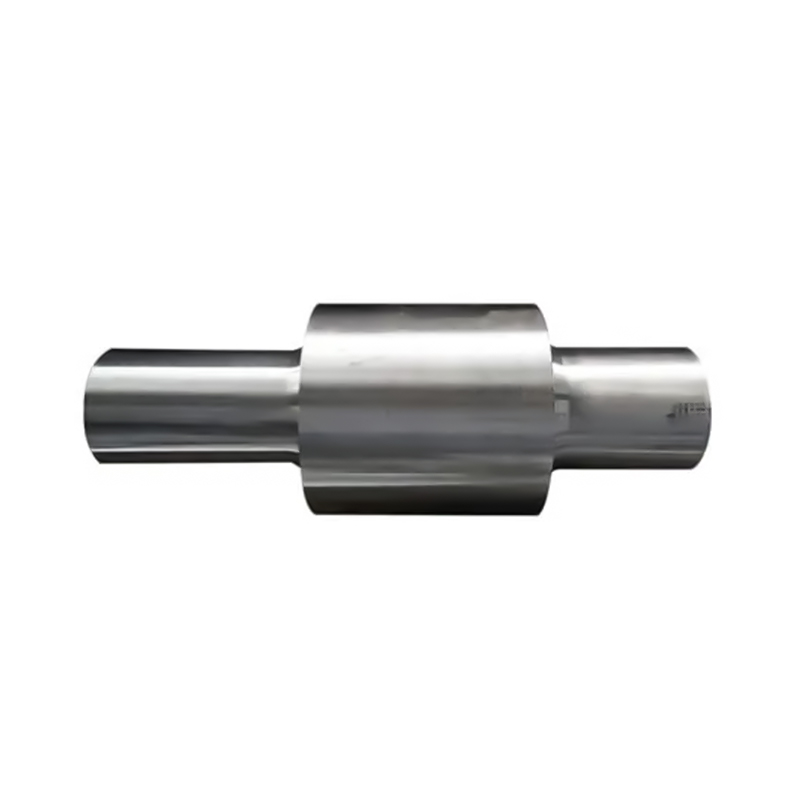
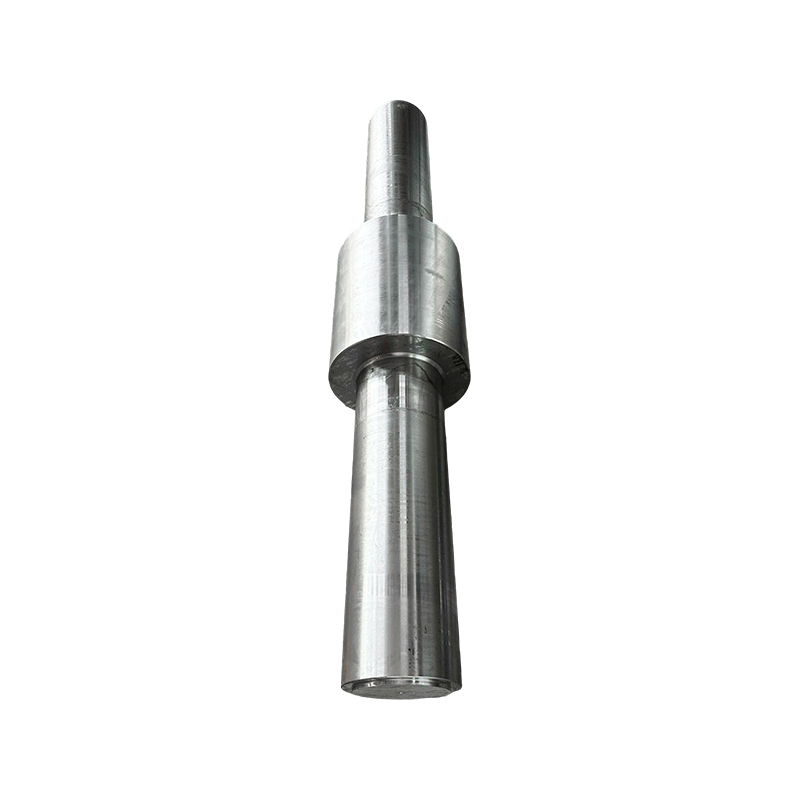
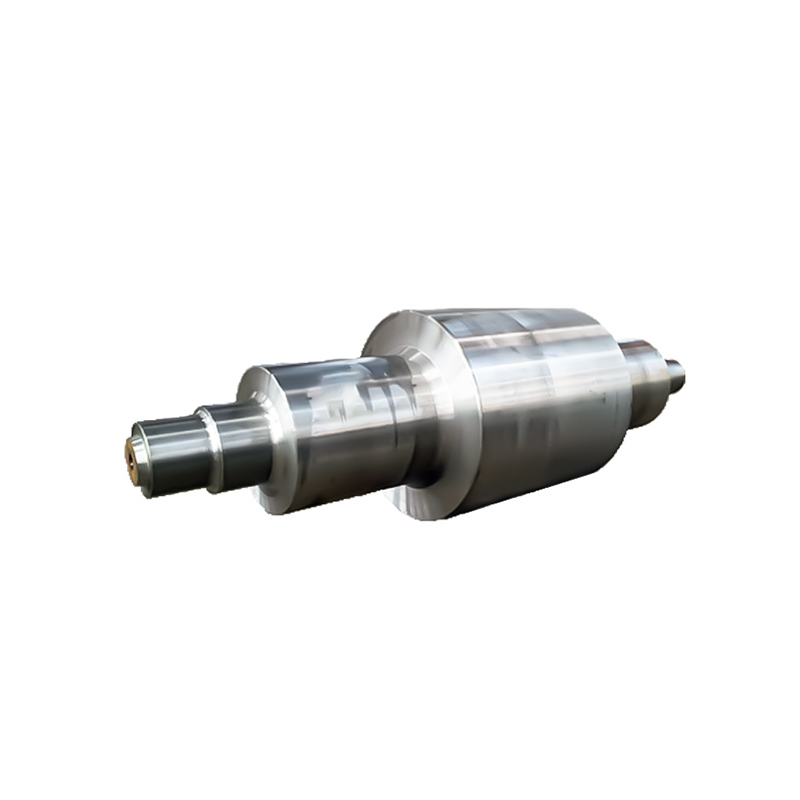
At Maiterio Intelligent Equipment (Zhangjiagang) Co., Ltd., we produce titanium alloy forgings in our open-die and ring-rolling lines. Our facility operates three ring-rolling lines, two open-die forging lines, and more than 70 CNC machines. Titanium flanges, shafts, and ring forgings are processed under controlled temperatures, followed by ultrasonic and liquid penetrant inspection. We report the actual grain flow and mechanical properties on every delivery.
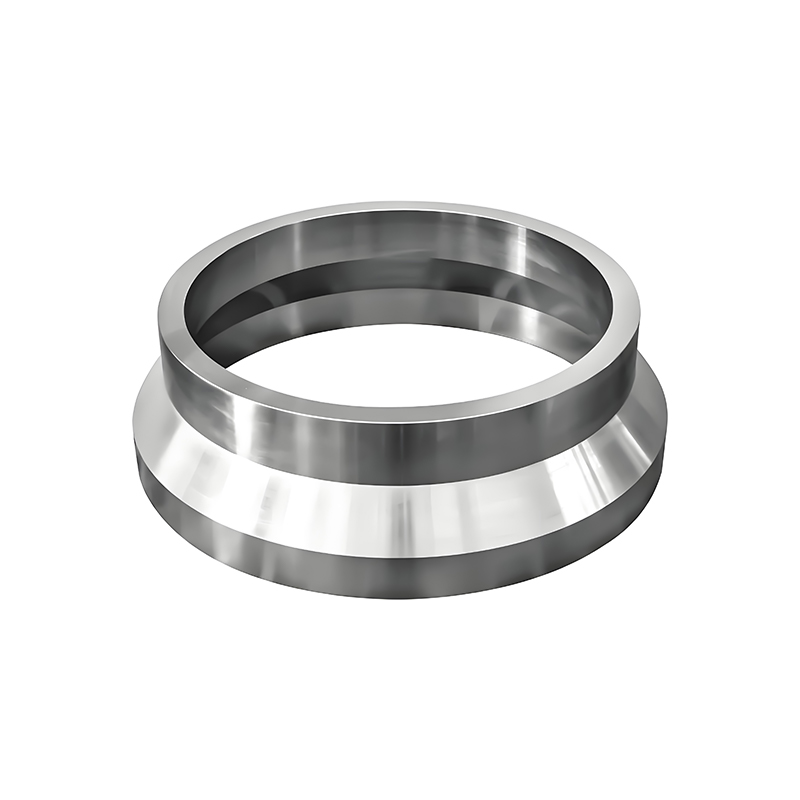 Titanium Alloy Forgings from Controlled Open-Die and Ring-Rolling LinesThis supplier details forging processes, inspections, and material certificates for titanium flanges, shafts, and rings. The page lists additional alloy options and emphasizes transparent process data for reliable evaluation.View Product →
When you evaluate a supplier, request the following documents: material mill certificate, forging process plan, heat treatment chart, and inspection records. A reliable supplier will openly share these. A supplier that only offers a “tested good” summary without process data should be treated with caution.
Yes, for the same alloy and heat treatment, forged titanium has higher yield, tensile, and fatigue properties than cast titanium. The gap ranges from 10% up to 100% depending on the property and the casting quality.
No. Hot isostatic pressing (HIP) closes internal porosity, but it does not refine the grain structure or create grain flow. The coarse cast microstructure remains, so the strength improvement is limited to about 5–10%, still far below forged values.
Forged titanium parts cost 1.5 to 2.5 times more per piece for smaller parts (2–10 kg), but the cost gap narrows for larger series and when fatigue failures are factored in. The longer life and reduced maintenance make forging the economically better choice in critical applications.
The most common forged titanium alloys are Ti-6Al-4V (Grade 5), Ti-6Al-4V ELI, and commercial-purity grades such as Grade 2. Alpha-beta alloys like Ti-6Al-4V are preferred for their balance of strength and formability. Near-alpha alloys are used for high-temperature service.

No.1317 Gangcheng Road, Daxin Town, Zhangjiagang, Jiangsu, China
WhatsApp:+86-151 5156 6388 Terry Huang
+86-151 5156 6388 Terry Huang
+86-138 1299 2607 Maggie Xia
Terry Huang -VP of Sales
[email protected]
Maggie Xia -VP of Sales
[email protected]

 Previous