
 English
 Español
 русский
News
Home / News / Industry News / Advantages of Aluminum Forgings over Steel Forgings | Weight, Corrosion & Cost
A structural buyer at a European wind turbine access platform manufacturer recently asked us to re-quote a steel hinge bracket as an aluminum forging. The target: hold the rated 12 kN load, remove 3 kg from the subframe, and keep delivery under four weeks. We replaced a 42CrMo4 steel forging with a 7075-T6 aluminum forging that weighed 2.9 kg instead of 6.1 kg, passed the same static and fatigue checks, and cut machining time by almost half. That outcome is the practical starting point for answering what are the advantages of aluminum forgings over steel forgings.
The short answer: aluminum forgings deliver weight savings of 40 to 60 percent at equal load capacity, remove most protective coating costs in outdoor service, and reduce finished-part machining cost despite a higher blank price per kilogram. The longer answer includes stiffness, fatigue, and temperature limits that every engineer must respect before switching. Maiterio Intelligent Equipment, a forging supplier serving wind power, engineering machinery, and mining customers since 2019, manufactures both aluminum and steel open-die and rolled-ring forgings, so these trade-offs are part of our daily quoting work.
Aluminum forging definition: an aluminum forging is a solid component shaped by compressive force from a wrought billet at 350-500°C. The deformation aligns grain flow with the part's load path, giving forged aluminum higher fatigue and impact resistance than cast aluminum of the same alloy.
For strength-limited components, a 7075-T6 aluminum forging carries the same load at about half the mass of a quenched-and-tempered 4140 steel forging.
Tensile capacity is a function of yield strength and cross-section. A 4140 Q+T bar at 655 MPa yield needs 153 mm2 to carry a 100 kN tensile force, which equals 1.20 kg per meter at steel density. A 7075-T6 forging at 503 MPa yield needs 199 mm2, but at 2.81 g/cm3 that section weighs only 0.56 kg per meter. The load is identical; the mass is not.
The stiffness caveat is important. Aluminum has one-third of steel's elastic modulus (69 GPa versus 210 GPa), so an identical beam deflects three times more under load. When a design is limited by deflection rather than stress, you must increase section height or wall thickness; the weight advantage shrinks to roughly 30-40 percent but normally does not disappear.
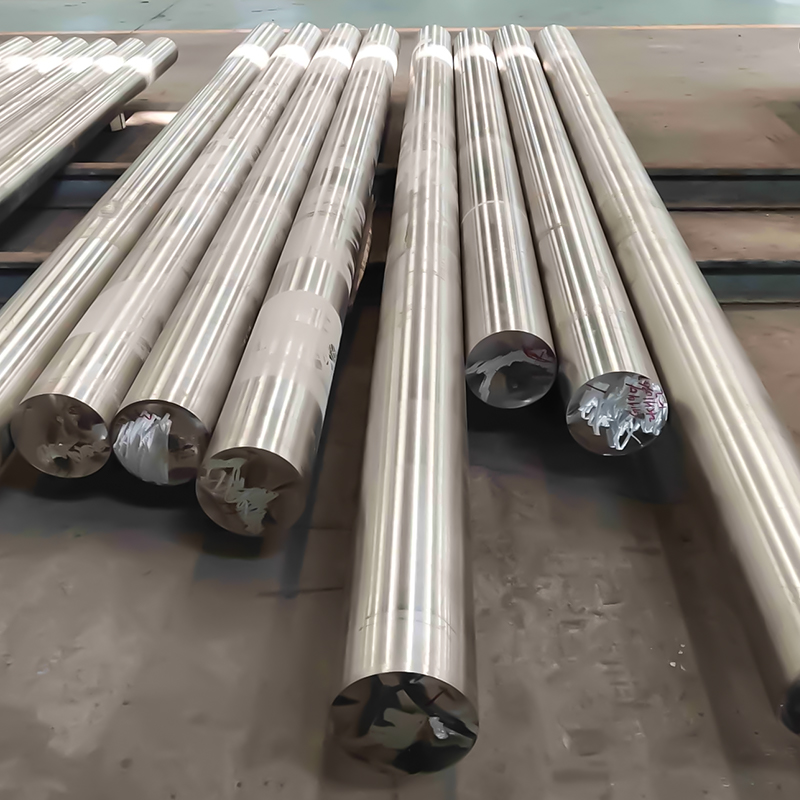
 7075 Aluminum Alloy Forgings for High-Strength ApplicationsThis high-strength, zinc-based aluminum alloy is suited for load-critical aerospace and defense components, and its low inertia benefits rotating assemblies by enabling smaller actuators and faster cycle times.View Product →
For rotating and moving assemblies, the mass saving is amplified: lower inertia allows smaller actuators, lower motor power, and faster cycle times. This is why robotic arms, sorting machine linkages, and wind turbine latch systems are increasingly quoted in 7075 forgings rather than steel.
Aluminum forgings build a dense, self-repairing oxide film that removes the need for paint in dry and moderately humid service and extends maintenance intervals in marine and industrial atmospheres.
Steel components almost always require a multi-layer protective system: zinc-rich primer, epoxy intermediate, and a polyurethane topcoat. In coastal or chemical environments, that system needs repair every four to eight years. A 5083 aluminum forging in the same location forms an oxide layer that stops further attack; shipbuilders and offshore equipment manufacturers use it bare, with no coating at all.
The salt-spray number: in ASTM B117 testing, 5083 aluminum typically shows only shallow pitting after 1,000 hours, while bare carbon steel develops red rust within 24-72 hours. Over a 20-year equipment life, that difference dominates the maintenance budget.
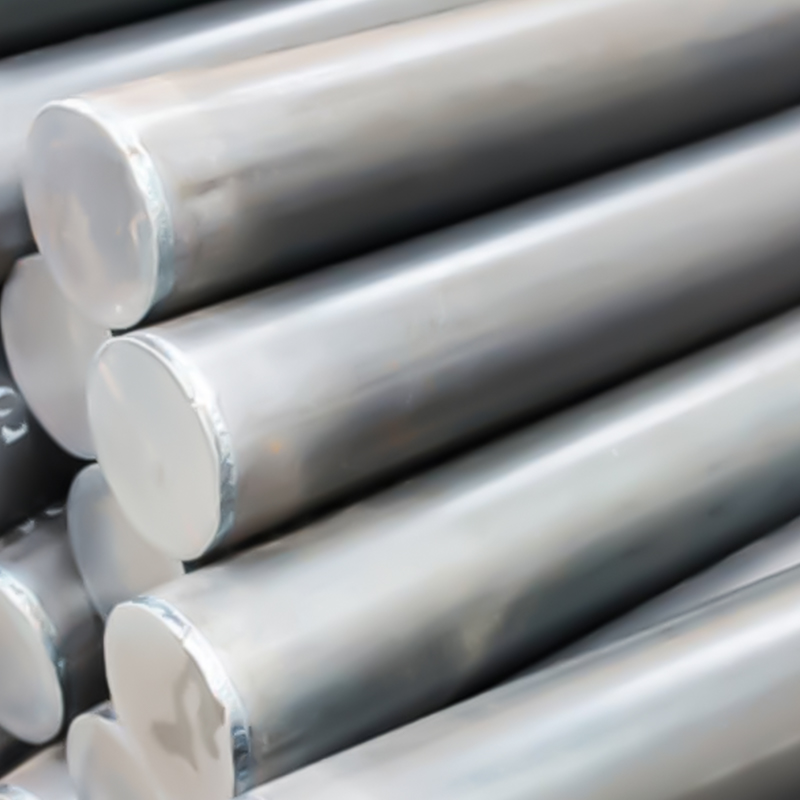
 5083 Aluminum Alloy Forgings for Marine and Corrosive EnvironmentsWith excellent corrosion resistance and weldability, this magnesium-based alloy resists salt-spray damage far better than steel, making it a durable choice for shipbuilding and cryogenic equipment.View Product →
One precaution prevents most field failures: aluminum in direct contact with carbon steel or stainless steel suffers galvanic corrosion. Designers must isolate the interface with zinc-chromate primer, insulating washers, or a transition joint. When the interface is managed correctly, an aluminum forging under a painted or anodized surface performs for decades without re-coating.
The total cost of a finished component is frequently lower in aluminum because machining time drops 40-70 percent and tool life rises, which offsets the higher material price per kilogram.
With carbide tooling, 6061 and 7075 forgings machine at 300-600 m/min. The equivalent range for 4140 or 1045 steel is 80-150 m/min. Aluminum chips evacuate cleanly, many operations run dry or with minimal mist, and the soft matrix prevents the notched-edge wear that steel's oxidized scale causes near forged surfaces. In our machine shop, a gearbox mounting bracket that takes 22 minutes to finish from a steel forging runs in 9 minutes from a 6061 forging, and insert life increases roughly fourfold.
Forging tooling also lasts longer with aluminum: aluminum is forged at 350-500°C, while steel requires 950-1,250°C. The lower thermal load reduces die wear and scale formation, improving dimensional consistency across a production run.
The decision should therefore never be made on blank price alone. Compare finished-part cost: material yield, machining hours, tooling, surface treatment, and handling of a heavier steel workpiece all belong in the calculation.
Steel remains the correct choice when the design is governed by stiffness, high-cycle fatigue, wear, or service temperatures above 200°C.
The comparison is straightforward once load type is known. Aluminum's lower elastic modulus penalizes deflection-critical shafts and beams. Its fatigue endurance is lower than quenched-and-tempered steel: typical notched fatigue limits run 60-120 MPa for aluminum versus 250-350 MPa for heat-treated alloy steel. Above roughly 150-200°C, aluminum loses strength quickly, while alloy steels hold useful load capacity to 400-500°C.
Selection rule of thumb: if a part is sized by deflection, steel wins. If it is sized by strength, moving mass, or corrosion, aluminum is the natural answer - and the forging versus casting comparison shows why the forged structure matters for both metals.
When the decision remains with steel for high-temperature or high-cycle applications, the steel forging supplier selection criteria on this site outline the testing and certification steps applied to every alloy steel forging we ship.
The grade decision starts with corrosion and strength: 6061 covers general structural and machined parts, 7075 covers high-load linkages and brackets, and 5083 covers marine and welded structures.
Each of these common forging alloys has a steel counterpart that it usually replaces.
| Grade | Density (g/cm3) | Yield (MPa) | Tensile (MPa) | Corrosion | Typical steel replaced |
| 6061-T6 | 2.70 | 276 | 310 | Good | 1045 / EN8 brackets, housings |
| 7075-T6 | 2.81 | 503 | 572 | Moderate, protect | 4140 / 42CrMo4 links, levers |
| 2A12 | 2.78 | 275 | 425 | Moderate | 4130 machine parts |
| 5083 | 2.66 | 145 | 290 | Excellent | Painted A36 marine structures |
Selection follows from three questions. First, is the part strength- or stiffness-limited? Second, what is the maximum service temperature? Third, will the part see salt or chemicals? The table above answers the alloy choice once those three answers are known.
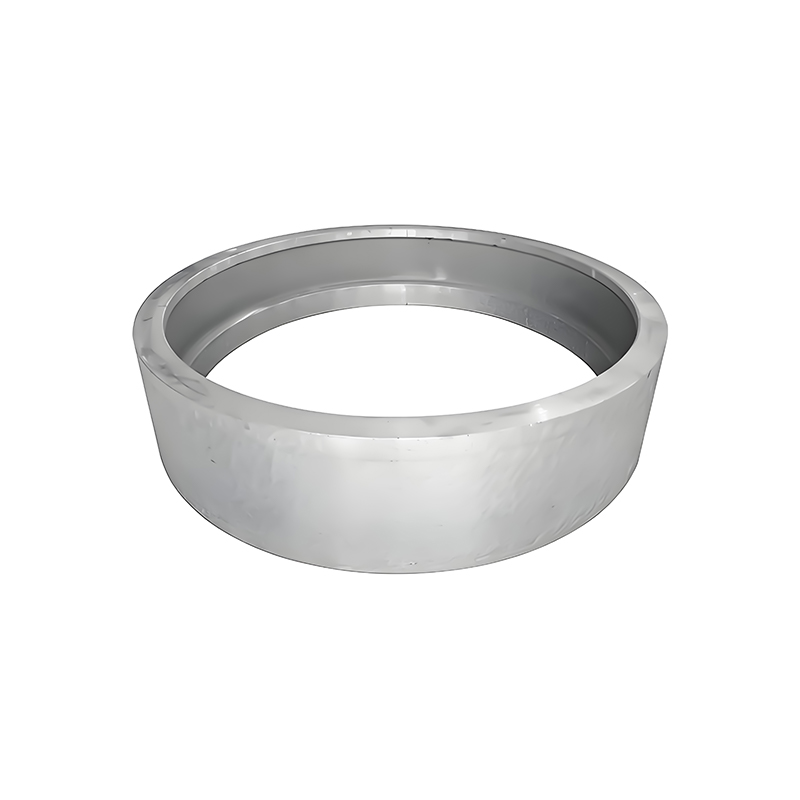
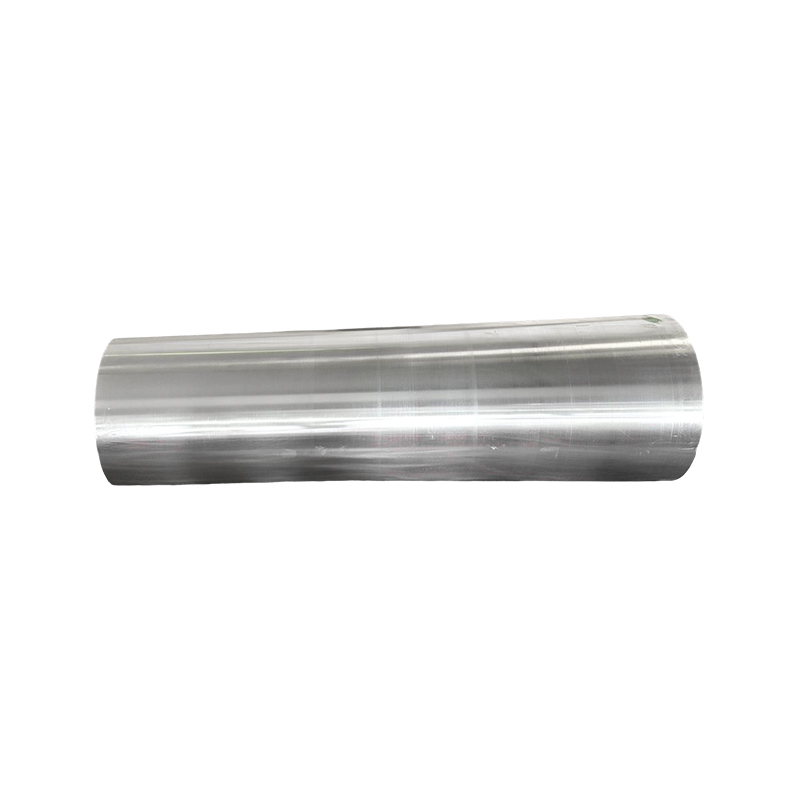
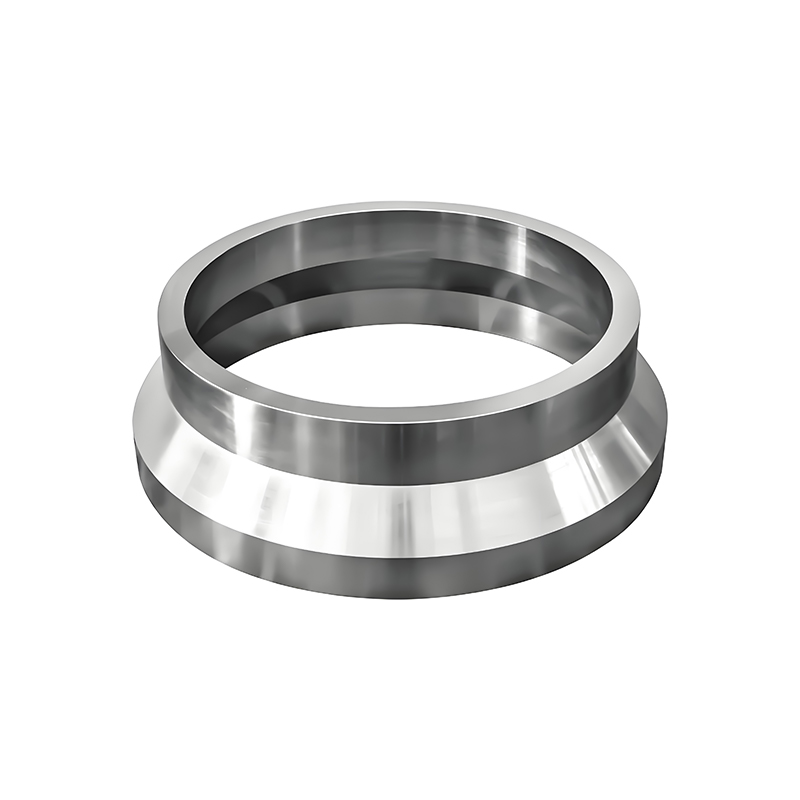 6061 Aluminum Alloy Forgings Balancing Strength and EconomyA heat-treatable alloy with good hot workability, this forging offers a practical balance of strength, plasticity, and corrosion resistance, suitable for aerospace and mechanical structures where cost matters.View Product →
Supplier qualification: the same quality gate applies to aluminum forgings as to steel: verify chemical composition, ultrasonic inspection, mechanical test certificates, and heat treatment records before release. At Maiterio Intelligent Equipment, every forging lot is traceable from the billet supplier to the final dimensional report.
In absolute terms, no. A 7075-T6 forging reaches about 503 MPa yield strength, while a quenched-and-tempered 4140 forging reaches roughly 655 MPa. The advantage appears in strength-to-weight: 7075-T6 delivers around 180 kN-m/kg of specific yield strength versus about 83 for 4140 Q+T and 57 for 1045 Q+T. Weight-limited designs therefore benefit more from aluminum.
Three limits matter most: elastic modulus is one-third of steel, so stiffness-critical parts need larger sections; sustained temperatures above 150-200°C reduce strength sharply; and aluminum has lower fatigue endurance than heat-treated steel, so high-cycle designs need larger fillet radii and better surface finishes.
Substitution pays off when the part is mass-critical, moves at high speed or acceleration, operates in a corrosive environment where coating maintenance is expensive, or has machining time that dominates its cost. Robotic arms, linkage systems, wind turbine latches, and mobile machinery brackets are typical candidates.
Per kilogram, yes - typically two to four times the steel blank price. Per finished part, often not. Shorter machining cycles, longer tool life, lower handling cost for lighter workpieces, and elimination of a protective coating system can make the aluminum forging the lower total-cost option at moderate annual volumes.

No.1317 Gangcheng Road, Daxin Town, Zhangjiagang, Jiangsu, China
WhatsApp:+86-151 5156 6388 Terry Huang
+86-151 5156 6388 Terry Huang
+86-138 1299 2607 Maggie Xia
Terry Huang -VP of Sales
[email protected]
Maggie Xia -VP of Sales
[email protected]

 Previous