
 English
 Español
 русский
News
Selecting a partner for your steel forgings is a critical decision that directly impacts the safety, performance, and cost of your final product. With numerous global options, particularly among steel forgings manufacturers in China, making an informed choice requires looking beyond price alone. The ideal supplier acts as an extension of your engineering team, offering not just a part, but a solution built on material science, precise manufacturing, and proven quality. This guide will walk you through the five key factors you must evaluate to forge a successful and reliable partnership for your custom components, especially for demanding sectors like heavy machinery and renewable energy.
Understanding Steel Forgings and Their Importance
At its core, forging is the process of shaping metal using localized compressive forces, often delivered by a hammer or press. This method, particularly for steel, does more than just form a shape; it refines the metal's internal grain structure, aligns the grain flow to follow the part's contours, and eliminates internal voids. The result is a component with superior mechanical properties—greater strength, toughness, and fatigue resistance—compared to parts made by casting or machining from bar stock. This makes forgings indispensable for critical applications where failure is not an option. The choice of material, whether standard carbon steel or advanced custom alloy steel forgings for heavy machinery, and the specific forging technique are fundamental decisions that set the performance ceiling for the part.
- Superior Structural Integrity: The forging process creates a continuous grain structure, making the part stronger and more reliable under dynamic or high-stress loads.
- Material Efficiency: Forging produces parts closer to final net shape, reducing material waste compared to machining from large blocks.
- Versatility in Design: It can produce a wide range of complex shapes and sizes, from small precision components to massive pieces weighing several tons.
5 Key Factors When Selecting Your Steel Forgings Partner
1. Manufacturing Capability: Open Die Forging and Beyond
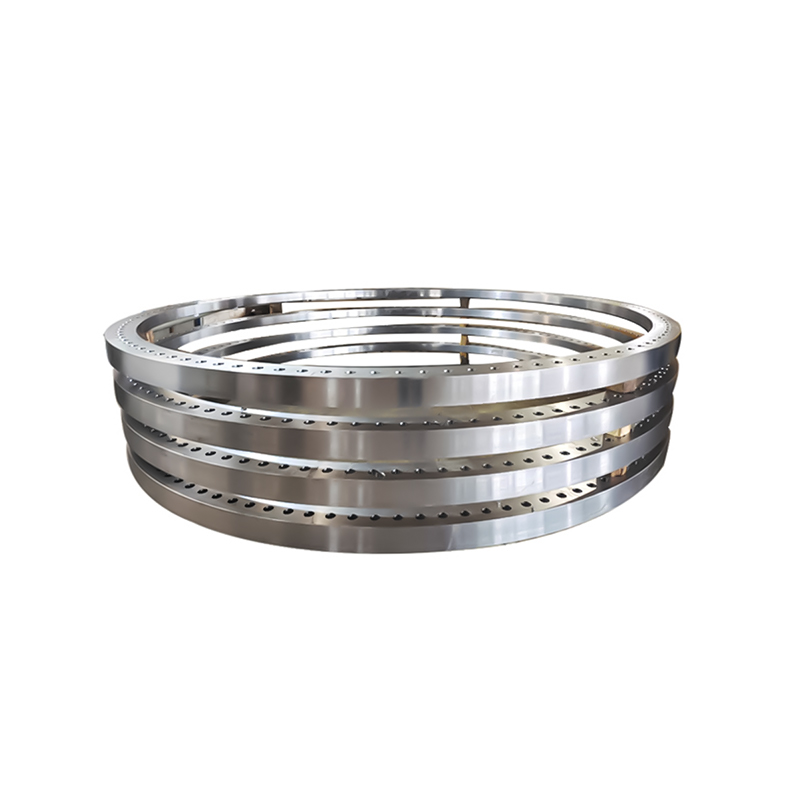
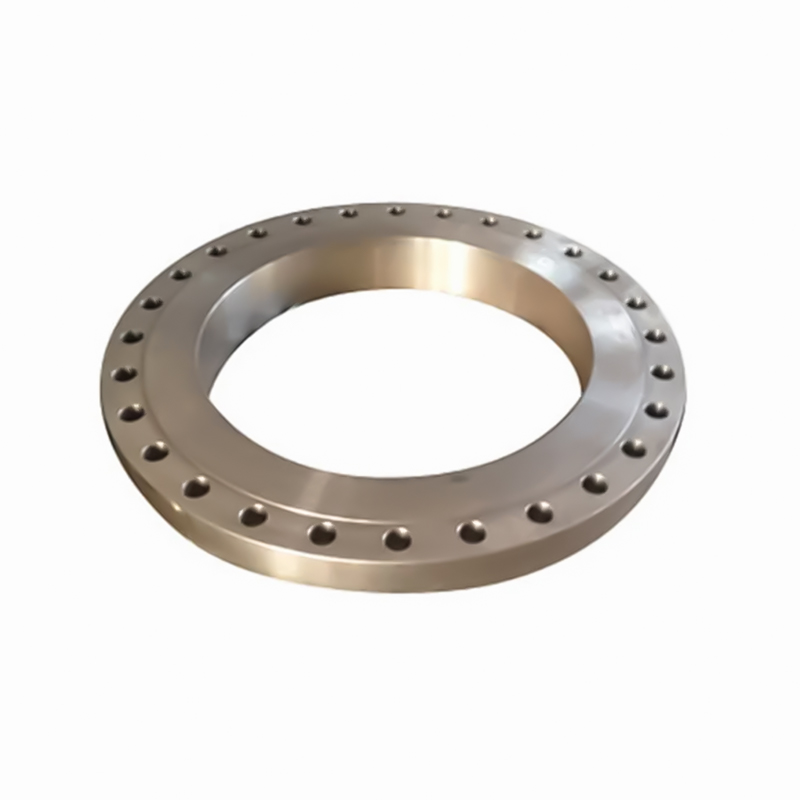
A supplier's manufacturing capabilities define what is possible. A deep understanding of the open die forging process and applications is essential for sourcing large, simple, or custom-shaped components. In open die forging, the metal is compressed between flat or simple-shaped dies that do not fully enclose the material, allowing for the production of large ingots, blanks, and rudimentary shapes. However, a top-tier supplier will also offer specialized processes. For instance, proficiency in producing seamless rolled ring forging for wind turbines indicates advanced capability. This process involves piercing a preform and rolling it under pressure to create a seamless ring with radial grain flow, which is critical for bearing races, gear rings, and flanges in energy applications.
| Process | Best For | Key Advantage |
| Open Die Forging | Large shafts, blocks, cylinders, and custom simple shapes. | Flexibility for large sizes and low-volume prototypes. |
| Seamless Rolled Ring Forging | Circular components like bearing rings, flanges, and turbine rings. | Superior strength from circumferential grain flow and material savings. |
| Closed Die Forging | High-volume, complex near-net-shape parts. | High dimensional accuracy and efficient mass production. |
2. Material Expertise: From Carbon to Custom Alloy Steel
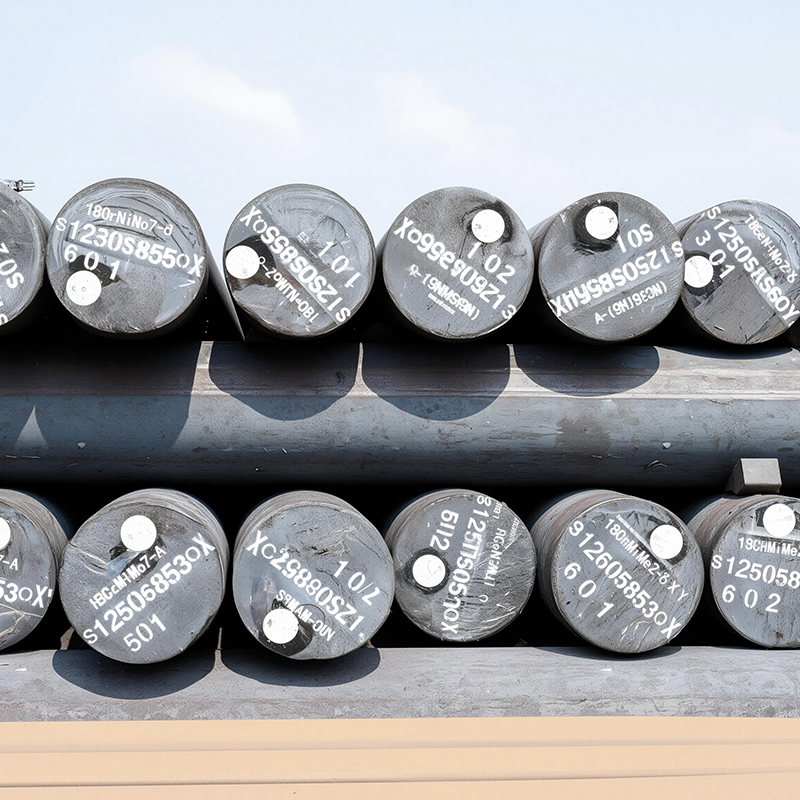
The foundation of any great forging is the material. A knowledgeable supplier guides you from selecting standard grades to developing custom alloy steel forgings for heavy machinery. While carbon steels offer a cost-effective solution for many applications, alloy steels—enhanced with elements like chromium, nickel, and molybdenum—provide increased strength, hardness, and toughness for extreme conditions. The true test of expertise is a supplier's ability to collaborate on metallurgical specifications, ensure precise heat treatment (normalizing, quenching, tempering), and guarantee material traceability from mill to finished part.
- Collaborative Specification: Work with suppliers who ask detailed questions about load, environment, and wear to recommend the optimal material.
- Heat Treatment Mastery: The supplier must have in-house or tightly controlled heat treatment to achieve the required mechanical properties.
- Full Traceability: Insist on documentation that traces the material batch through every production step, a must for certified industries.
3. Industry Application Experience
Experience in your specific industry is invaluable. A supplier familiar with wind energy, for example, understands the stringent quality standards, material specifications, and rigorous testing (like ultrasonic inspection) required for a seamless rolled ring forging for wind turbines. This domain knowledge reduces risk, accelerates the approval process, and ensures the component is designed and manufactured correctly from the start. Ask for case studies or references from projects similar to yours.
4. Quality Assurance and Certifications
Formal quality systems are non-negotiable. An ISO 9001 certified steel forging supplier operates under an internationally recognized Quality Management System, ensuring process consistency and continuous improvement. Beyond this, look for relevant industry-specific certifications (e.g., NADCAP for aerospace, ASME for pressure vessels) and the equipment for comprehensive Non-Destructive Testing (NDT) such as ultrasonic, magnetic particle, and dye penetrant testing.
5. The Strategic Advantage of a Global Manufacturing Partner
Sourcing from leading industrial hubs offers a compelling balance of technical capability and cost efficiency. Modern steel forgings manufacturers in China, for instance, often operate state-of-the-art facilities, employ advanced metallurgical expertise, and maintain full certification suites. When partnered with a competent engineering team for design support and project management, this model provides significant value, allowing you to invest in higher material quality or more complex designs without exceeding budget.
Conclusion: Forging a Successful Partnership
Choosing the right steel forgings supplier is a strategic decision. By thoroughly evaluating a partner's technical capabilities in processes like open die forging, their material and custom alloy expertise, relevant industry experience, robust quality certifications, and overall value proposition, you secure more than a vendor. You gain a collaborative partner committed to the success and reliability of your most critical components. This due diligence lays the foundation for a strong, long-term relationship that drives innovation and quality in your projects.
FAQ
What are the main benefits of open die forging compared to other methods?
Open die forging offers exceptional flexibility for producing large, heavy, or uniquely shaped components that would be impossible or too costly with closed-die methods. It is ideal for low-volume production, prototypes, and pre-forming for further forging processes. The key benefits include improved fatigue resistance and structural strength from worked grain structure, reduced material voids, and the ability to forge massive parts weighing up to hundreds of tons. It is the go-to process for large shafts, cylinders, and custom simple geometries.
Why is seamless rolled ring forging specifically important for wind turbine components?
Seamless rolled ring forging for wind turbines is critical because it creates a continuous, circumferential grain flow in the ring, which provides uniform mechanical properties and superior strength to withstand the dynamic, cyclical loads experienced by turbine bearings, gear rings, and flanges. This process is also material-efficient, minimizing waste. For wind energy applications, where reliability and longevity in harsh environments are paramount, the integrity offered by a seamless forged ring is a fundamental requirement for major OEMs.
How do I decide between carbon steel and custom alloy steel for my forging?
The choice hinges on your application's mechanical and environmental demands. Carbon steel is suitable for general-purpose parts with moderate strength requirements. Opt for custom alloy steel forgings for heavy machinery when you need enhanced properties: higher yield and tensile strength, better impact toughness at low temperatures, increased wear resistance, or improved hardenability for larger cross-sections. A qualified forging supplier can perform a detailed analysis of your operating conditions to recommend the most cost-effective and performance-appropriate material grade.
What should a true ISO 9001 certification tell me about a forging supplier?
An ISO 9001 certified steel forging supplier has demonstrated a systematic approach to managing its quality processes. It means they have documented procedures for every critical activity—from order review and material procurement to production, inspection, and shipping. This certification focuses on consistent output, customer satisfaction, and continual improvement. It is a foundational indicator of a mature and reliable operation, though for critical industries, you should also verify specific technical certifications relevant to your sector.
What are the key quality checks I should expect from a high-performance forging supplier?
Beyond standard dimensional checks, expect a rigorous regimen that includes:
- Chemical Analysis: Verification of material composition via spectrometry.
- Mechanical Testing: Tensile, impact, and hardness tests on coupons from the same heat lot as your forging.
- Non-Destructive Testing (NDT): Methods like Ultrasonic Testing (UT) to find internal flaws, and Magnetic Particle (MT) or Dye Penetrant (PT) inspection for surface defects.
- Microstructure Analysis: Reviewing grain size and structure to confirm proper heat treatment.
- Full Traceability: A complete audit trail linking the final part back to the original mill test certificate.
 Previous