
 English
 Español
 русский
News
What Is Forging?
Forging is a metalworking process that shapes metal by applying compressive force — through hammering, pressing, or rolling — while the material is either hot, warm, or cold. Unlike machining, which removes material to achieve a shape, forging displaces and compresses the metal's grain structure, producing parts with superior mechanical properties relative to their weight.
The process dates back thousands of years in its manual form, but modern industrial forging uses hydraulic presses capable of applying hundreds of thousands of tons of force, CNC-controlled hammers, and closed-die tooling machined to micron-level precision. The result is a component whose internal grain structure follows the contour of the part — a characteristic called grain flow — which significantly improves fatigue resistance, tensile strength, and impact toughness compared to bar stock or castings of the same alloy.
Forgings are specified wherever failure is not an option: crankshafts, connecting rods, landing gear components, pressure vessel flanges, surgical implants, and structural fasteners in aerospace and defense applications. The defining advantage is not just strength, but predictable, consistent strength — a quality that machined castings and weldments cannot reliably match in high-cycle fatigue environments.
Forging vs Casting: A Direct Comparison
Forging and casting are both primary metalforming processes, but they produce fundamentally different internal structures — and therefore different performance profiles. Choosing between them involves trade-offs across mechanical properties, geometric complexity, production volume, and cost.
In casting, molten metal is poured into a mold and allowed to solidify. As it cools, the metal's crystal structure forms randomly, often with porosity, shrinkage voids, and dendritic segregation — microscopic inconsistencies that reduce fatigue life and create unpredictable failure points. Castings excel at producing complex internal geometries (hollow passages, undercuts, intricate cavities) that would be impossible or prohibitively expensive to forge.
Forging eliminates the solidification phase entirely. Working solid metal at elevated temperatures closes porosity, refines grain size, and aligns the grain structure with the part's stress-bearing geometry. The resulting microstructure is denser, more homogeneous, and significantly more resistant to crack propagation than an equivalent casting.
| Property | Forging | Casting |
|---|---|---|
| Tensile strength | Higher | Lower (porosity dependent) |
| Fatigue resistance | Excellent | Moderate |
| Internal porosity | Essentially none | Possible without HIP treatment |
| Geometric complexity | Limited (no internal voids) | Very high |
| Tooling cost | High (closed die) | Moderate to high |
| Best for | High-stress, safety-critical parts | Complex shapes, lower-stress applications |
A practical rule: if the part must not fail under cyclic load, specify forging. If it requires hollow internal features or very thin walls in a complex shape, casting may be the only feasible route — with appropriate non-destructive testing to qualify the microstructure.
Open Die Forging: Process, Applications, and Advantages
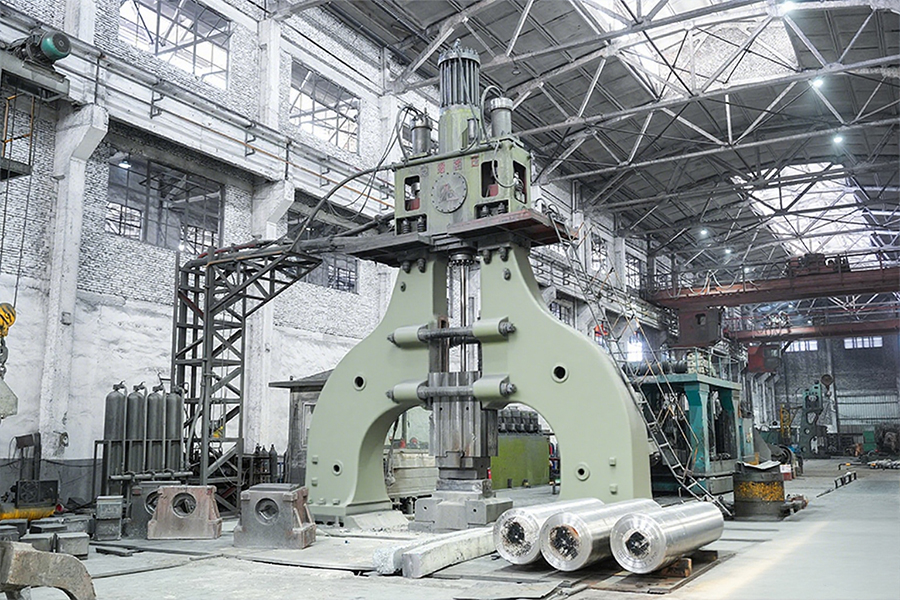
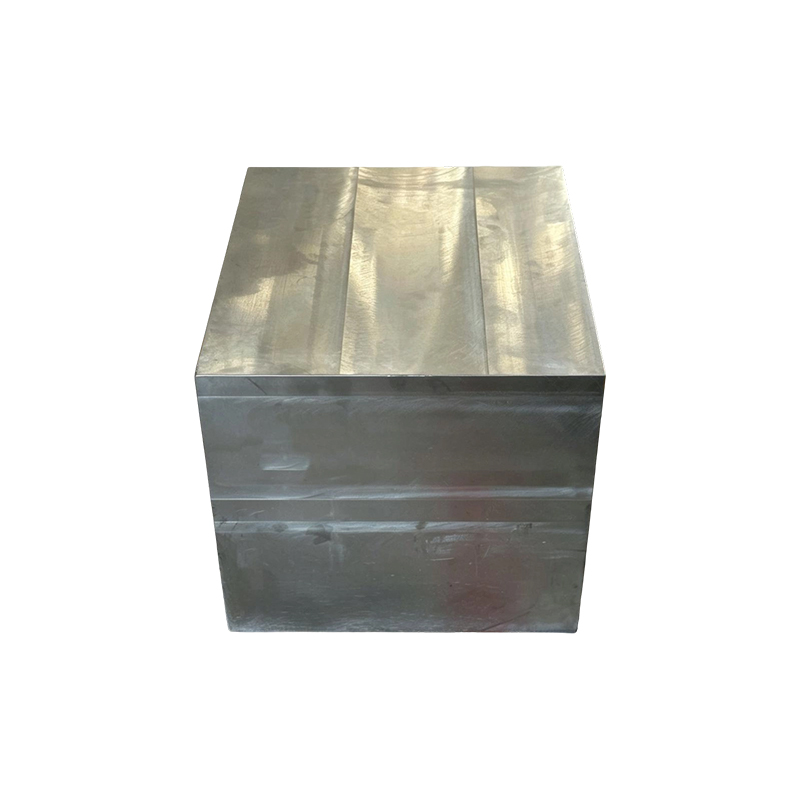
Open die forging — also called free forging or smith forging — is performed between flat or simply contoured dies that do not fully enclose the workpiece. The metal is shaped incrementally: the operator (or automated system) repositions the billet between hammer blows or press strokes, working the material progressively into the desired form.
Because the dies make contact with only a portion of the workpiece at any given moment, material can flow laterally without constraint. This makes open die forging the process of choice for:
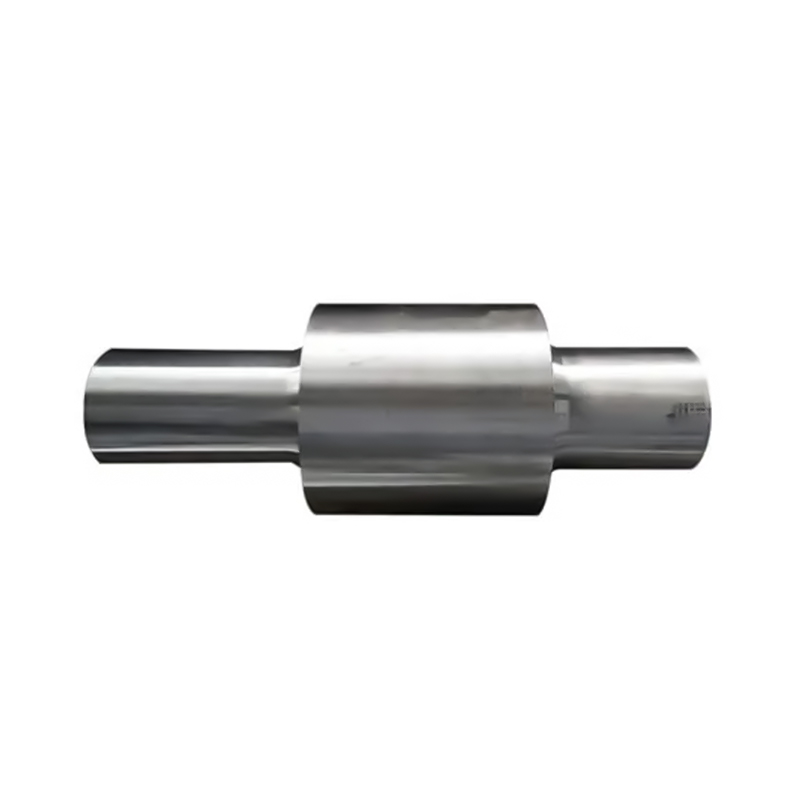
- Large, heavy components where closed die tooling would be impractically expensive — shafts, rollers, rings, and discs up to tens of thousands of kilograms
- Low-volume and custom parts where tooling amortization over a small run would make closed die forging uneconomical
- Ingot breakdown, the first step in converting a cast ingot into a wrought billet for subsequent closed die forging or machining
- Difficult-to-forge alloys that require careful, controlled deformation in multiple heats to avoid cracking
Open die forgings typically require more finish machining than closed die parts because dimensional tolerances are looser — typical tolerance ranges are ±3 mm or wider depending on part size, versus ±0.5 mm or tighter for precision closed die work. However, the microstructural benefits are identical: grain refinement, porosity closure, and directional grain flow all apply equally to open die and closed die products.
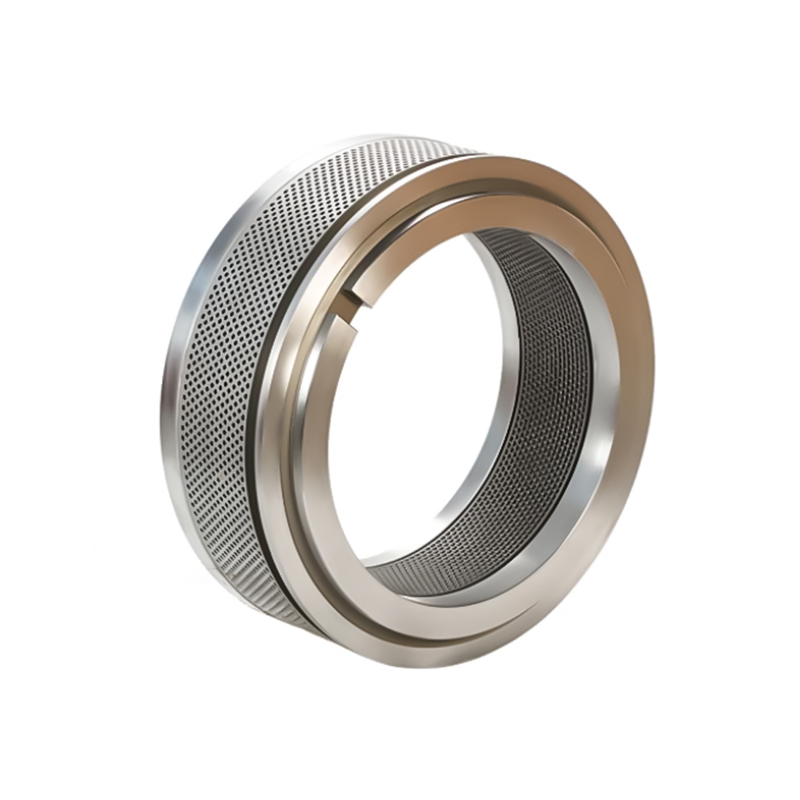
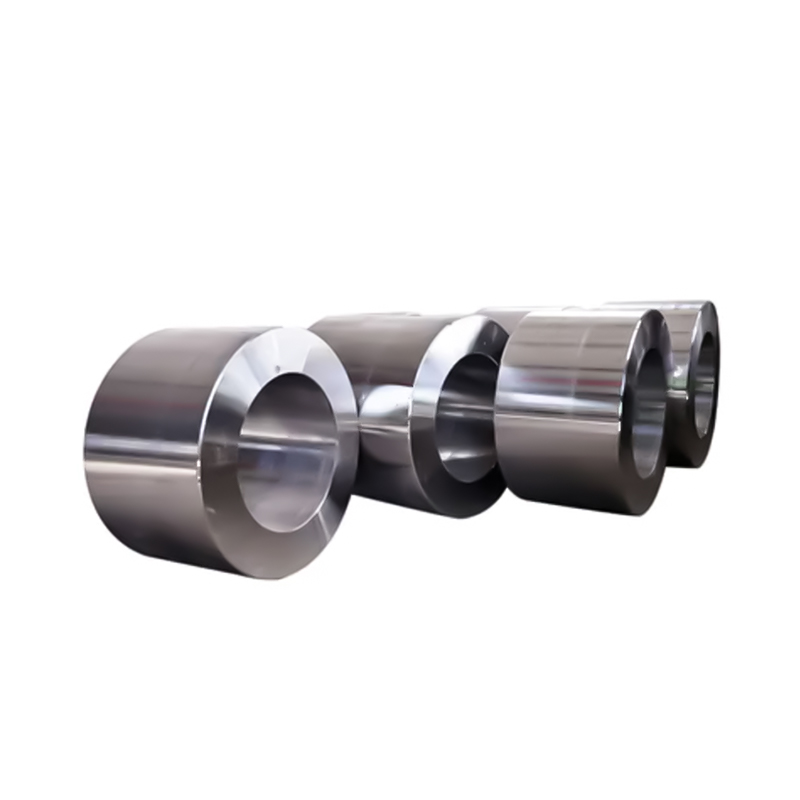
Ring rolling is a specialized form of open die forging used to produce seamless rings ranging from a few centimeters to several meters in diameter. A pierced billet is placed over a mandrel roll and progressively reduced in wall thickness as the ring diameter grows. The continuous grain flow around the ring circumference gives rolled rings exceptional hoop strength — the reason they are used in jet engine casings, bearing races, and pressure vessel flanges.
Carbon Steel for Forging: Grades, Selection, and Behavior
Carbon steel is the most widely forged material class, valued for its combination of forgeability, mechanical property range, cost, and response to heat treatment. Carbon content is the primary variable that governs both forging behavior and final part performance.
Low Carbon Steel (0.05–0.25% C)
Grades such as AISI 1010, 1018, and 1020 are highly ductile and forge easily across a wide temperature range (900–1,300°C). They produce little scale at forging temperature and are forgiving of variation in working temperature — making them suitable for high-volume closed die production with less process control overhead. Their limitation is strength ceiling: low carbon forgings are not heat-treatable to high hardness and rely on work hardening or case hardening (carburizing, nitriding) for surface wear resistance.
Medium Carbon Steel (0.30–0.60% C)
Grades including AISI 1035, 1045, and 1060 are the workhorses of structural forging. They respond well to quench-and-temper heat treatment, achieving tensile strengths from 700 MPa to over 1,000 MPa depending on section size and treatment parameters. AISI 1045 is among the most commonly specified forging grades globally — used for crankshafts, axles, gears, connecting rods, and general-purpose structural components. Forging temperatures typically range from 850–1,250°C, with finish forging above 850°C to avoid cracking from reduced ductility.
High Carbon Steel (0.60–1.00% C)
Grades such as AISI 1075 and 1095 are harder and stronger but significantly less forgiving. Higher carbon content narrows the forging temperature window and increases susceptibility to cracking if the metal cools unevenly during working. These grades are used where hardness after heat treatment is paramount — cutting tools, springs, rail components, and wear-resistant parts. They require tighter furnace control, more frequent reheating during open die work, and slow controlled cooling after forging to prevent quench cracking before heat treatment.
For applications demanding strength beyond what carbon steel can provide, alloy steels (4140, 4340, 8620) add chromium, molybdenum, and nickel to improve hardenability — the ability to achieve high hardness through the full cross-section of a large forging, not just at the surface.
 Previous