
 English
 Español
 русский
News
What Are Open Die Forgings?
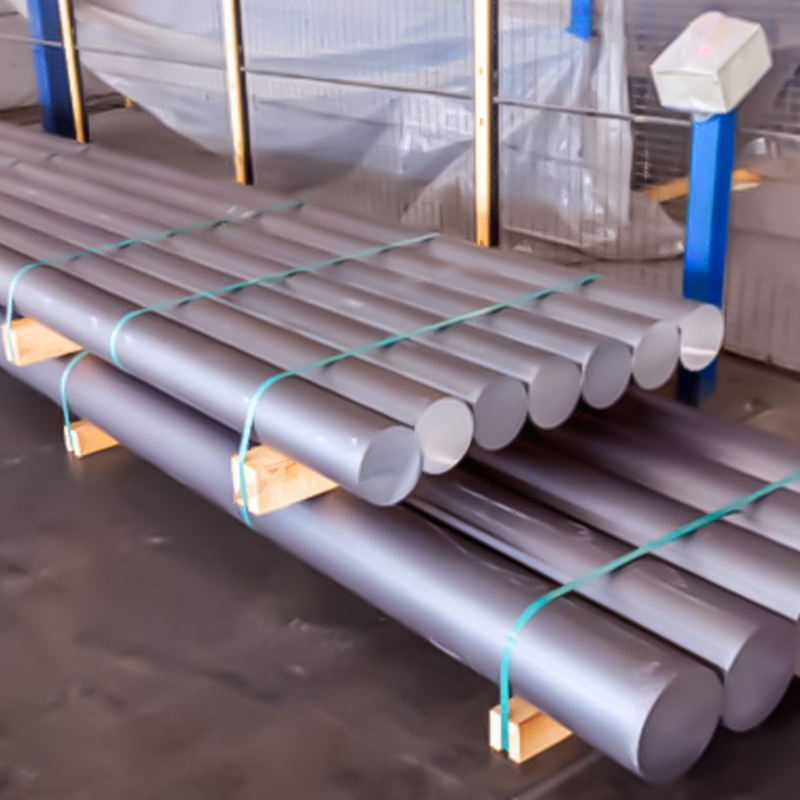
Open die forgings are metal components shaped by compressive force between flat or simply contoured dies that do not fully enclose the workpiece. Unlike closed die (impression die) forging — where the metal is confined within a shaped cavity that defines the final geometry — open die forging allows the material to flow laterally as the dies compress it, with the operator repositioning and rotating the workpiece between blows to progressively shape it toward the desired form.
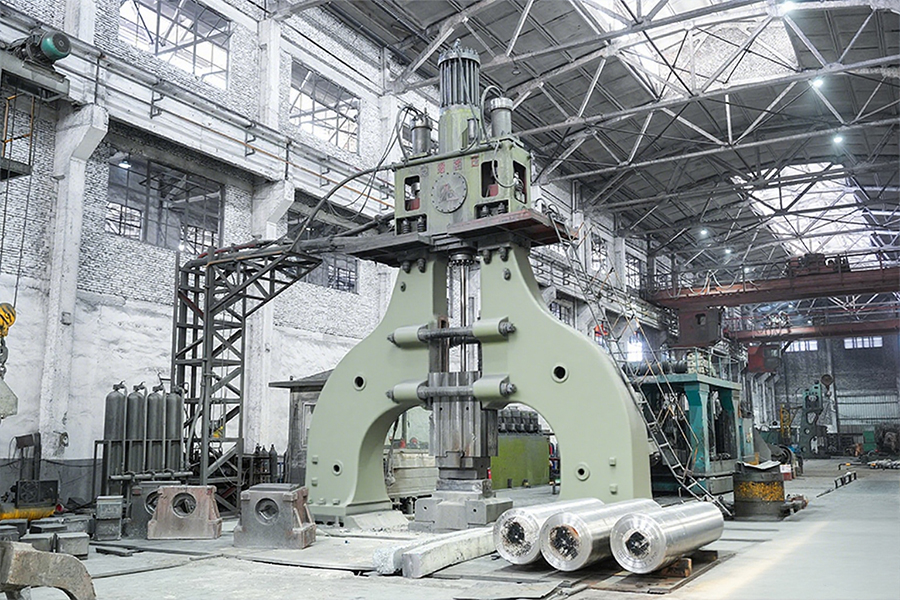
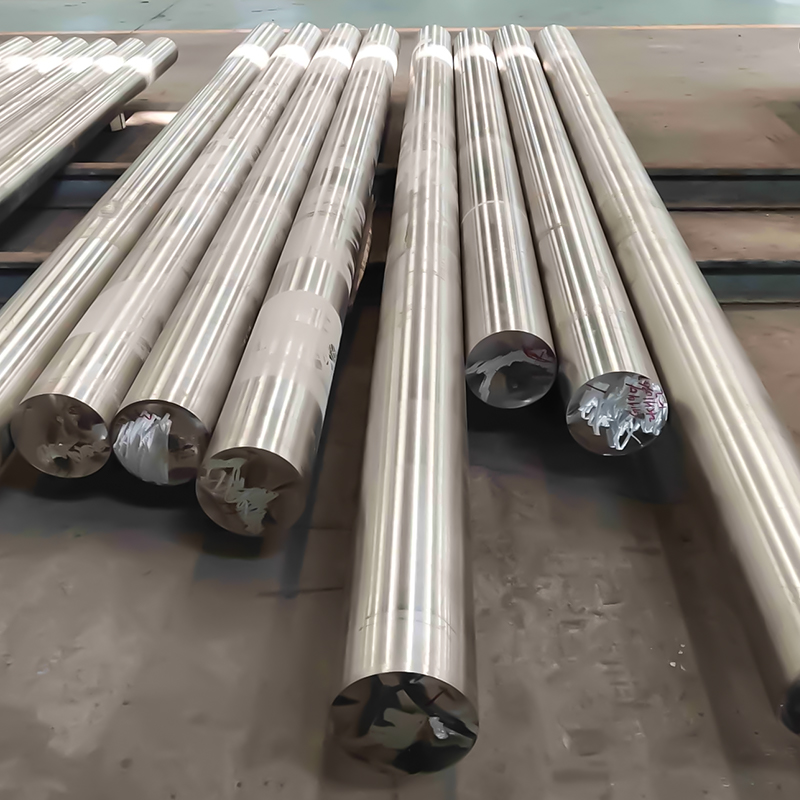
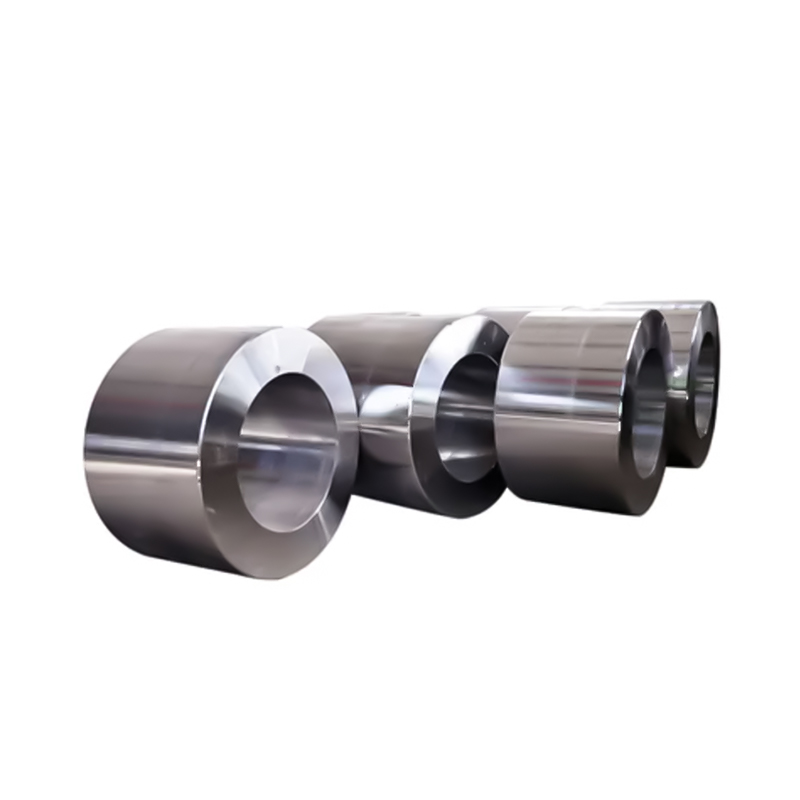
The process is performed on hydraulic presses, hammers, or ring rolling mills depending on the part geometry. Typical open die products include shafts, spindles, cylinders, discs, rings, and custom-profile bars — components that are either too large for closed die tooling, required in quantities too low to justify the tooling investment, or specified for the superior grain structure that open die working produces in the finished material.
Open die forging is the dominant process for very large components. Press capacities in heavy industrial forging facilities range from 1,000 to 15,000 tonnes, enabling the production of single-piece forgings weighing several hundred tonnes — ship propeller shafts, nuclear reactor pressure vessel shells, and wind turbine main shafts among them. At these sizes, no other manufacturing process can match the structural integrity that open die forging delivers.
Grain Flow and Mechanical Properties
The defining metallurgical advantage of open die forging is the controlled deformation of the as-cast grain structure of the ingot. When a cast ingot is forged, the dendritic grain structure breaks down and recrystallizes into refined, equiaxed grains oriented along the direction of material flow. This produces a continuous, uninterrupted grain flow pattern throughout the part cross-section — a condition that maximizes tensile strength, fatigue resistance, and impact toughness in the directions most critical for service loading.
In large open die forgings, achieving uniform grain refinement throughout the entire cross-section requires careful management of reduction ratios. A minimum 3:1 reduction ratio (the ratio of original to final cross-sectional area) is typically specified to ensure adequate deformation reaches the center of the workpiece, breaking down the cast core structure that would otherwise persist as a zone of lower toughness in the finished part.
Common Applications
Open die forgings serve critical structural roles across industries where part failure is unacceptable:
- Oil and gas: wellhead components, valve bodies, pressure vessel shells, drill collars
- Power generation: turbine shafts, generator rotors, low-pressure steam turbine discs
- Aerospace and defense: landing gear components, structural bulkheads, ordnance bodies
- Marine: propeller shafts, rudder stocks, anchor chain links
- Heavy machinery: rolling mill rolls, press frames, mining equipment shafts
Temperature for Forging Steel
The forging temperature range for steel is determined by the alloy composition and the metallurgical objectives of the forging operation. Steel must be hot enough to deform plastically without cracking, but not so hot that grain growth, oxidation, or incipient melting at grain boundaries compromises the material. Maintaining correct temperature throughout a forging sequence — from initial heating through final blows — is one of the most critical process variables in steel forging.
Hot Forging Temperature Ranges by Steel Grade
Hot forging is performed above the steel's recrystallization temperature, allowing the deformed grains to continuously recrystallize during working and preventing work hardening from building up in the material. The working window differs significantly by alloy class:
- Low-carbon steel (e.g. AISI 1020): Start temperature 1,250°C–1,280°C; finish temperature no lower than 900°C. The wide working window makes low-carbon grades among the most forgiving in production.
- Medium-carbon steel (e.g. AISI 1045): Start temperature 1,200°C–1,250°C; finish temperature 850°C–900°C. The most commonly forged grade for mechanical components including gears, shafts, and flanges.
- Alloy steel (e.g. 4140, 4340): Start temperature 1,150°C–1,230°C; finish temperature 850°C–900°C. Chromium-molybdenum and nickel-chromium-molybdenum alloys have narrower working windows due to their higher hardenability and sensitivity to deformation below the recrystallization temperature.
- Stainless steel (austenitic grades, e.g. 316): Start temperature 1,150°C–1,260°C; finish temperature 950°C–1,000°C. The high finish temperature requirement limits the amount of work that can be done per heat and increases reheat frequency in large forgings.
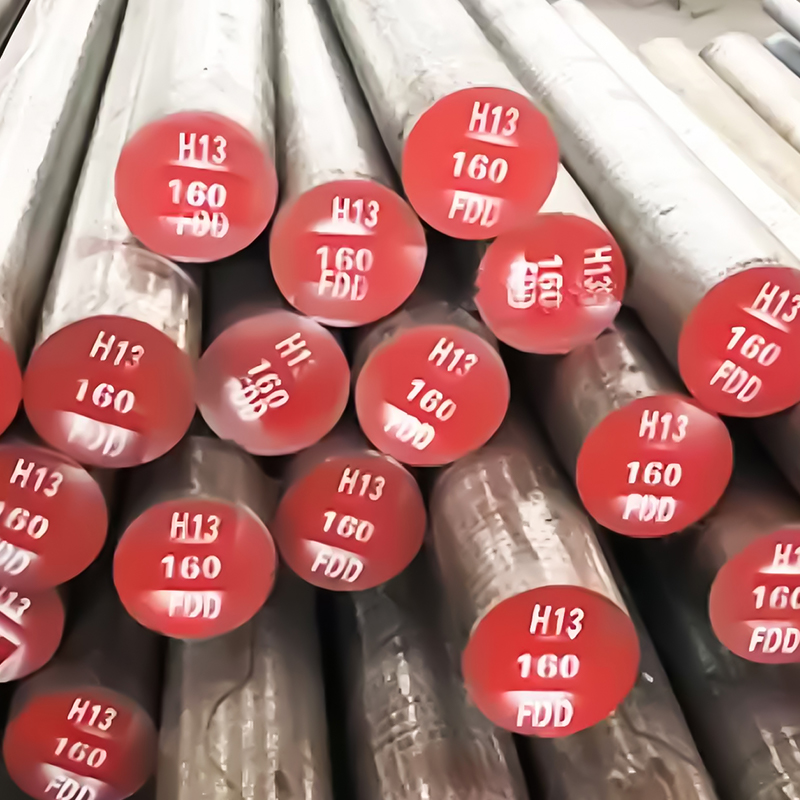
- Tool steel (e.g. H13, D2): Start temperature 1,050°C–1,150°C; finish temperature 900°C–950°C. High alloy content narrows the forging window considerably and demands tighter furnace temperature control to avoid carbide dissolution or grain boundary liquation.
Consequences of Incorrect Forging Temperature
Forging above the recommended start temperature causes rapid grain growth during heating and holding, producing a coarse grain structure that reduces toughness and fatigue life in the finished part. In the most severe cases — particularly in high-alloy steels — overheating causes grain boundary liquation, a condition called burning, that is irreversible and renders the workpiece unrecoverable regardless of subsequent heat treatment.
Forging below the recommended finish temperature produces deformation in a partially or fully work-hardened state. The resulting grain structure contains residual deformation bands and directional anisotropy, and the high forming loads required can crack the workpiece or damage tooling. For large open die forgings where a single heat may take hours to complete, temperature monitoring via optical pyrometer or thermocouple — combined with disciplined reheat scheduling — is mandatory to keep the workpiece within its forging window throughout the operation.
Warm and Cold Forging
Not all steel forging is performed hot. Warm forging — conducted between 650°C and 900°C — is used for near-net-shape production of smaller components where tighter dimensional tolerances and better surface finish than hot forging are required. Cold forging at room temperature is applied to low-carbon and microalloyed steels for high-volume fastener and precision component production, exploiting the work hardening that hot forging deliberately avoids to achieve high surface hardness and dimensional precision in a single operation.
Forging Versus Casting: A Technical Comparison
The choice between forging and casting is one of the most consequential decisions in component manufacturing, affecting mechanical properties, dimensional capability, lead time, cost structure, and design freedom simultaneously. Neither process is universally superior — the correct choice depends on the specific performance requirements, production volume, and geometric complexity of the component in question.
Mechanical Properties
Forging consistently outperforms casting in mechanical properties for wrought-compatible alloys. The deformation process eliminates the porosity, shrinkage cavities, and dendritic segregation inherent in solidification, while developing the continuous grain flow that maximizes directional strength. In a direct comparison using the same alloy and heat treatment condition, forgings typically show 20–30% higher tensile strength, 30–50% higher fatigue life, and significantly higher Charpy impact values than equivalent castings — particularly in the transverse direction, where castings show their greatest weakness relative to forgings.
Casting, however, is the only viable route for alloys that cannot be hot-worked — nickel superalloys with high gamma-prime fractions, certain titanium aluminides, and complex ceramic-reinforced composites among them. For these materials, casting is not a compromise but a necessity.
Geometric Complexity
Casting offers substantially greater design freedom. Complex internal passages, undercuts, thin walls, and integrated features that would require multiple machining operations or assembly steps on a forging can be cast in a single pour. Investment casting, in particular, can produce near-net-shape components with internal geometries — turbine blade cooling channels, hydraulic manifold passages — that are physically impossible to forge. Forging is limited to geometries achievable by die compression and material flow, requiring secondary machining to produce features such as bores, threads, and non-draft faces.
Cost Structure and Lead Time
Closed die forging requires significant tooling investment — dies for a medium-complexity automotive component typically cost $15,000–$80,000 — which makes it economical only above minimum order quantities that amortize tooling cost acceptably. Open die forging has lower tooling costs but higher per-piece labor costs due to the operator skill and repositioning time involved. Casting tooling (patterns and core boxes) is generally less expensive than forging dies for equivalent part complexity, making casting more economical for low-volume and prototype production.
Lead time also favors casting for complex parts. A sand casting can be produced from a new pattern in days to weeks; a closed die forging requires die design, manufacture, and qualification before first article production, a process that typically spans 8–20 weeks for a new component.
| Criterion | Forging | Casting |
|---|---|---|
| Tensile strength | Higher | Lower (same alloy) |
| Fatigue resistance | Superior | Lower |
| Internal porosity | Minimal | Risk present; managed by process |
| Geometric complexity | Limited by die design | High; internal features possible |
| Tooling cost | Higher (closed die) | Lower for equivalent complexity |
| Minimum viable volume | Medium–high (closed die); low (open die) | Low to medium |
| Maximum part size | Very large (open die) | Very large |
| Best fit | High-stress structural components | Complex geometry, low-stress housings |
When to Specify Forging Over Casting
Forging is the correct specification when the component carries cyclic or impact loading, operates in safety-critical service, or requires certified mechanical property minimums that casting cannot reliably deliver without extensive inspection protocols. Connecting rods, crankshafts, aircraft structural fittings, pressure vessel nozzles, and drive axles are examples where the mechanical property advantage of forging directly translates to longer service life, reduced inspection burden, and lower probability of in-service failure.
Casting is appropriate where geometric complexity demands it, where production volumes are insufficient to amortize forging tooling, or where the alloy is not amenable to hot working. Many engineering components — pump housings, valve bodies, machine tool bases, and decorative hardware — carry primarily static compressive loads at moderate stress levels where the microstructural differences between forging and casting have negligible practical consequence, and casting's cost and design flexibility advantages dominate the selection decision.
 Previous