
 English
 Español
 русский
News
Forging is a manufacturing process that shapes metal using localized compressive forces, and cold forging—also called cold forming—achieves this at room temperature with remarkable precision. The result is components that are 20–50% stronger than machined or cast equivalents, with tolerances as tight as ±0.03 mm. For industries sourcing custom alloy steel forgings or investing in hot forging automation, understanding these processes is the first step toward higher part performance and lower total cost.
What Does Forging Mean, and What Is a Forging?
At its core, forging means deforming metal in a solid state between two dies to achieve a desired shape and internal grain structure. Unlike casting, where liquid metal fills a cavity, forging reorients the metal's grain flow to follow the part's profile. This continuous grain structure is what gives forgings their superior mechanical properties—tensile strength improvements of up to 30% and dramatically higher fatigue resistance compared to the same alloy in cast form.
A "forging" is the finished part itself. These range from connecting rods weighing a few hundred grams to turbine shafts exceeding several tons. The process is typically classified by forming temperature: hot forging operates above the metal's recrystallization point (about 1100–1250°C for steel), warm forging in an intermediate range, and cold forging at ambient temperature. Each method serves distinct applications, but all share the fundamental principle of controlled compression.
What Is Cold Forming and What Is Cold Forging?
Cold forging, or cold forming, is a near-net-shape process performed without heating the workpiece. A slug or wire section is placed in a die and struck with immense force—pressures can exceed 2,500 MPa in a single blow. The metal flows plastically, filling the die cavity to produce a part that often requires no further machining. Because the material work-hardens during deformation, yield strength increases significantly, a phenomenon exploited in fastener, bearing, and gear manufacturing.
- Dimensional accuracy: Tolerances of IT7–IT8 (roughly ±0.02–0.05 mm) are standard, enabling direct assembly without grinding.
- Surface quality: Ra values of 0.8–1.6 µm are achievable, reducing or eliminating polishing steps.
- Material efficiency: Cold forging converts over 90% of the input billet into finished product, far outperforming cutting-based methods.
Industry data from the International Cold Forging Group shows that a typical multi-stage cold forging line can produce over 120 parts per minute, making it one of the highest-productivity metal forming processes available. The ability to combine operations like extrusion, upsetting, and piercing in a single press stroke is a key reason why cold forging has become dominant for automotive fasteners—a market exceeding 20 billion units annually.
Custom Metal Forging Services and Manufacturers: What to Look For
When selecting a custom metal forging manufacturer, several factors separate commodity suppliers from true engineering partners. First, evaluate material capability. For alloy steel forgings—often using grades like 4140, 4340, or 8620—the manufacturer must demonstrate precise temperature control and post-forge heat treatment knowledge to achieve target hardness and microstructure. Second, examine the range of in-house processes. A manufacturer that offers both cold and hot forging, plus secondary machining, can optimize the process chain without subcontracting.
A growing number of buyers are also prioritizing automation integration. For instance, Zhangjiagang Maiterio Intelligent Equipment Company specializes not only in forging equipment manufacturing but also in full-line hot forging automation solutions, including die-cutting automation equipment and robotic handling systems. Their turnkey approach helps forging shops reduce manual handling by over 80% and improve stroke-to-stroke consistency, a critical factor in achieving Cpk values above 1.33 for safety-critical components.
In the custom forging services landscape, lead times also vary dramatically. Standard orders might deliver in 8–12 weeks, but some alloy steel forging manufacturers offering integrated engineering support—from simulation to finished part—can compress this to 4–6 weeks for urgent programs, thanks to process validation conducted digitally before tool steel is ever cut.
Hot Forging Automation Equipment: Die Cutting, Handling, and Wholesale Supply
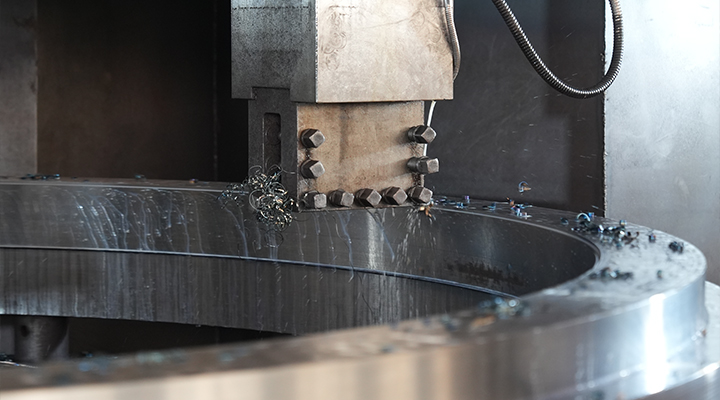
The business case for hot forging automation is driven by more than labor savings. Automated die lubrication, billet transfer, and trimming systems ensure that every workpiece follows precisely the same thermal and deformation path. In a high-volume forging line, this translates to scrap rate reductions of 2–5%, a significant figure when raw material accounts for 40–60% of part cost. Hot forging die cutting automation equipment—such as mechanical trim presses and multi-axis robotic cells—has become standard in modern shops producing parts over 500,000 units per year.
For companies looking to procure hot forging automation equipment at wholesale, the supplier ecosystem includes specialized automation integrators as well as broader forging equipment manufacturers. Some key evaluation points include the control system architecture (is it compatible with your existing press line?), the maximum pick-and-place rate (typically 15–30 cycles per minute for heavy parts), and the ability to handle hot workpieces at 1000°C+ without premature gripper failure. A proven supplier will offer detailed mean-time-between-failure data for their actuators and end-of-arm tooling, ideally over 10,000 hours for core mechanical components.
Alloy Steel Forging Manufacturers and the Shift Toward Intelligent Production
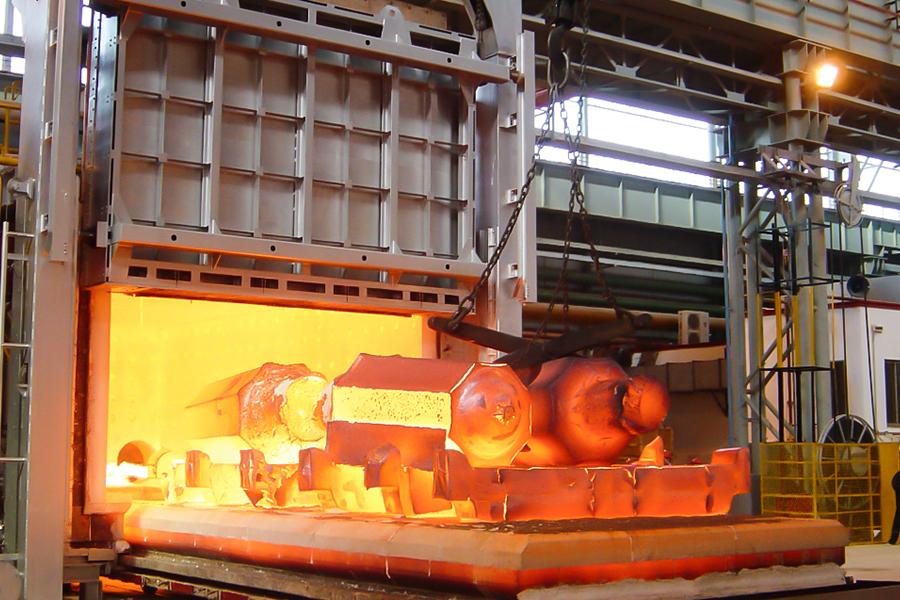
Alloy steel forgings—especially those used in powertrain, oilfield, and structural applications—demand tight chemistry control and precise thermal management. Top-tier alloy steel forging manufacturers now employ real-time process monitoring, with sensors tracking ram position, velocity, and tonnage on every stroke. When anomalies occur, the press can adjust parameters or stop within milliseconds, preventing defects before they happen. This data-driven approach, combined with automated part handling and die-change systems, is enabling a new generation of smart forging factories that achieve overall equipment effectiveness (OEE) above 85%.
For companies like Zhangjiagang Maiterio Intelligent Equipment Company, the convergence of forging expertise and automation engineering means they can deliver complete production cells that unify the press, the die cutting station, and the material handling network under a single control interface. This integration simplifies installation and after-sales support, key concerns when sourcing complex hot forging lines from equipment wholesalers. As the industry pushes toward energy efficiency—electric-driven screw presses now consume 30–40% less energy than equivalent hydraulic models—having a partner who understands both the forming process and the automation layer will increasingly define competitive success.
 Previous