
 English
 Español
 русский
News
Home / News / Industry News / The Ultimate Guide to Pelleting Dies Forging: Process, Benefits, and Applications
In the demanding world of industrial manufacturing, the quality of a component's formation is paramount to its performance and longevity. This is especially true for pelleting dies forging, a specialized process critical for producing durable, high-precision dies used in pellet mills across industries like biomass, feed, and pharmaceuticals. Forging transforms metal under immense pressure, creating a superior grain structure compared to casting or machining from bar stock. This guide delves deep into the intricacies of pelleting dies forging, exploring its methods, advantages, and why it's the preferred choice for heavy-duty applications. As a leader in advanced forging solutions, Maiterio Group combines over 30 years of industry expertise with state-of-the-art facilities to deliver forged components that meet the highest global standards, including for terminal customers in energy and heavy machinery sectors.
Pelleting dies are cylindrical metal parts with drilled holes through which material is compressed to form pellets. They endure extreme cyclic pressure, abrasion, and heat. Forging is not merely an option but a necessity for high-performance dies, as it fundamentally enhances the metal's internal integrity.
The choice of manufacturing method for pelleting dies significantly impacts their service life and reliability. Forging offers distinct structural advantages over other processes.
The following table summarizes the key differences:
| Property | Forged Pelleting Die | Cast Pelleting Die | Machined-from-Bar Die |
|---|---|---|---|
| Grain Structure | Refined, directional flow | Coarse, random | Unchanged from original bar |
| Density & Porosity | High density, no porosity | Potential for porosity and cavities | Dependent on bar quality |
| Fatigue Strength | Exceptionally High | Moderate to Low | High (but not optimized) |
| Impact Resistance | Superior | Lower | Good |
| Life Expectancy | Longest | Shortest | Moderate |
Producing a superior forged pelleting die is a meticulous multi-stage process that ensures optimal material properties and dimensional accuracy.
This is where the magic happens. Heated billets are shaped using open-die or closed-die forging presses.
Our in-house designed forging lines at Maiterio Group enable smaller forging allowances and higher production pace, reducing material waste and cost while maintaining quality.
The correct heat treatment protocol is what unlocks the full potential of the forged microstructure. It directly determines the die's surface hardness, core toughness, and resistance to cracking.
Not all alloy steels are created equal. The choice impacts wear life, breakage resistance, and overall cost-effectiveness. For instance, high-chromion cold work tool steels offer excellent wear resistance but may require more careful heat treatment to avoid cracking compared to some hot-work steels[1].
| Steel Type | Key Characteristics | Typical Applications |
|---|---|---|
| Chromium-based Cold Work Steel (e.g., 1.2379) | High wear resistance, good through-hardening | Standard feed pelleting, abrasive materials |
| Tungsten-Molybdenum High-Speed Steel | Exceptional red-hardness, high wear resistance | High-temperature pelleting, demanding applications |
| Nickel-Chromium Alloy Steel | High toughness and impact resistance | Large-diameter dies, high-pressure applications |
Adherence to stringent quality control standards like ISO 9001 is fundamental. This involves rigorous checks at every stage:
While the initial unit cost of a forged die is higher than a cast one, the Total Cost of Ownership (TCO) is often lower. The cost analysis of forged vs cast pelleting dies must consider:
A reliable forging operation depends on proper pelleting die forging machine setup and maintenance. This includes regular inspection of dies, hydraulic systems, and heating elements to ensure consistent forging temperature and pressure. As designers and long-term users of forging lines, Maiterio Group understands the intricacies of optimizing this setup for pelleting die production.
The complexity of pelleting dies forging demands a partner with deep vertical integration and expertise.
Our unique position as the largest customer of a top-tier alloy steel mill guarantees not only the most competitive steel prices but also stringent quality control from the very origin of the material. Our internal consumption allows us to enforce specifications that guarantee forgeability and final performance.
Our founding team brings over 30 years of forging leadership. This experience is directly applied in our self-designed forging lines, which achieve smaller forging allowances—meaning less material waste and lower machining costs for our clients—and a higher, more consistent production pace.
Holding ISO 9001 (Quality), 14001 (Environmental), and 45001 (Occupational Health & Safety) certifications, Maiterio Group's processes are transparent, repeatable, and aligned with the expectations of global giants in energy, wind power, and heavy industry.
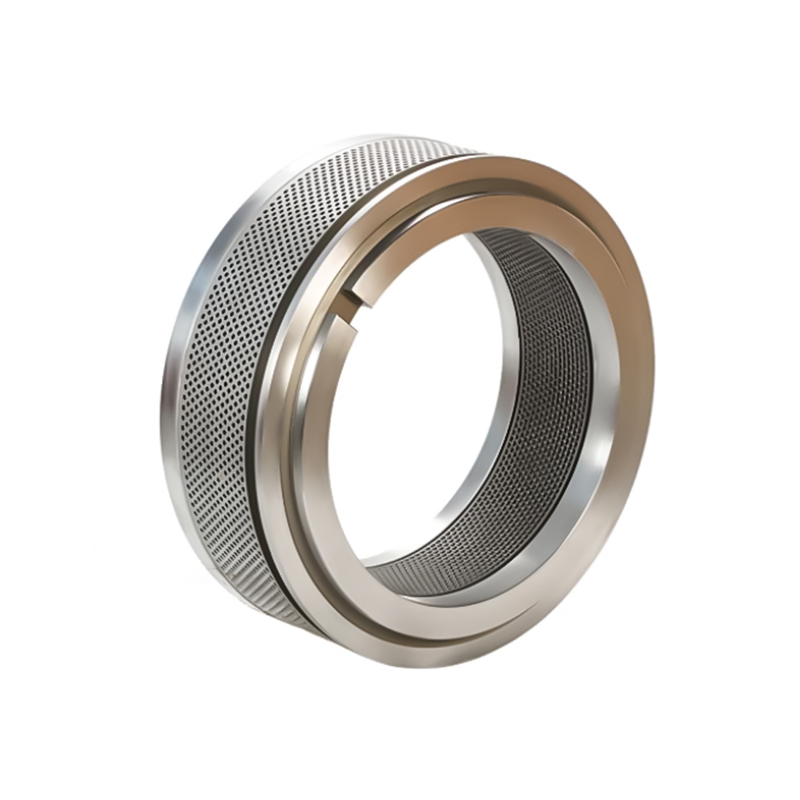
Choosing pelleting dies forging is an investment in durability, reliability, and operational efficiency. The process's ability to create a superior metallurgical structure is unmatched by alternatives. By focusing on critical aspects such as heat treatment for forged pelleting dies, selecting the correct alloy steel for pelleting die forging, and adhering to rigorous pelleting die forging quality control standards, manufacturers can achieve exceptional die performance. A thorough cost analysis of forged vs cast pelleting dies reveals the true long-term value, and a proper pelleting die forging machine setup and maintenance regimen ensures consistent production quality. For partners seeking a technically adept and vertically integrated supplier, Maiterio Group provides a complete solution from premium alloy steel to precision-forged and machined components, engineered for the world's most demanding applications.
The primary advantage is a vastly superior internal grain structure. Forging eliminates porosity, refines the grain, and aligns it to better withstand stress, resulting in significantly higher fatigue strength, impact resistance, and longer service life.
Heat treatment (hardening and tempering) is critical. It determines the final hardness for wear resistance and the toughness to resist cracking. An improperly heat-treated die, even if perfectly forged, will fail prematurely.
There's no single "best" alloy; it depends on the application. Chromium-based alloy steels like DIN 1.2379 are a common, excellent choice for general high-wear applications. For extreme abrasion or heat, high-speed or nickel-chromium steels may be selected.
Absolutely. When conducting a total cost analysis, forged dies almost always have a lower total cost of ownership due to their longer lifespan (reducing replacement frequency and downtime) and more consistent pellet output quality.
You should expect material certification, in-process dimensional checks, final full dimensional inspection, hardness testing at multiple locations, and non-destructive testing (like ultrasonic testing) to ensure the die is free from internal flaws.
[1] Roberts, G., Krauss, G., & Kennedy, R. (1998). *Tool Steels* (5th ed.). ASM International. This source provides detailed metallurgy on various tool steel classes, including the behavior of high-chromium cold work steels during heat treatment.

No.1317 Gangcheng Road, Daxin Town, Zhangjiagang, Jiangsu, China
WhatsApp:+86-151 5156 6388 Terry Huang
+86-151 5156 6388 Terry Huang
+86-138 1299 2607 Maggie Xia
Terry Huang -VP of Sales
[email protected]
Maggie Xia -VP of Sales
[email protected]

 Previous