
 English
 Español
 русский
News
What Is Stainless Steel Bar Forging?
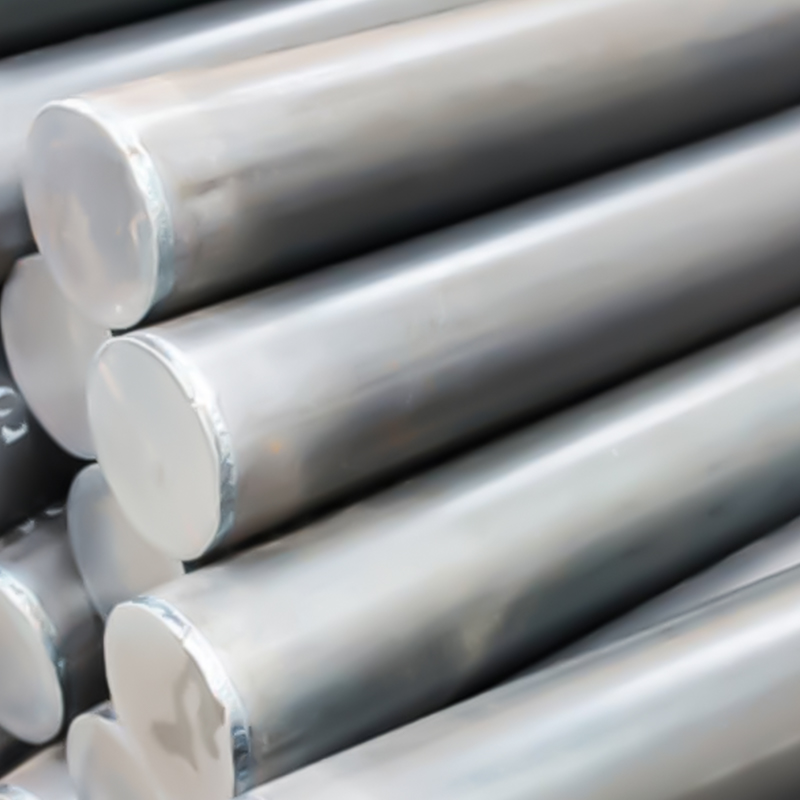
Stainless steel bar forging is a metal-shaping process that uses compressive force — from a hammer, press, or rolling die — to deform a heated or room-temperature stainless steel billet into a bar shape. The defining characteristic of a forged bar versus a cast or machined one is that the metal's internal grain structure is compressed and reshaped along the direction of the load, rather than being formed by pouring molten metal into a mold or removing material from stock.
That grain flow is what gives forged stainless steel bars their mechanical edge: because the grain follows the part's contours instead of being cut across by machining, forged bars generally deliver higher strength and better fatigue resistance for the same alloy composition than an equivalent cast or as-rolled bar.
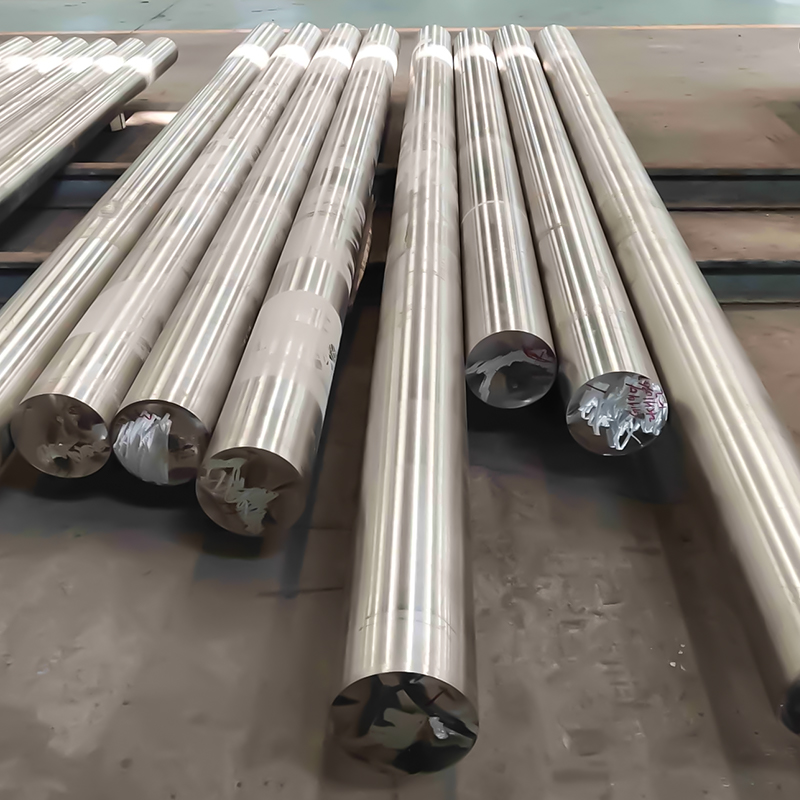
How Stainless Steel Forgings Are Made
The stainless steel forging manufacturing process follows a consistent sequence regardless of the final bar's size or grade, though temperature, press tonnage, and number of forging steps scale with part size and alloy.
- Billet cutting: Stainless steel stock is cut to a starting billet size and weight calculated to yield the final bar dimensions after deformation.
- Heating (for hot forging): Billets are heated in a furnace to a temperature typically between 1,700°F and 2,250°F (925°C–1,230°C) depending on the grade, which softens the metal enough to deform without cracking.
- Forging (deformation): The heated billet is placed in a die or under a hammer/press and progressively deformed into the target bar shape, often across multiple strikes or passes to control grain flow and avoid defects.
- Trimming: Excess material (flash) that's squeezed out at the die parting line during closed-die forging is trimmed away.
- Heat treatment: Forged bars are solution annealed and, depending on grade, quenched to dissolve carbides and restore corrosion resistance and ductility after the thermal and mechanical stress of forging.
- Machining and finishing: Bars are straightened, and where dimensional precision matters, machined or ground to final tolerance.
- Inspection and testing: Mechanical testing (tensile, hardness), and for critical applications ultrasonic or dye-penetrant testing, verify the forging meets its specification before shipment.
Hot Forging vs. Cold Forging Stainless Steel
Hot forging heats stainless steel above its recrystallization temperature before deforming it, which keeps the metal soft and workable enough to form large or complex shapes without cracking. Because grain structure recrystallizes during the process, hot forging can also refine grain size and eliminate internal porosity carried over from the original billet, which is part of why it's the standard choice for large-diameter bars and heavy forgings.
Cold forging deforms stainless steel at or near room temperature, relying on the alloy's ductility rather than heat to allow the shape change. It produces a smoother surface finish and tighter dimensional tolerance than hot forging, and because the grain structure work-hardens rather than recrystallizing, cold-forged parts typically end up with higher yield strength — but at the cost of higher forming force, more limited shape complexity, and a narrower range of workable alloys.
In practice, most stainless steel bar forging for structural and pressure-retaining applications is done hot, while cold forging is reserved for smaller precision components such as fasteners where tight tolerance and surface finish outweigh the need for large deformation.
Types of Stainless Steel Forgings
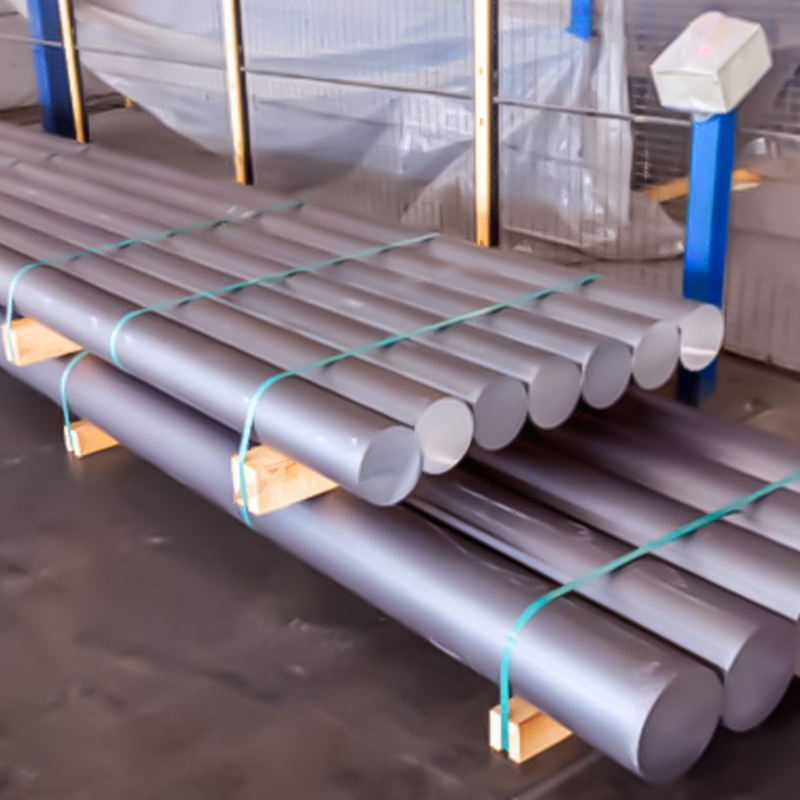
- Open die forging: The billet is shaped between flat or simple-contour dies that don't fully enclose it, giving flexibility for large or custom bar sizes without the cost of a dedicated die set — the standard method for large-diameter round or square bar stock.
- Closed die (impression die) forging: The billet is compressed inside a die that fully encloses the desired shape, producing near-net-shape parts with tighter tolerances — used for components with more complex geometry than a simple bar.
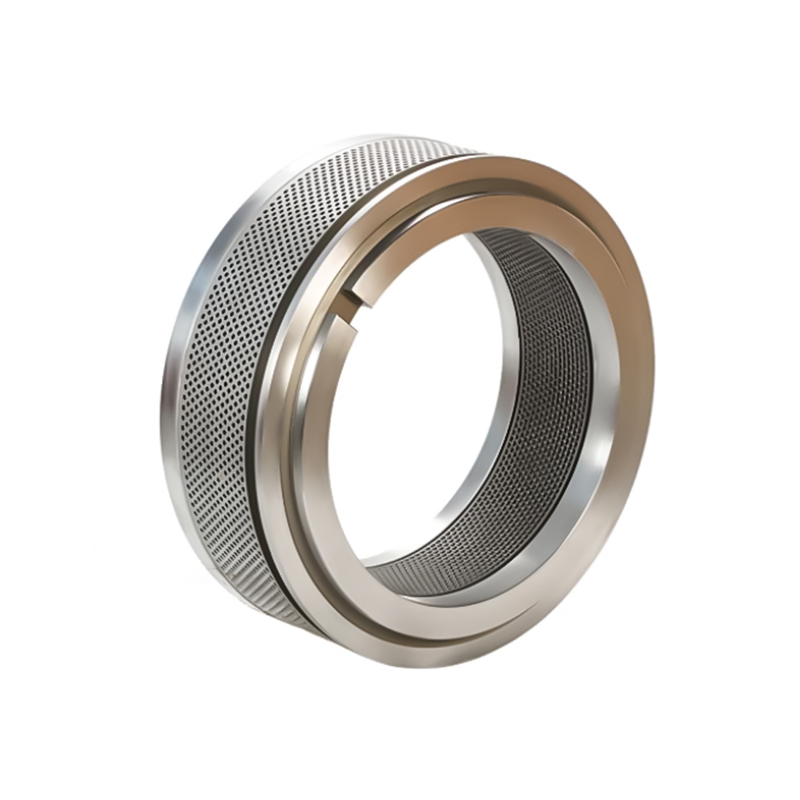
- Ring rolling: A pierced, donut-shaped billet is rolled and expanded between rollers to form seamless rings, used for flanges and large-diameter ring-shaped stainless steel components.
- Upset forging: The billet is compressed along its length to increase diameter at a specific section, commonly used to form heads or flanged ends on bar stock.
Stainless Steel Forging Grades and Applications
Grade selection for a forged stainless steel bar depends primarily on the corrosion environment and mechanical load the finished part will see in service.
| Grade | Type | Typical Applications |
|---|---|---|
| 304 / 304L | Austenitic | General-purpose valve bodies, fittings, food and chemical processing equipment |
| 316 / 316L | Austenitic | Marine hardware, chemical processing, pharmaceutical equipment requiring chloride resistance |
| 410 / 420 | Martensitic | Pump shafts, valve components, cutlery-grade parts needing higher hardness |
| 17-4PH | Precipitation-hardening | Aerospace fittings, high-strength shafts, oil and gas components |
| 2205 | Duplex | Offshore piping components, pressure vessels needing high strength and chloride resistance |
Forged stainless steel bars from these grades feed directly into flanges, valve bodies, shafts, fasteners, and pressure vessel components across oil and gas, marine, food processing, and power generation industries, wherever a machined or fabricated part needs to withstand both corrosive exposure and mechanical load.
Advantages of Stainless Steel Forgings
- Higher strength-to-weight ratio: Continuous grain flow gives forged bars better mechanical properties than cast parts of the same alloy and weight.
- Improved fatigue resistance: Grain structure that follows the part's shape rather than being interrupted by machining reduces the stress concentration points where fatigue cracks typically initiate.
- Fewer internal defects: The forging process closes up porosity and voids that can be present in cast material, producing a denser, more homogeneous part.
- Better impact toughness: Forged stainless steel generally withstands sudden shock loading better than cast equivalents, which matters for parts subject to vibration or impact in service.
- Material efficiency at scale: Near-net-shape closed die forging minimizes the amount of material removed in subsequent machining compared to starting from solid bar stock, reducing scrap in high-volume production.
 Previous