
 English
 Español
 русский
News
Home / News / Industry News / Beta Transus Temperature Control in Titanium Ring Rolling: Optimizing Grain Structure
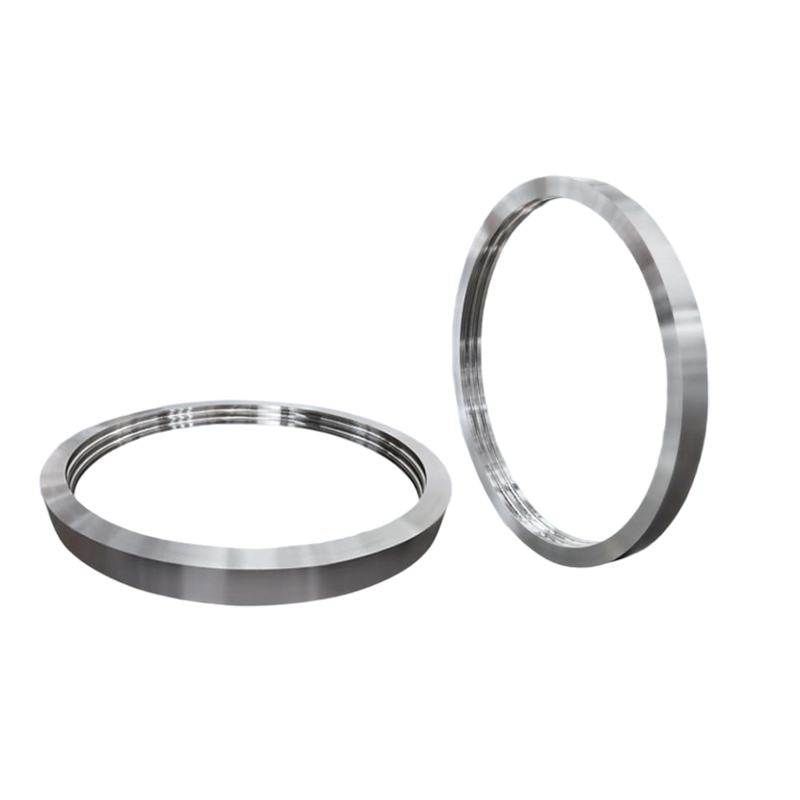
In titanium ring rolling, the beta transus temperature is not just a metallurgical reference point. It determines how the material responds to heating, deformation, and cooling, and it directly controls the final grain structure of rolled rings. For components used in wind turbines, aerospace engines, and heavy machinery, a well-controlled beta transus strategy supports both mechanical integrity and manufacturing stability.
Core principle: The beta transus is the lowest temperature at which the titanium alloy structure becomes 100 percent beta phase. Working too far above it produces coarse prior-beta grain boundaries, while working below it preserves the alpha-beta mixture that improves strength and fatigue behavior.
This article explains how beta transus temperature control can be integrated into titanium ring rolling to optimize grain structure, with practical process guidance and equipment considerations.
The beta transus temperature, often abbreviated Tβ, is alloy-specific and composition-sensitive. In Ti-6Al-4V, the most widely used alpha-beta titanium alloy, Tβ is approximately 995°C. Small changes in oxygen, iron, carbon, or nitrogen content can shift Tβ by dozens of degrees, so depending only on published data is risky for production.
Beta transus can be determined by differential thermal analysis, metallographic quenching trials, or computational models. In daily production, the metallographic method is reliable: small coupons are heated to a temperature ladder and quenched, and the lowest temperature at which no primary alpha remains is recorded as Tβ.
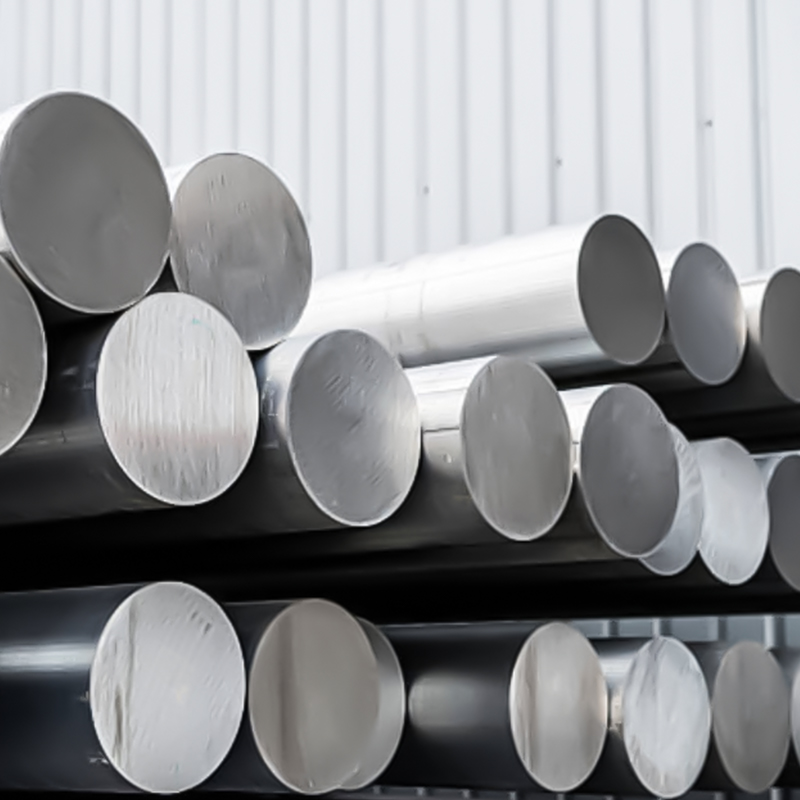
In ring rolling, the workpiece experiences complex strain paths. If the billet is soaked far above Tβ, the final ring may develop coarse platelet structures with low ductility. If deformation is completed at too low a temperature, recrystallization may be incomplete. The solution is to start with a homogeneous beta field, apply enough deformation in the alpha-beta range, and control cooling to promote a fine equiaxed or bimodal alpha distribution.
Optimizing grain structure in titanium ring rolling is not a single temperature setting. It is a sequence of thermal-mechanical decisions. The table below summarizes typical objectives and temperature references for a production cycle.
| Stage | Temperature Reference | Main Objective |
|---|---|---|
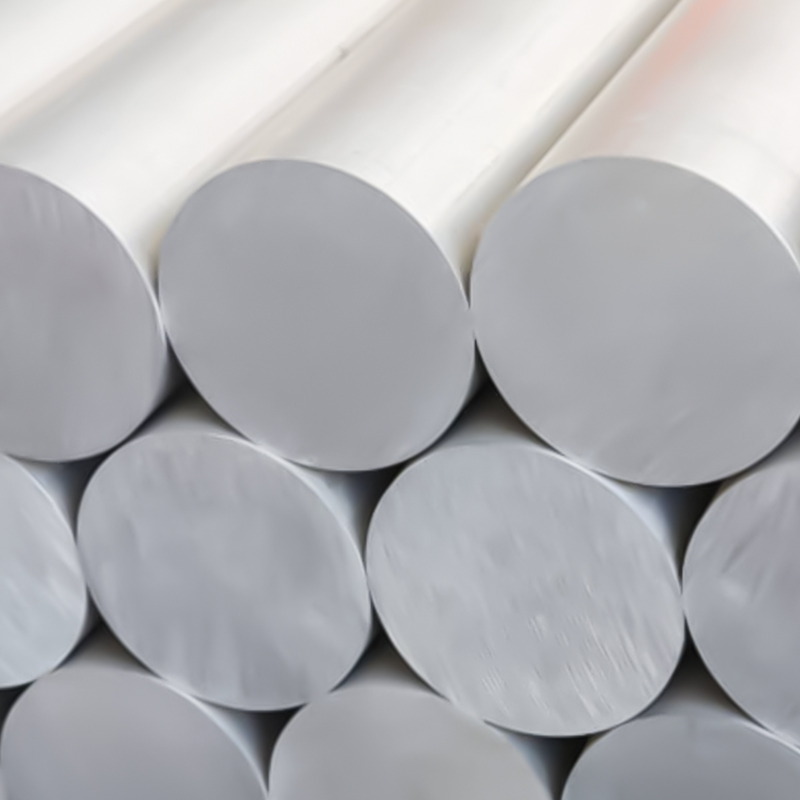
| Billet heating | Tβ + 30-80°C | Homogenize chemical composition |
| Initial rolling | Near or slightly above Tβ | Beta working with controlled strain per pass |
| Finish rolling | 30-120°C below Tβ | Break lamellar alpha and promote globularization |
| Post-rolling cooling | Controlled air or accelerated cooling | Control secondary alpha morphology |
Several variables influence the final grain structure:
During ring rolling, each pass accumulates strain and changes the ring geometry. Because the ring core is often hotter than the measured surface temperature, the actual working temperature should be estimated with a thermal model rather than assumed from pyrometer readings alone. These principles are described in more practical detail in our guide to seamless rolled ring forging engineering.
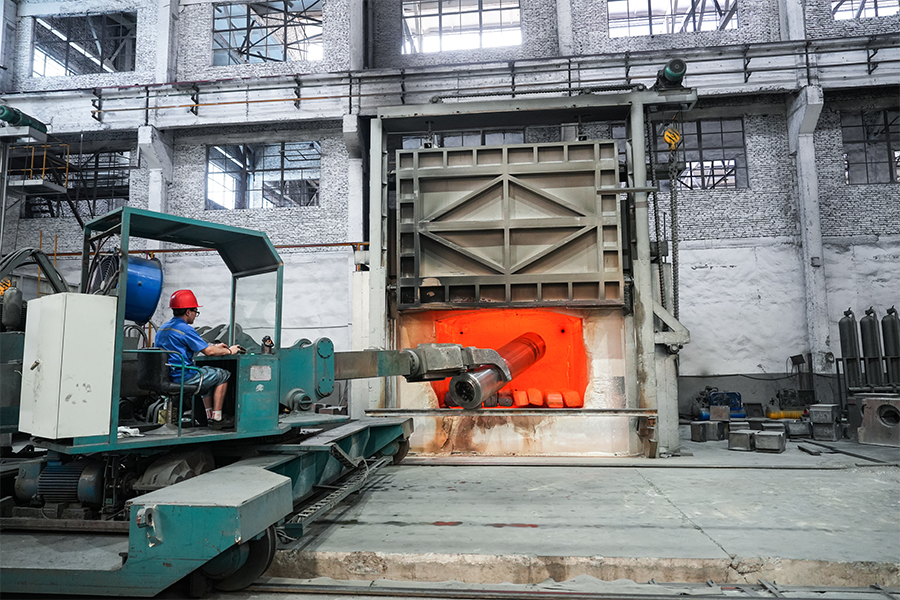
In production, thermal control depends on the equipment around the rolling mill. A titanium ring must move from the heating furnace to the mill quickly, with minimal temperature loss at surfaces, and the mill must be rigid enough to perform precise reductions without an overly long cycle time.
Maiterio's ring rolling mill is configured for controlled multi-pass rolling. Its radial-axial design gives operators the flexibility needed to reduce wall thickness and diameter while staying inside the intended thermal window.
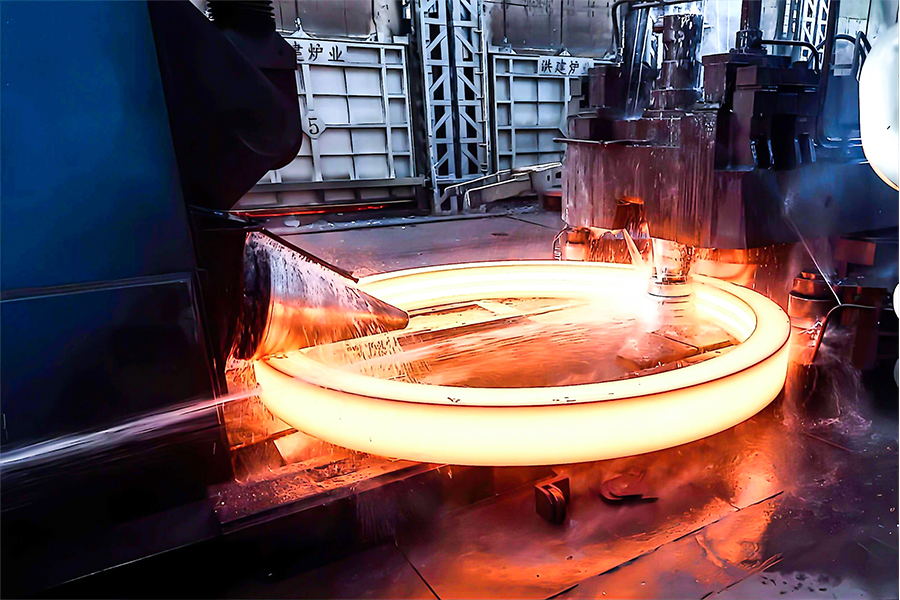 CNC Radial-Axial Ring Rolling Mill for Seamless RingsThis CNC ring rolling machine combines electromechanical-hdraulic control for multi-pass radial-axial rolling, helping operators reduce wall thickness and diameter within thermal limits. Its real-time sensors and closed-loop feedback support dimensional accuracy.View Product →
For companies building a new titanium ring production line, an integrated ring rolling line solution can shorten engineering time by matching material handling, heating, rolling, and cooling equipment to a defined process sequence.
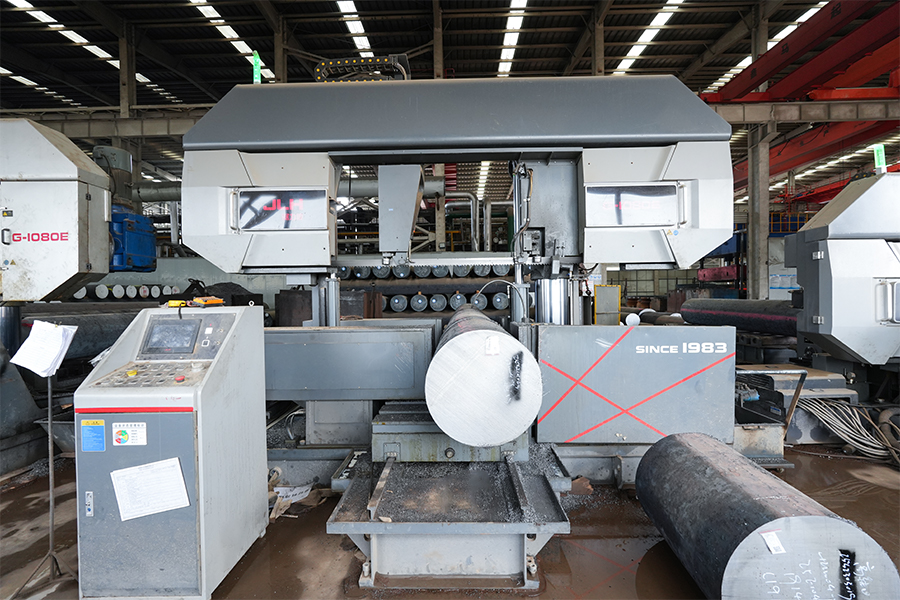 Integrated Ring Rolling Production Line SolutionA complete line covering sawing, gas heating, upsetting, ring rolling, straightening, heat treatment, and machining. Matching material handling and equipment sequence can shorten engineering time for new titanium ring production lines.View Product →
Equipment must also minimize scale and oxygen pickup. Titanium is reactive at high temperatures, and an oxidizing atmosphere can produce alpha case. Furnaces used for titanium heating need controlled atmosphere, uniform temperature distribution, and carefully planned transfer timing.
After rolling, heat treatment determines whether the optimized grain structure is retained or transformed. For alpha-beta alloys, annealing below Tβ is common, because a treatment slightly below Tβ can allow equiaxed primary alpha to coexist with transformed beta regions.
For components requiring high fracture toughness, beta annealing may be selected intentionally; the resulting lamellar structure offers good damage tolerance but may reduce fatigue initiation resistance. For components where fatigue strength is critical, an alpha-beta anneal below Tβ is often the safer choice.
Heat treatment equipment must provide precise ramp rates and uniform temperature profiles across large-diameter rings. A homogenous heating furnace prevents local overheating, which is especially important when the target microstructure relies on a narrow treatment window.
 Car-Type Heat Treatment Furnace with Precise Temperature ControlThis car-bottom furnace supports annealing, normalizing, tempering, and stress relieving with multi-zone burners and circulating fans for uniform temperature. It suits large rings requiring controlled ramp rates and narrow treatment windows.View Product →
Microstructure verification should include both metallographic inspection and Tβ confirmation. Samples should be taken from both axial and tangential directions because ring rolling creates anisotropic strain paths. A robust quality record should link batch chemistry, Tβ verification, rolling parameters, post-rolling cooling, and heat treatment data.
Mechanical testing normally includes tensile, impact, and microhardness checks. The relationship between temperature control and final properties is visible in the grain structure: a fine and uniform alpha-beta mixture indicates that the process window was respected, while coarse grain boundaries indicate either excessive overheating or insufficient deformation.
Maiterio has published a TC4 titanium alloy forged flange production case that shows how temperature and pass planning were applied on a real component.
The beta transus temperature is the lowest temperature at which the equilibrium structure of a titanium alloy becomes 100 percent beta phase. Below this temperature, alpha and beta phases coexist in a composition-dependent proportion.
It depends on the application. Simple beta working above Tβ can break down a coarse microstructure, but finishing in the alpha-beta range below Tβ usually provides a better balance of strength, ductility, and fatigue resistance for rolled rings.
Limit soaking time above Tβ, use a controlled heating rate, avoid excessive final temperatures, and apply sufficient deformation with a moderate strain rate so that recrystallization takes place before the grain boundaries become too coarse.
A fine equiaxed or bimodal alpha structure is usually preferred because it combines good strength, ductility, and fatigue performance. The exact target depends on the ring's service condition and customer specification.
Beta transus temperature control is the foundation of grain structure optimization in titanium ring rolling. By verifying the alloy-specific Tβ, designing a thermal-mechanical window, integrating the right equipment, and controlling post-rolling heat treatment, manufacturers can produce rings with consistent mechanical properties and reliable performance.
For a producer with both forging capability and line-building experience, the practical path is clear: measure the material, control the temperature, and match every process step to the microstructure target.

No.1317 Gangcheng Road, Daxin Town, Zhangjiagang, Jiangsu, China
WhatsApp:+86-151 5156 6388 Terry Huang
+86-151 5156 6388 Terry Huang
+86-138 1299 2607 Maggie Xia
Terry Huang -VP of Sales
[email protected]
Maggie Xia -VP of Sales
[email protected]

 Previous