
 English
 Español
 русский
News
Home / News / Industry News / Reducing Tool Wear When Machining Forged Titanium: Feeds, Speeds, Coolant
Forged titanium components are widely used in aerospace, energy, and heavy industrial equipment, where high strength-to-weight ratio and corrosion resistance justify the material's premium cost. Yet titanium is also one of the most difficult metals to machine. During machining of forged titanium components, tool wear develops rapidly unless cutting speed, feed rate, and coolant delivery are carefully matched to the material's unique properties.
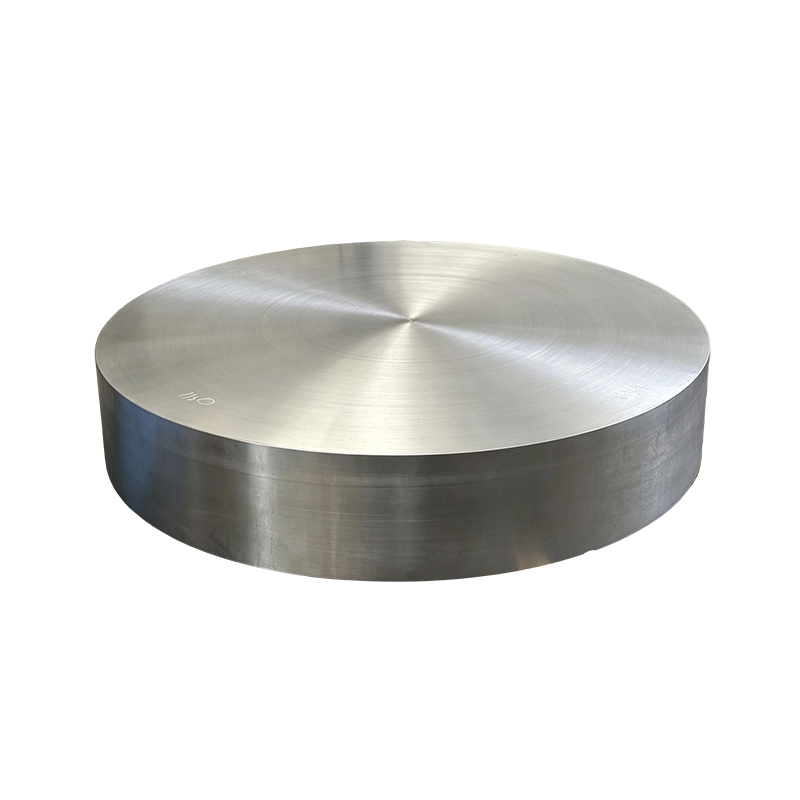
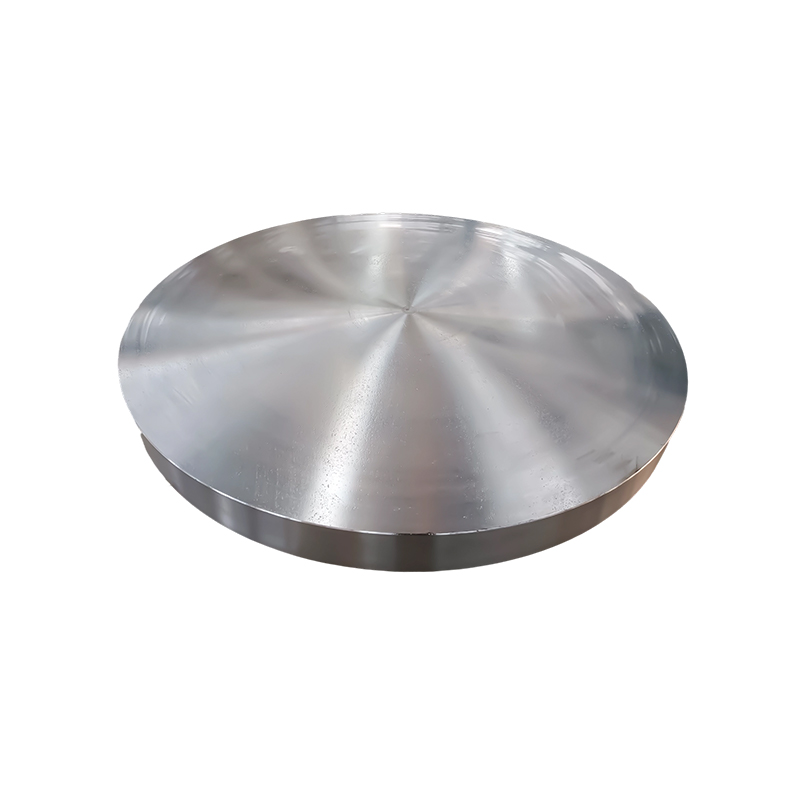
This article consolidates practical, shop-floor-proven guidance for reducing tool wear when machining forged titanium. The focus stays on the three most controllable process variables: feeds, speeds, and coolant. Maiterio's recent TC4 titanium alloy forged flange production illustrates how consistent parameter control produces repeatable results in real production.
Forged titanium differs from cast or billet stock in ways that directly affect machinability. The forging process refines the grain structure and closes internal voids, producing a tougher, more uniform workpiece. That is excellent for structural performance, but significantly more demanding for the cutting tool.
Titanium conducts heat poorly, at approximately 7 W/m·K versus roughly 50 W/m·K for steel, so heat concentrates at the tool-chip interface. Above 500°C, titanium becomes chemically reactive with common tool materials, accelerating diffusion and adhesion wear. Its low elastic modulus, around 114 GPa, also causes spring-back and chatter, especially in thin-wall forged components.
Forged surfaces often carry scale, flash, or localized residual stress from the forming operation. When the cutting tool rubs against these defects instead of cutting cleanly beneath them, the surface work-hardens instantly, making every subsequent pass even more punishing on the edge.
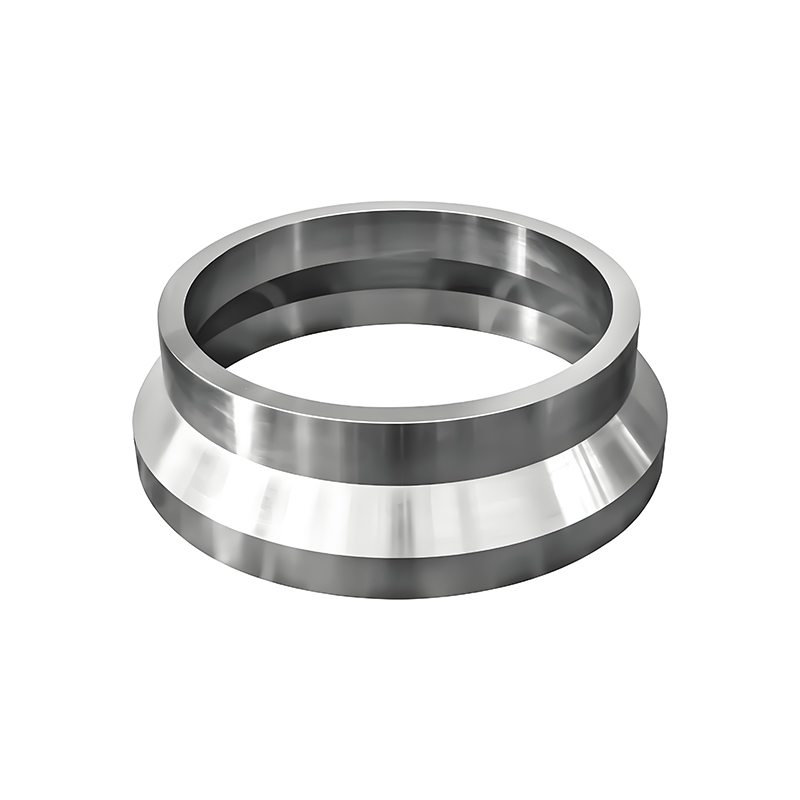 Special Material Forgings Factory Offering Diverse Alloy ForgingsThis factory supplies forged components in aluminum alloys, stainless steels, and duplex grades, providing options for applications where surface integrity and machinability matter under demanding conditions.View Product →
Extending tool life starts with identifying the dominant wear mode. Three mechanisms appear most frequently when machining forged titanium.
Flank wear develops where the tool flank abrades against the hardened titanium surface. It appears as a uniform wear land below the cutting edge and is the most common reason inserts are indexed. Cutting speed drives flank wear progression, so a modest speed reduction usually yields a large tool-life gain.
Crater wear forms on the rake face where the hot chip flows over the tool. Titanium's chemical reactivity above 500°C accelerates this diffusion-dominated mode. A deepening crater weakens the mechanical support of the cutting edge and can trigger sudden fracture.
Notch wear appears as a localized groove at the depth-of-cut line, where the tool meets the work-hardened boundary from the previous pass. Forged components with inconsistent surface layers are especially vulnerable. The table below summarizes these wear modes and their main indicators.
| Wear Mode | Primary Cause | Visual Indicator |
|---|---|---|
| Flank Wear | Abrasion of hard surface | Uniform wear land on flank face |
| Crater Wear | Diffusion at high temperature | Depression on rake face |
| Notch Wear | Work-hardened boundary layer | Groove at depth-of-cut line |
Cutting speed is the dominant factor controlling tool wear in titanium. Unlike steel, titanium requires conservative surface speeds regardless of insert grade.
For rough turning of forged titanium, keep cutting speed between 25 and 40 m/min. Finish turning runs at 50 to 70 m/min because the depth of cut is smaller. If edge life falls below 15 minutes per corner, reduce cutting speed by 10 to 20 percent rather than changing feed or depth of cut.
Feed rate has less influence on tool wear than speed, but correct selection is still important. Use 0.20 to 0.40 mm/rev for roughing and 0.08 to 0.15 mm/rev for finishing. Excessive feed fractures the edge; too little feed causes rubbing, which heats the part and accelerates work hardening.
The first pass on a forged surface must remove the scale layer in a single continuous cut, typically at least 1.5 mm deep. Subsequent roughing passes run between 2.0 and 4.0 mm, while finishing passes stay between 0.25 and 0.75 mm to preserve surface integrity.
| Parameter | Rough Turning | Finish Turning | Milling |
|---|---|---|---|
| Cutting speed, m/min | 25-40 | 50-70 | 35-55 |
| Feed, mm/rev or mm/tooth | 0.20-0.40 | 0.08-0.15 | 0.05-0.12 |
| Depth of cut, mm | 2.0-4.0 | 0.25-0.75 | 0.5-2.0 |
Coolant is a primary process variable in titanium machining, not an accessory. Its job is to remove heat from the cutting zone and prevent chemical wear at the tool-chip interface.
Water-soluble emulsion at 8 to 10 percent concentration is the baseline approach. Conventional flood nozzles often fail to penetrate the tool-chip interface because titanium generates intense local heat. Aim multiple nozzles directly at the cutting edge and increase flow rate for fuller coverage.
High-pressure coolant delivered at 50 to 200 bar brings fluid straight to the cutting zone through the tool holder. It lowers temperature, breaks chips effectively, and improves surface finish. Production trials show 30 to 50 percent less tool wear compared with flood coolant when machining titanium. For shops that can support through-tool coolant, this is the most impactful upgrade available.
Minimum quantity lubrication suits light finishing passes and selected milling operations. Cryogenic cooling with liquid nitrogen or carbon dioxide reduces chemical wear dramatically and is increasingly used in high-value aerospace machining, though it requires dedicated equipment and qualified processes.
Micro-grain carbide with a K-grade substrate is the default tool material for titanium machining. PVD coatings such as AlCrN or AlTiN can extend edge life in stable operations, while steel-oriented TiN or TiAlN coatings perform poorly because of chemical affinity with titanium. CBN inserts are reserved for selected finishing applications where higher speed is justified.
Tool geometry should use positive rake angles to reduce cutting forces and avoid rubbing. Sharp or lightly honed edges outperform heavily chamfered edges in titanium. In milling, climb milling with a chip load that never reaches zero prevents work hardening of the machined surface.
The following rules keep tool wear under control in series production of forged titanium parts.
A systematic approach to feeds, speeds, and coolant consistently doubles tool life in titanium machining compared with relying on default manufacturer recommendations.
Use 25 to 40 m/min for rough turning and 50 to 70 m/min for finishing. Start toward the lower end and adjust based on edge wear observations.
Yes. Titanium's low thermal conductivity makes cooling essential. High-pressure coolant above 50 bar gives the best results. With flood coolant, use maximum flow rate and accurate nozzle positioning.
Micro-grain K-grade carbide is the industry standard. PVD coatings such as AlCrN or AlTiN add edge life in stable conditions. Avoid titanium-bearing coatings that chemically match the workpiece.
Take a first pass at least 1.5 mm deep to cut below the scale. Reduce cutting speed by 10 percent for that pass, then restore normal parameters once clean material is exposed. Light gold chips indicate acceptable cutting temperature.
Reducing tool wear when machining forged titanium components comes down to four actions: keep cutting speed conservative, maintain continuous cut engagement, pass below the forged surface layer, and deliver coolant precisely where the cut happens. Applied consistently, these measures cut tool spending, stabilize cycle times, and protect workpiece quality.
At Maiterio, in-house forging and precision machining expertise combine in high-integrity titanium components and other special material forgings. Delivering forgings with controlled surface condition and consistent microstructure helps customers avoid machining problems before they begin.

No.1317 Gangcheng Road, Daxin Town, Zhangjiagang, Jiangsu, China
WhatsApp:+86-151 5156 6388 Terry Huang
+86-151 5156 6388 Terry Huang
+86-138 1299 2607 Maggie Xia
Terry Huang -VP of Sales
[email protected]
Maggie Xia -VP of Sales
[email protected]

 Previous