
 English
 Español
 русский
News
Ring forging, open die forging, and rolled ring forging are three distinct metalworking processes — each suited to different part geometries, production volumes, and structural requirements. In short: rolled ring forging is the most efficient method for producing seamless rings with superior grain structure; open die forging offers maximum flexibility for large, custom, or low-volume shapes; and ring forging is the broader category that encompasses both. Understanding the differences helps engineers and procurement teams select the right process for cost, performance, and lead time.
What Ring Forging Actually Means
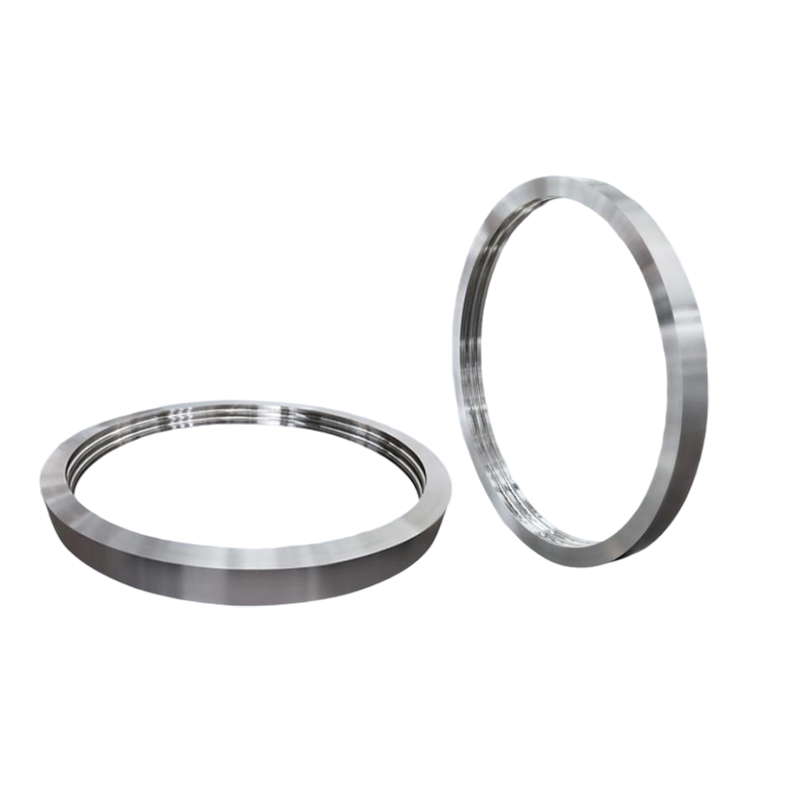
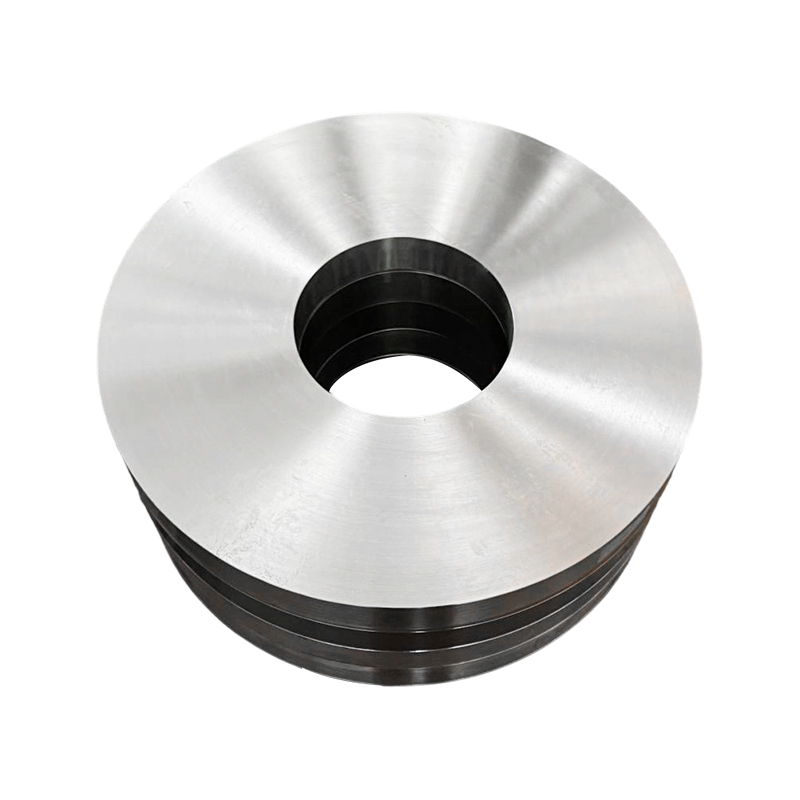
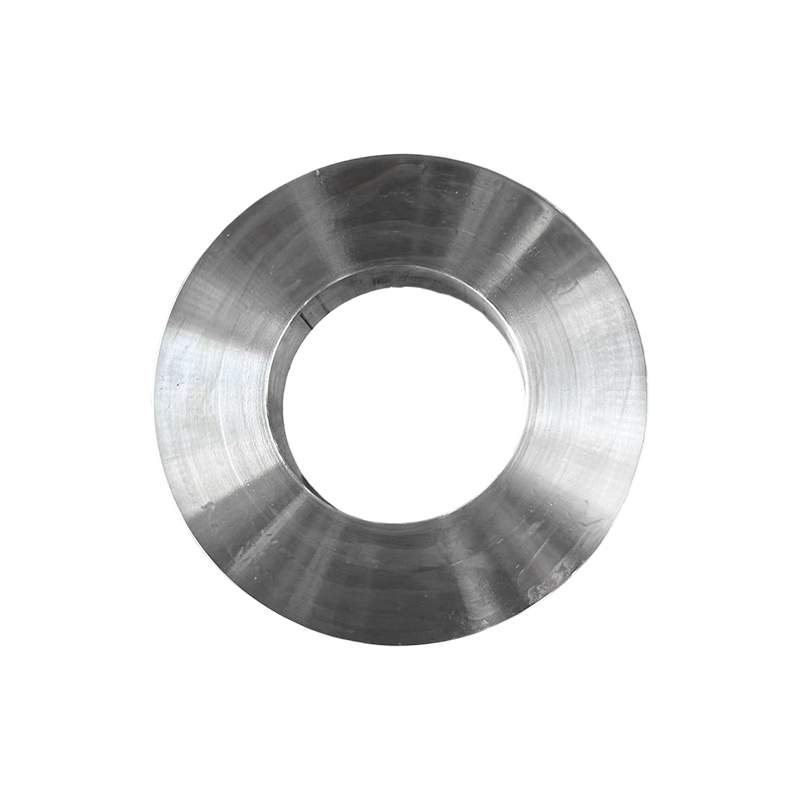
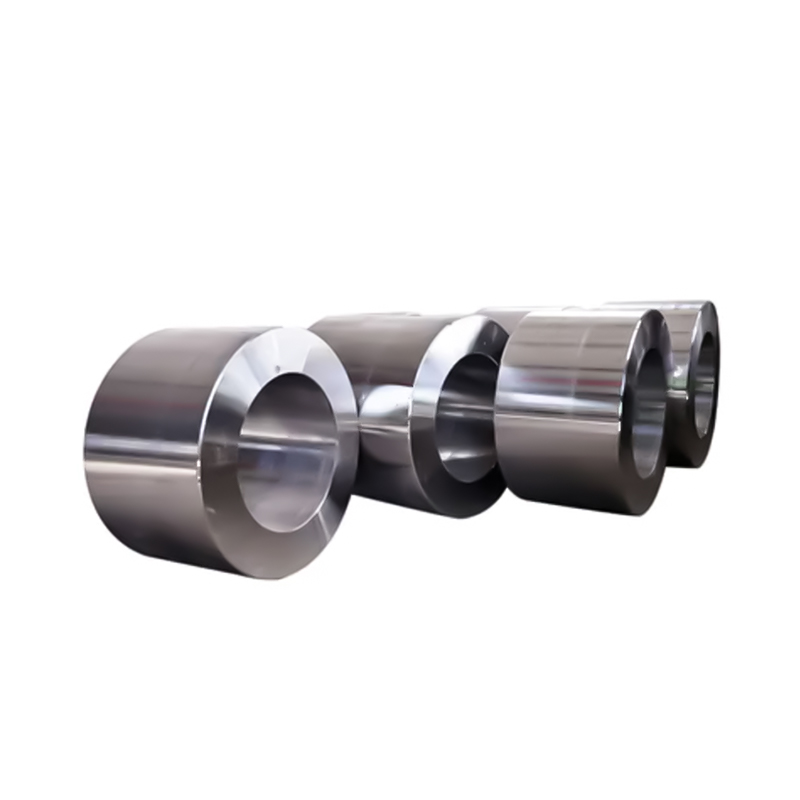
Ring forging is a general term describing any forging process that produces a ring-shaped component — a hollow, cylindrical part with a round cross-section. The category includes both rolled ring forging (the dominant industrial method) and open die forging techniques adapted for ring geometries.
What all ring forging methods share is the application of compressive force to a heated metal billet, which refines the grain structure and produces mechanical properties far superior to castings or machined bar stock. Forged rings are used in aerospace turbines, pressure vessels, wind energy flanges, bearings, and heavy industrial equipment — anywhere high strength-to-weight ratio and reliability under cyclic stress are non-negotiable.
Rolled Ring Forging: Process and Advantages
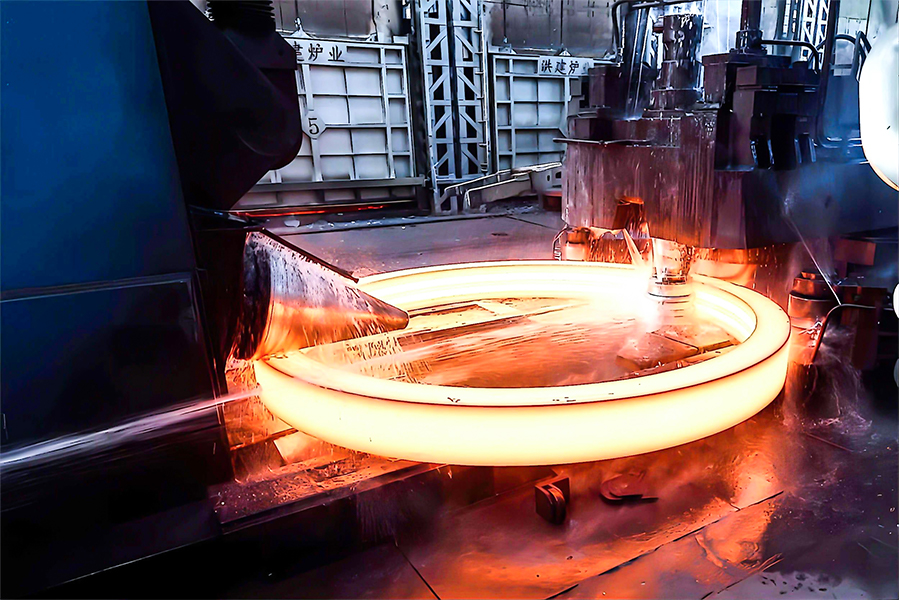
Rolled ring forging — also called ring rolling — is a specialized hot forging process that begins with a pre-formed donut-shaped preform (a pierced billet) and progressively rolls it between a driven roll and an idler roll to reduce wall thickness and increase diameter. An axial roll controls height simultaneously.
The Ring Rolling Process Step by Step
- A round billet is cut to a precise weight and heated to the material's forging temperature — typically 1,100°C to 1,250°C for carbon steel, or higher for superalloys.
- The billet is upset (compressed axially) to increase diameter and reduce height, then punched to create the central hole — forming the preform ring.
- The preform is placed on a ring rolling mill. The main roll rotates and drives the ring while an idler roll applies radial pressure, progressively thinning the wall.
- Axial (conical) rolls control the ring's height and prevent flaring during the rolling process.
- The ring grows in diameter until the target dimensions are reached. Centering rolls maintain roundness throughout.
- The ring is removed, allowed to cool in a controlled manner, and then heat treated, inspected, and rough or finish machined.
Why Rolled Ring Forging Produces Superior Mechanical Properties
The rolling action causes the metal's grain flow to follow the contour of the ring circumferentially. This circumferential grain orientation is the key structural advantage — it aligns the strongest direction of the material with the hoop stresses the ring will experience in service. By contrast, a ring machined from a solid bar has radially interrupted grain flow, leaving weaker planes exposed to operating loads.
In practice, rolled ring forgings in AISI 4140 steel can achieve tensile strengths exceeding 1,000 MPa with impact toughness values that castings of the same alloy cannot match. For aerospace-grade titanium rings (Ti-6Al-4V), rolled ring forgings routinely meet AMS 4928 and AMS 6931 specifications with consistent fatigue life critical for rotating components.
Size Range and Materials
Ring rolling mills can produce rings from as small as 75mm in diameter up to 10 meters or more in diameter for large flanges and pressure vessel components. Wall thicknesses can be as thin as 12mm or as heavy as several hundred millimeters. Common materials include:
- Carbon and alloy steels (AISI 1045, 4140, 4340)
- Stainless steels (304, 316, 17-4 PH)
- Titanium alloys (Ti-6Al-4V, Ti-3Al-2.5V)
- Nickel superalloys (Inconel 718, Waspaloy, René 41)
- Aluminum alloys (6061, 7075)
- Copper and bronze alloys
Open Die Forging: Process and When It's the Right Choice
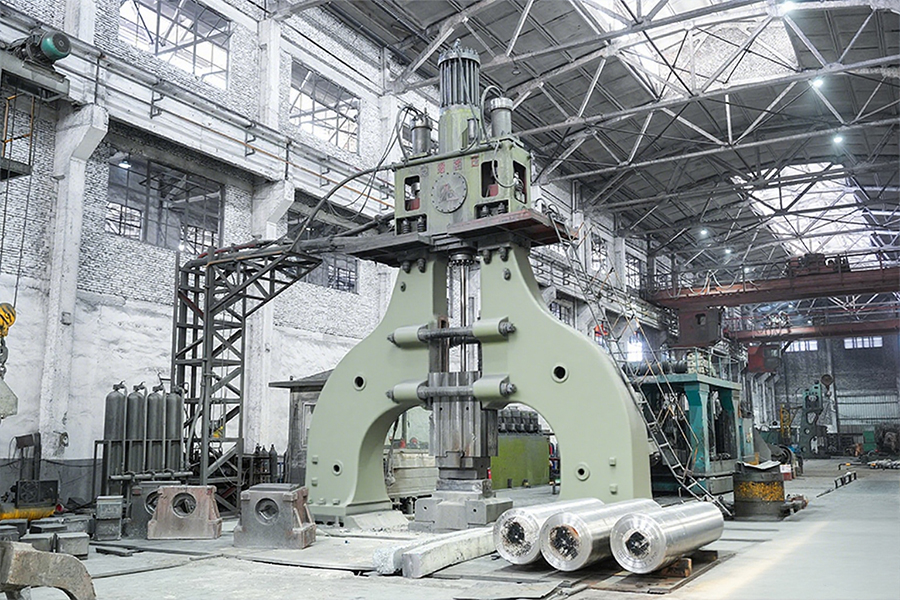
Open die forging (also called free forging or smith forging) shapes a heated metal workpiece between flat, V-shaped, or contoured dies that do not fully enclose the material. The operator repositions and rotates the workpiece between hammer or press strokes to achieve the desired shape incrementally. There are no closed impression dies — hence the term "open."
How Open Die Forging Produces Rings
To produce a ring shape using open die forging, the operator upsets a billet, punches a hole through its center, and then uses a mandrel bar inserted through the hole along with a flat top die to forge the ring by rotating it incrementally under the press. This is a slower, more labor-intensive process than ring rolling, and dimensional tolerances are significantly wider — typically ±3mm to ±10mm or more compared to the tighter tolerances achievable in ring rolling.
Strengths of Open Die Forging
- Unlimited shape flexibility — open die forging can produce shafts, discs, hubs, cylinders, and complex custom profiles that ring rolling mills cannot accommodate.
- Very large part sizes — open die presses can work ingots weighing hundreds of metric tons, producing components over 20 meters in length or rings several meters in diameter for nuclear or petrochemical applications.
- Low tooling cost — no custom dies are required, making open die forging economical for one-off or very low-volume parts where investment in closed impression dies cannot be justified.
- Internal defect closure — the progressive working of the metal through multiple press strokes closes internal porosity and segregation from the original ingot, improving overall soundness.
Limitations of Open Die Forging
- Wide dimensional tolerances require significant machining stock, increasing material waste and machining costs.
- Grain flow is less predictable and consistent than in ring rolling, particularly for ring geometries.
- Labor-intensive operation with longer cycle times makes it less cost-effective for mid-to-high volume production.
Direct Comparison: Rolled Ring Forging vs Open Die Forging
| Parameter | Rolled Ring Forging | Open Die Forging |
|---|---|---|
| Dimensional Tolerance | ±1mm – ±3mm (tighter) | ±3mm – ±10mm+ (wider) |
| Grain Flow | Circumferential, consistent | Variable, operator-dependent |
| Tooling Cost | Low (standard rolls) | Very low (flat/simple dies) |
| Material Utilization | High (near-net shape) | Lower (more machining stock) |
| Production Volume | Single piece to high volume | Best for low volume / one-offs |
| Part Shape Capability | Rings and flanges only | Rings, shafts, discs, custom |
| Max Diameter | Up to ~10m (mill-dependent) | 20m+ possible |
| Surface Finish (as-forged) | Better | Rougher |
| Cycle Time per Part | Shorter | Longer |
Contour Rolled Ring Forging: An Advanced Variation
Standard ring rolling produces rings with a rectangular cross-section. Contour rolling (also called profile ring rolling) uses shaped rolls to produce rings with complex cross-sectional profiles — T-sections, L-flanges, grooves, or tapered walls — directly during the rolling process.
This dramatically reduces the volume of material that must be removed by machining. For example, a jet engine turbine disk ring produced via contour rolling may arrive at the machine shop with only 15% to 25% of material remaining to be removed, compared to 50% or more for a rectangular-section open die forged ring. At aerospace alloy prices — Inconel 718 can cost over $50/kg — this material saving alone justifies the additional tooling investment in shaped rolls.
Industry Applications by Process Type
| Industry | Rolled Ring Forging Applications | Open Die Forging Applications |
|---|---|---|
| Aerospace | Turbine disks, engine casings, bearing races | Large structural frames, prototype components |
| Oil & Gas | Pipeline flanges, valve bodies, wellhead rings | Large pressure vessel shells, custom subsea bodies |
| Wind Energy | Tower flanges, slewing bearing rings | Main shafts, large hub forgings |
| Nuclear | Reactor coolant pump rings, pressure rings | Reactor vessel shells, large nozzle forgings |
| Mining & Heavy Industry | Rotary kiln rings, mill liners, gear blanks | Crusher shafts, press columns, large rolls |
Quality Standards and Inspection for Forged Rings
Forged rings for critical applications must meet stringent material and inspection standards. Common standards applied to rolled ring and open die forgings include:
- ASTM A290 — carbon and alloy steel rings for turbines and retaining rings
- ASTM A694 — carbon and alloy steel forgings for high-pressure transmission flanges
- AMS 2375 — nickel alloy ring forgings for aerospace applications
- EN 10243 — European standard for steel die forgings (applicable tolerances)
- ASME Section IX / Section VIII — pressure vessel and boiler forgings
Inspection typically includes ultrasonic testing (UT) to detect internal discontinuities, magnetic particle inspection (MPI) or liquid penetrant testing (LPT) for surface defects, dimensional verification, and mechanical property testing from forging test coupons representing each heat and forging lot.
Choosing the Right Forging Method for Your Application
Use these practical decision criteria when specifying a ring forging process:
- If the part is a ring or flange and volume is one piece or higher — rolled ring forging is almost always the better choice for cost, grain quality, and near-net shape efficiency.
- If the part requires a complex non-ring profile or is very large — open die forging provides the shape flexibility and scale that ring rolling cannot.
- If machining cost and material waste are primary concerns — specify contour rolled ring forging to minimize the buy-to-fly ratio, especially in expensive alloys.
- If structural integrity documentation is required — both processes can meet full traceability and third-party inspection requirements; confirm that your supplier is certified to the relevant ASTM, AMS, or EN standard for your application.
- If lead time is critical — rolled ring forging generally offers shorter lead times for standard geometries due to the absence of custom die fabrication and faster cycle times per piece.
 Previous