
 English
 Español
 русский
News
Home / News / Industry News / Forged 7075 vs 6061 Aluminum: Tensile Strength, Anodizing & Machinability
Choosing between forged 7075 and 6061 aluminum alloys is a recurring decision for engineers and procurement teams who need lightweight components with predictable mechanical performance. Although both are age-hardenable wrought aluminum alloys, their chemical families, strength ceilings, surface behavior, and machining costs differ substantially. This guide compares forged 7075 vs 6061 aluminum alloys on the three factors that matter most in precision-forged parts: tensile strength, anodizing quality, and machinability.
The practical differences begin at the ingot. Alloy 7075 belongs to the aluminum-zinc-magnesium-copper (Al-Zn-Mg-Cu) system, while 6061 belongs to the aluminum-magnesium-silicon (Al-Mg-Si) system. The alloying philosophy is simple: 7075 is designed to maximize strength through dense precipitation of MgZn2 particles, whereas 6061 emphasizes well-rounded performance with good corrosion resistance and weldability.
| Element | 7075 (wt%) | 6061 (wt%) |
|---|---|---|
| Zinc (Zn) | 5.1 – 6.1 | 0.25 max |
| Magnesium (Mg) | 2.1 – 2.9 | 0.8 – 1.2 |
| Copper (Cu) | 1.2 – 2.0 | 0.15 – 0.40 |
| Silicon (Si) | 0.40 max | 0.40 – 0.80 |
| Chromium (Cr) | 0.18 – 0.28 | 0.04 – 0.35 |
| Iron (Fe) | 0.50 max | 0.70 max |
The high zinc and copper content in 7075 drives precipitation hardening. In 6061, magnesium and silicon form Mg2Si precipitates, which deliver moderate strength while keeping elongation and corrosion performance balanced. That difference cascades into every later property.
In the T6 condition, the most common heat treatment for both alloys, forged 7075 delivers a yield strength of roughly 435–505 MPa and an ultimate tensile strength of 510–570 MPa. Forged 6061-T6 typically reaches 240–275 MPa yield and 290–310 MPa ultimate tensile strength. In practical terms, 7075 offers approximately 80% higher yield strength than 6061.
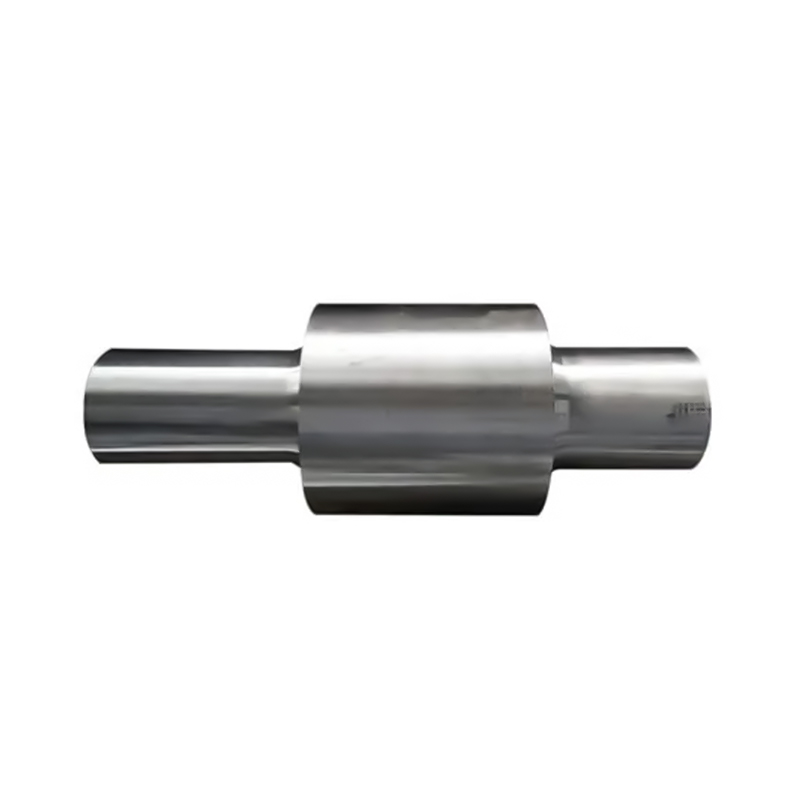
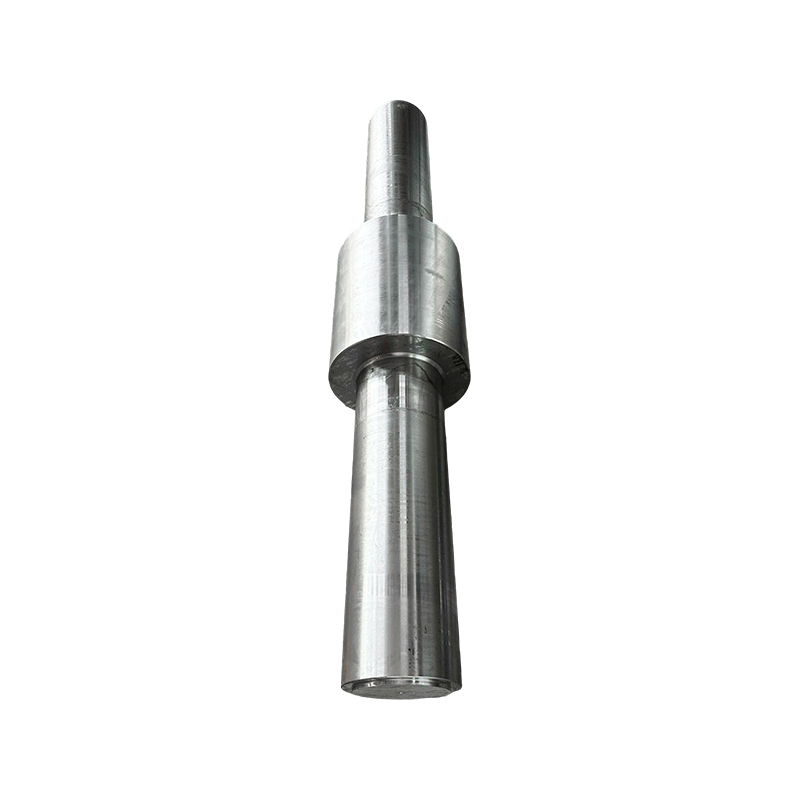
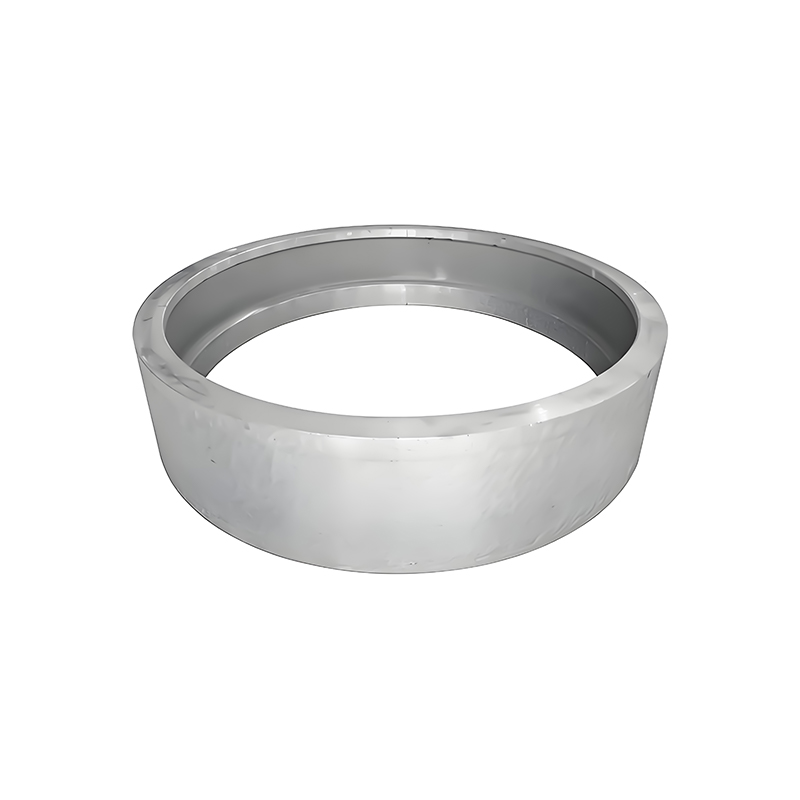 7075 Aluminum Alloy Forgings for High-Strength Structural PartsWith roughly 80% higher yield strength than 6061 in T6 condition, 7075 forgings suit heavy-load components like gears and flanges, where reducing section size lowers weight while maintaining load capacity.View Product →
That gap comes from the Zn-Mg-Cu system: 7075 precipitates are coarser and more numerous after artificial aging, blocking dislocation movement more effectively. For structural components such as forged gears, shaft flanges, and bearing housings in wind power and heavy machinery, the extra strength allows section sizes to be reduced, lowering mass without sacrificing load capacity.
Elongation tells a different story. 6061 typically shows 10–14% elongation in T6, while 7075 sits around 6–10%. If energy absorption or post-forging formability is critical, 6061 is the more forgiving choice.
Anodizing is a common post-forging operation for aluminum parts that need wear resistance, corrosion protection, or a specific aesthetic finish. Alloy 6061 is widely regarded as one of the best aluminum alloys for anodizing. Its low copper content produces a clear, bright, uniform coating that accepts dyes consistently, whether the requirement is clear, black, or a custom color.
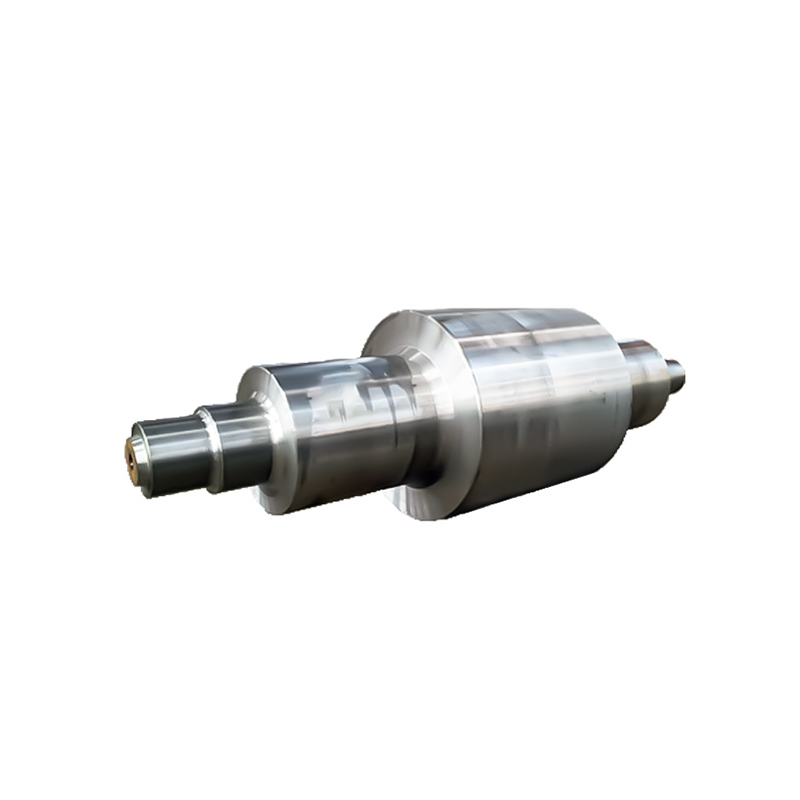
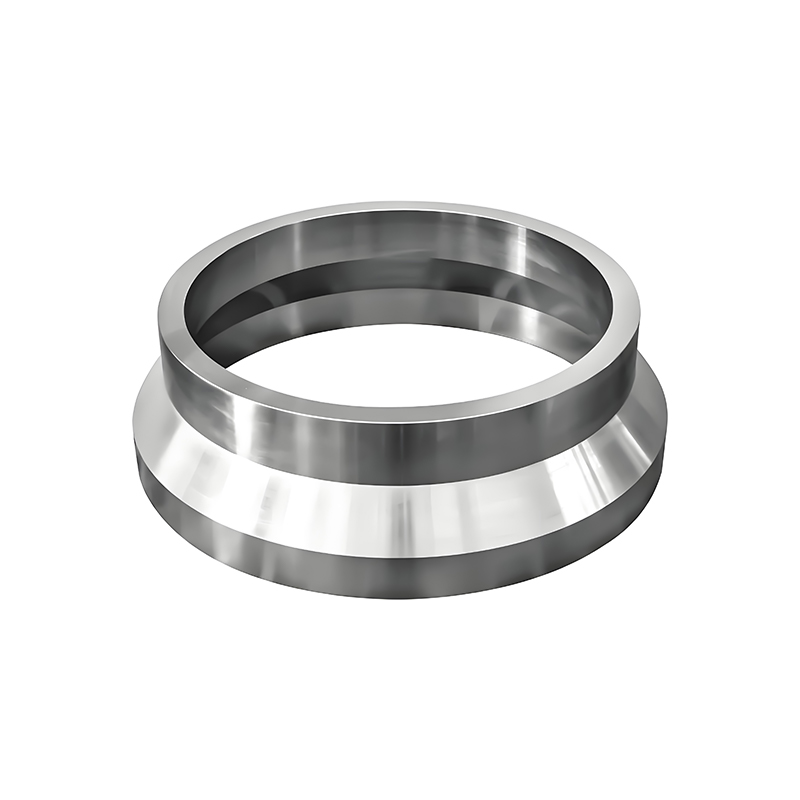 6061 Aluminum Alloy Forgings with Superior Anodizing ResponseKnown for consistent, bright anodized finishes, 6061 forgings balance strength, plasticity, and cost, making them a practical choice for structural parts that require clear or colored anodic coatings.View Product →
Alloy 7075 anodizes acceptably but with trade-offs. Copper-rich intermetallic particles can cause slightly darker or uneven tints in clear anodized finishes, especially when part geometry creates varying current densities. In practice, 7075 is often specified with dark anodizing colors or used without anodizing when the application is primarily structural. For both alloys, Type II sulfuric acid and Type III hard coat anodizing are possible; hard coat anodizing is frequently applied to 7075 to restore wear resistance that high strength alone does not provide.
Machinability is often the deciding factor in production cost. Alloy 6061 is famously easy to machine: it produces short, well-broken chips, allows high cutting speeds, and leaves a fine surface finish that often eliminates secondary polishing. With proper coolant and standard carbide tooling, 6061 forgings can be turned, milled, and drilled at rates that maximize throughput.
7075 is less forgiving but not difficult. The same zinc and copper that raise strength also increase work hardening and produce tougher, stringier chips. Operators typically reduce cutting speeds by 20–30% compared to 6061, use sharper insert geometries, and rely on rigid setups to avoid vibration. The result is a clean, repeatable finish, but cycle times and tooling costs are naturally higher.
One important note: forged material generally machines more predictably than cast material because the forging process closes porosity and refines the grain structure. That advantage applies to both 7075 and 6061 when the part is supplied as a forged blank rather than a casting.
Both alloys are forgeable, but their process windows differ. Alloy 6061 has a wide forging temperature range, roughly 400–500°C, and lower deformation resistance. That makes it ideal for complex closed-die geometries and for open-die operations like forged shafts, rings, and cylinders. Alloy 7075 requires a tighter window, approximately 350–420°C, and higher press forces. It is best suited to simpler geometries where the payoff is maximum mechanical strength.
Heat treatment also differs in sensitivity. Both alloys are solution treated and artificially aged to the T6 condition. 7075 needs precise quench control to avoid distortion, while 6061 is more tolerant. For a supplier such as Maiterio Intelligent Equipment, which operates open-die forging lines, ring rolling mills, heat treatment furnaces, and CNC machining workshops, handling both alloys in-house is a routine capability.
No alloy is universally superior; the choice depends on the loaded environment, surface requirements, and budget. Use this decision guide:
For a quick reference, the table below summarizes the main differences in forged condition:
| Criteria | 7075-T6 | 6061-T6 |
|---|---|---|
| Ultimate tensile strength | 510–570 MPa | 290–310 MPa |
| Yield strength | 435–505 MPa | 240–275 MPa |
| Anodizing uniformity | Good, darker tint | Excellent, bright finish |
| Machinability | Moderate | Excellent |
| Weldability | Poor | Good |
| Typical cost | Higher | Lower |
Forged 7075-T6 has roughly 80% higher yield strength than forged 6061-T6. 7075 is the first choice when maximum strength is required. 6061 should be selected when moderate strength combined with better corrosion resistance and weldability is sufficient.
Both alloys can be anodized, but 6061 produces a brighter and more uniform clear anodized coating. 7075 tends to develop a slightly darker or less uniform tint; choosing dark anodizing colors minimizes this effect.
7075 requires about 20–30% lower cutting speeds and sharper tooling due to higher hardness and a greater work-hardening tendency. 6061 is more economical to machine, especially in high-volume CNC production.
Forged 7075 is favored in aerospace, defense, and high-performance automotive applications. Forged 6061 is widely used in wind power, construction machinery, marine equipment, and general industrial machinery where corrosion resistance and cost efficiency matter.
Maiterio Intelligent Equipment maintains dedicated aluminum alloy forging capabilities covering 7075, 6061, 2A12, 5083, and 5A06. The facility includes open-die forging hammers, seamless ring rolling mills, heat treatment furnaces, and more than 70 CNC machines, so forged blanks can be delivered finish-machined and ready for assembly. For engineers comparing forging suppliers, practical shop-floor experience matters as much as alloy data sheets — learn more in our guide to choosing the right forging supplier.

No.1317 Gangcheng Road, Daxin Town, Zhangjiagang, Jiangsu, China
WhatsApp:+86-151 5156 6388 Terry Huang
+86-151 5156 6388 Terry Huang
+86-138 1299 2607 Maggie Xia
Terry Huang -VP of Sales
[email protected]
Maggie Xia -VP of Sales
[email protected]

 Previous