
 English
 Español
 русский
News
Home / News / Industry News / 5083 vs 5A06 Aluminum Forgings: Corrosion Resistance in Marine and Heavy Machinery
Selecting an aluminum alloy for corrosive environments is never a simple spec-sheet exercise. When the application involves seawater, mining mud, excavator tracks, or offshore support equipment, the difference between a strong alloy and a corrosion-resistant alloy can determine a component’s entire service life. 5083 and 5A06 are both aluminum-magnesium workhorses favored for these conditions, yet they belong to different standards families, carry different magnesium levels, and respond differently to forging and welding. This article compares their corrosion resistance and practical performance in marine and heavy machinery applications.
5083 is the international benchmark marine aluminum alloy, covered by ASTM B928, EN 573, and ISO 6361. Its nominal magnesium content of 4.0–4.9 percent places it in the non-heat-treatable Al-Mg family that delivers excellent corrosion resistance and weldability. 5A06, defined under the Chinese GB/T 3190 standard, is also a non-heat-treatable Al-Mg alloy but carries a higher magnesium range of 5.8–6.8 percent, producing higher as-forged strength and a slightly different corrosion profile.
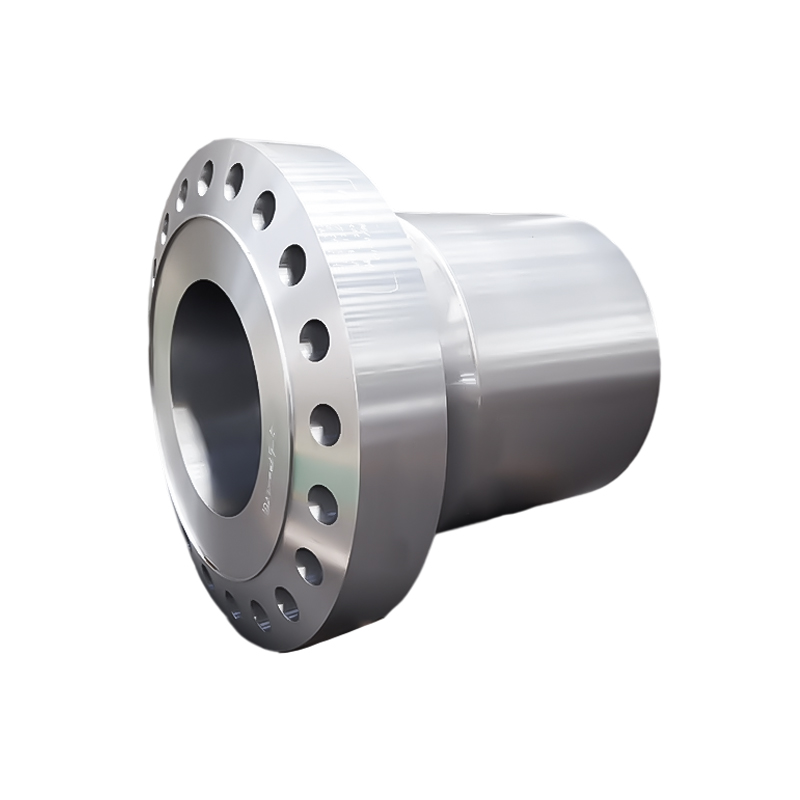
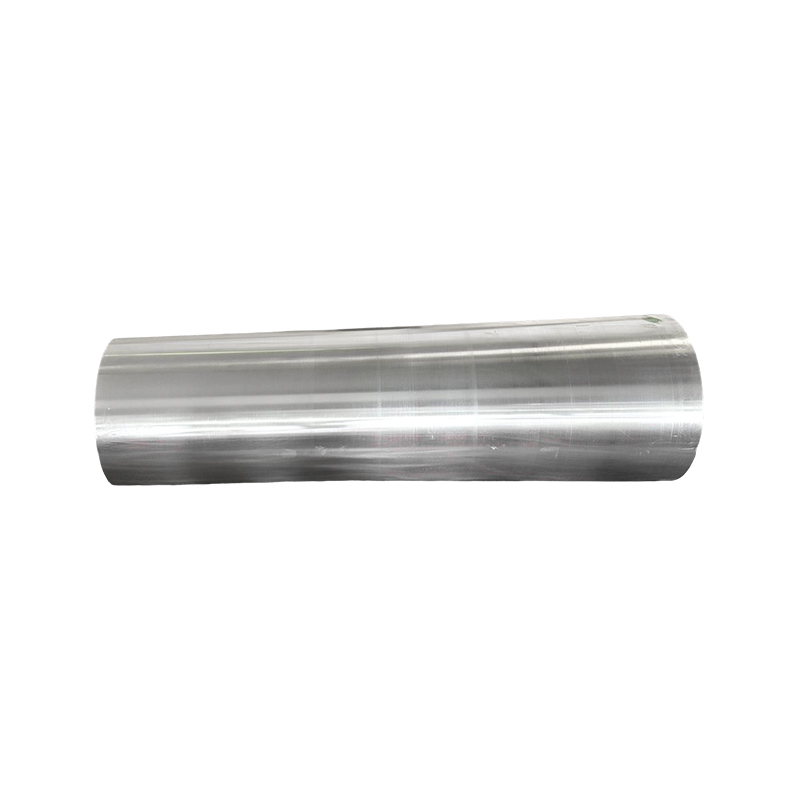 5083 Marine-Grade Aluminum Alloy Forgings for Ships and Pressure VesselsThis alloy is the international benchmark for marine aluminum, offering exceptional corrosion resistance and weldability. Its 4.0–4.9% magnesium content suits shipbuilding and cryogenic applications, making it a reliable choice for critical structural components.View Product →
Both alloys are available as forged rings, shafts, discs, and custom-shaped components. Suppliers such as Maiterio produce aluminum alloy forgings with controlled forging ratios and documented process parameters. The practical differences begin with chemistry.
| Element | 5083 (wt%) | 5A06 (wt%) |
|---|---|---|
| Mg | 4.0–4.9 | 5.8–6.8 |
| Mn | 0.40–1.0 | 0.50–0.80 |
| Si | ≤ 0.40 | ≤ 0.40 |
| Fe | ≤ 0.40 | ≤ 0.40 |
| Cu | ≤ 0.10 | ≤ 0.10 |
| Zn | ≤ 0.25 | ≤ 0.20 |
| Ti | ≤ 0.15 | 0.02–0.10 |
| Al | Remainder | Remainder |
The extra 1.5–2 percent magnesium in 5A06 is the single largest differentiator. Magnesium atoms go into solid solution and raise mechanical strength, but they also change how the alloy behaves when heated during forging, welding, or prolonged service.
Seawater is a chloride-rich electrolyte that aggressively attacks aluminum’s protective oxide film. The practical corrosion behavior of 5083 and 5A06 depends less on total magnesium content and more on how the alloy is processed and where its service temperature sits.
5083 has the strongest documented track record of any aluminum alloy in marine service. The 4.5 percent magnesium level is deliberately balanced: it provides high strength while keeping the alloy below the threshold where sensitization, the precipitation of an aluminum-magnesium beta phase along grain boundaries, becomes a serious concern. In normal tempers, 5083 resists pitting, exfoliation, and stress corrosion cracking even after decades of immersion.
5A06 behaves similarly in general seawater exposure. Its higher magnesium content produces slightly better mechanical properties and comparable resistance to pitting and general corrosion. However, the higher magnesium concentration also moves the alloy closer to the sensitization threshold. Long-term exposure above 65 degrees Celsius, or slow cooling after forging or welding, can precipitate the beta phase and create a path for intergranular corrosion and stress corrosion cracking.
Key takeaway: if the component will see sustained service below 65 degrees Celsius and must meet international marine specifications, 5083 is the proven default. If 5A06 is chosen, the forging process must include controlled finishing temperature and rapid cooling to preserve corrosion resistance.
Marine applications are not the only environment where these alloys earn their keep. Heavy machinery, from excavators and wheel loaders to mining trucks and conveyor systems, exposes forged parts to acidic soils, groundwater, chlorides from dust suppression, and constant abrasion that grinds away protective oxide layers.
For forged wheel hubs, connecting rings, gear blanks, and structural components in these machines, both 5083 and 5A06 provide good resistance to atmospheric and soil corrosion. Selection is usually driven by mechanical loads rather than corrosion alone. 5A06 forgings deliver roughly 10–15 percent higher tensile strength, which is valuable for lifting points, highly stressed gears, and cylinder components, while 5083 offers easier weldability and a wider qualification base.
One important design rule applies to both alloys: avoid galvanic corrosion when aluminum parts are bolted or welded to steel structures. Use insulated fasteners, compatible washers, and isolate the aluminum surface with a suitable coating at every interface.
| Property | 5083-H112 | 5A06-H112 |
|---|---|---|
| Tensile Strength (MPa) | 290–315 | 315–355 |
| Yield Strength (MPa) | 145–200 | 165–220 |
| Elongation (%) | 12–16 | 10–14 |
| Hardness (HBW) | 75–85 | 85–95 |
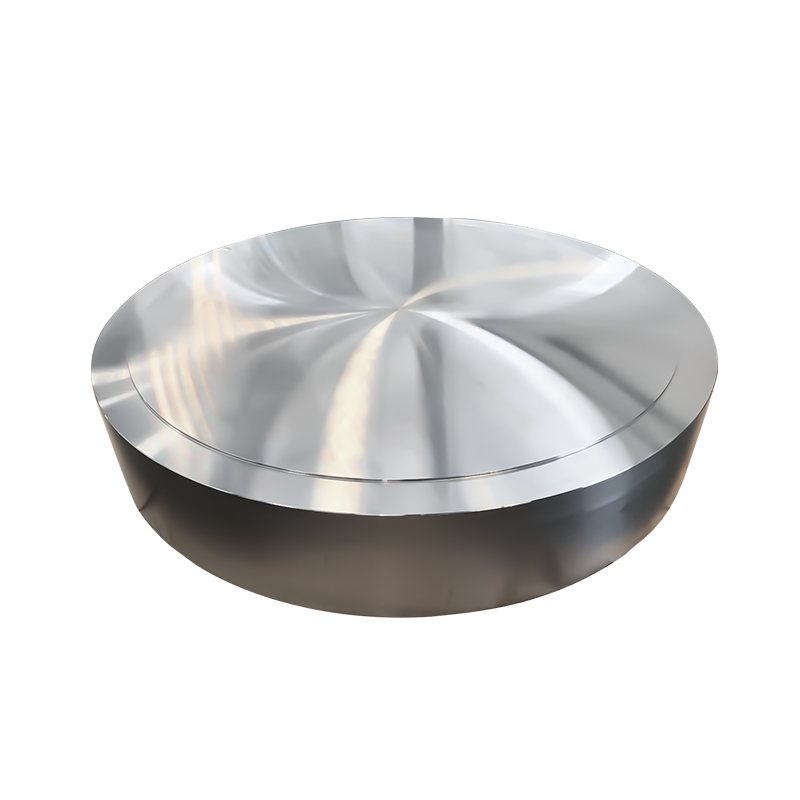
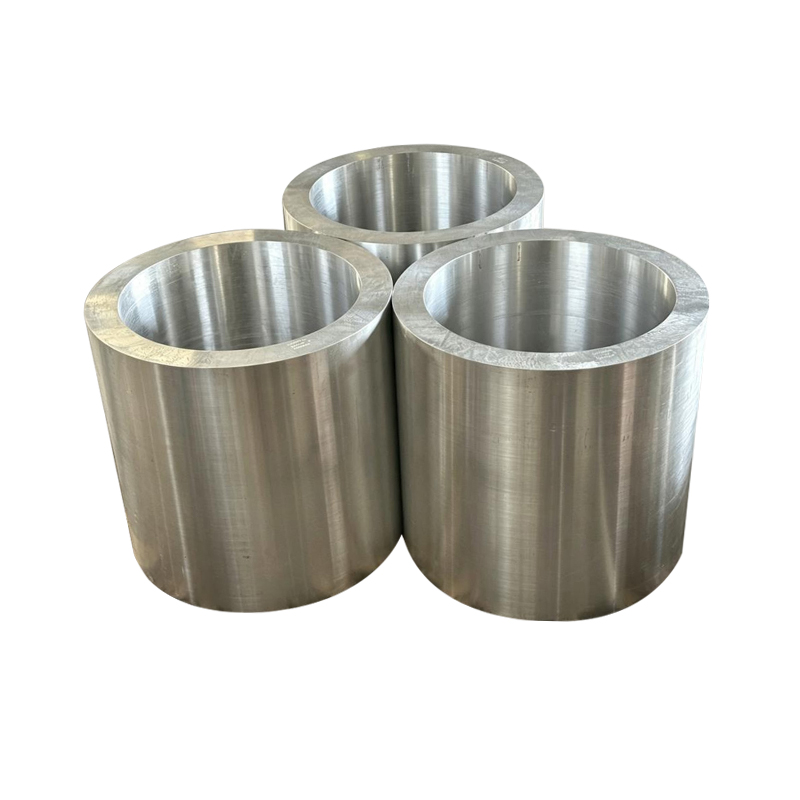 5A06 High-Strength Aluminum Alloy Forgings for Marine and Aerospace UseWith a higher magnesium range of 5.8–6.8%, this non-heat-treatable Al-Mg alloy delivers improved as-forged strength and strong seawater resistance. It is ideal for demanding applications in marine engineering, aerospace, and heavy machinery where durability matters.View Product →
Because both alloys are non-heat-treatable, final strength is developed through strain hardening, cold working, and the forging process itself. Forging refines the cast dendritic structure, closes internal porosity, and aligns grain flow with the component’s load path, which also improves resistance to stress corrosion cracking in the through-thickness direction.
Both 5083 and 5A06 forge well in the 420–480 degrees Celsius range and are readily processed by open-die and ring-rolling methods. The critical difference is what happens after forging. If a heavy section cools slowly through the 200–300 degrees Celsius range, the beta phase can precipitate even in 5083, and the risk is significantly higher in 5A06 because of its elevated magnesium content.
Responsible aluminum forging practice therefore includes finishing the forging at a controlled temperature, followed by rapid cooling, typically water quenching, to keep the magnesium in solid solution. For critical marine-grade components, a post-forge solution anneal and quench restores the maximum corrosion-resistant condition.
For ring-shaped and cylindrical marine components, the comprehensive guide to seamless rolled ring forging engineering excellence explains how grain flow and process control directly influence the finished part’s corrosion and fatigue performance.
Use the following decision table as a first-pass reference for typical marine and heavy machinery scenarios.
| Application Context | Recommended | Reason |
|---|---|---|
| Seawater immersion below 65 deg C | 5083 | Proven track record and qualification data |
| High-strength structural forgings | 5A06 | 10–15% higher tensile strength |
| Welded marine structures | 5083 | Lower sensitization risk during welding |
| Heavy machinery in soil and mud | Either | Selection driven by mechanical loads |
| International export projects | 5083 | ASTM/EN/ISO recognition |
No. They are both aluminum-magnesium alloys, but 5083 is the ASTM/EN/ISO designation with 4.0–4.9 percent magnesium, while 5A06 is the Chinese GB/T designation with 5.8–6.8 percent magnesium. They overlap in applications but are not drop-in substitutes.
Both offer excellent resistance to seawater corrosion when the service temperature remains below 65 degrees Celsius and the forging is properly processed. 5083 has a longer documented service history and lower sensitization risk; 5A06 can match it in many cases but requires stricter control of cooling rates after forging and welding.
Yes, 5A06 is widely used in Chinese-built marine and heavy equipment. The choice should be confirmed through engineering review, standards compliance, welding procedure qualification, and corrosion testing against the specific design specification.
ER5356 or ER5556 filler wire with argon shielding is standard for both alloys. Interpass temperature must be controlled to avoid heating the base metal into the sensitization range for extended periods.
5083 and 5A06 are two high-performance aluminum-magnesium alloys with more similarities than differences. For marine components, welded assemblies, and internationally certified projects, 5083 remains the safest and most documented choice. For heavy machinery parts where higher strength matters and the component can tolerate a slightly stricter process window, 5A06 offers a mechanical edge. In both cases, the corrosion resistance of the final forged part depends as much on the forge’s process control as on alloy chemistry. Verify the supplier’s forging temperature management, cooling practice, and test documentation before finalizing your material specification.

No.1317 Gangcheng Road, Daxin Town, Zhangjiagang, Jiangsu, China
WhatsApp:+86-151 5156 6388 Terry Huang
+86-151 5156 6388 Terry Huang
+86-138 1299 2607 Maggie Xia
Terry Huang -VP of Sales
[email protected]
Maggie Xia -VP of Sales
[email protected]

 Previous