
 English
 Español
 русский
News
Home / News / Industry News / Why Forged 2A12 Aluminum Outperforms Cast Components in Fatigue Stress Applications
Aluminum alloy 2A12 has become a standard material for structural parts that must survive repeated loading. Yet the same chemical composition can behave very differently depending on how it is shaped into a finished component. When the application is dominated by fatigue stress, forged 2A12 aluminum consistently outperforms cast components of similar nominal composition. The gap is rooted not in alloy chemistry alone, but in the microstructure created by two fundamentally different manufacturing processes.
2A12 is a wrought aluminum alloy in the 2xxx series, with copper and magnesium as its principal alloying elements. It is the Chinese national standard counterpart of 2024, a material with a long service record in aircraft structures, vehicle frames, and other components where strength-to-weight ratio is decisive. After solution treatment at roughly 495 degrees C, quenching, and natural or artificial aging, 2A12 reaches tensile strength of 440 to 470 MPa and yield strength of 280 to 350 MPa, depending on temper and product form.
For fatigue-critical design, the high ratio of fatigue strength to density gives 2A12 an advantage over many steel grades. Lighter moving parts produce lower inertia loads, reduce system vibration, and permit higher operating speeds. The material, however, delivers its full potential only when the manufacturing route preserves its internal integrity.
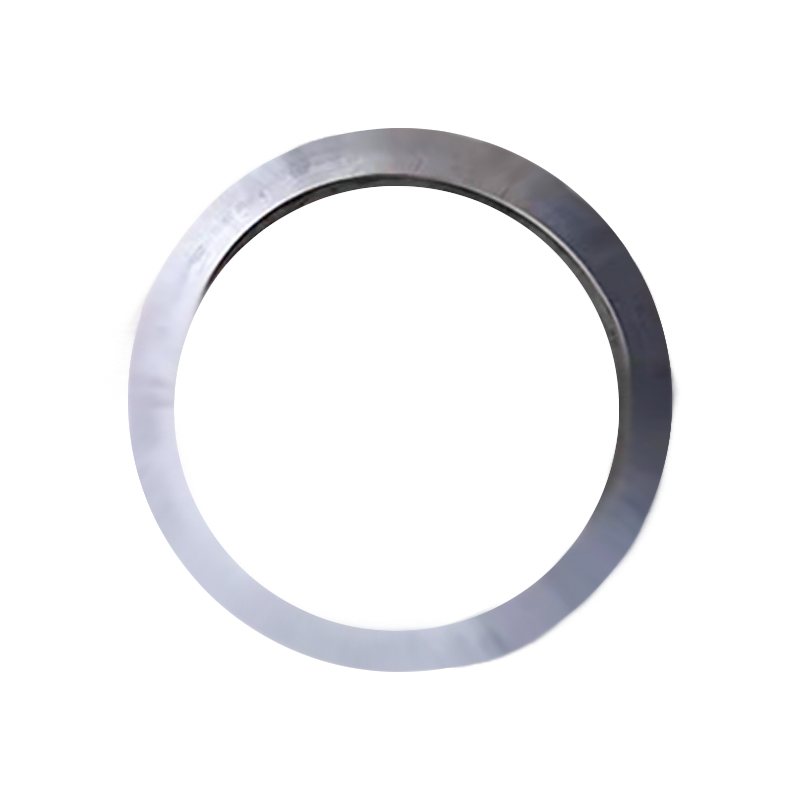 2A12 Aluminum Alloy Forgings with CNC MachiningThese 2A12 forgings offer high fatigue strength and a favorable strength-to-weight ratio, making them relevant for lightweight moving parts. CNC machining to near-final dimensions supports efficient transition from alloy to finished component.View Product →
At Maiterio Intelligent Equipment, 2A12 is produced as forged aluminum alloy components and supplied with CNC machining to near-final dimensions, giving design teams a direct route from alloy specification to finished part.
Casting forms a component by pouring liquid metal into a mold cavity and allowing it to solidify. The melt contains dissolved gases, and the shrinkage that occurs during solidification can leave porosity. In an as-cast structure, dendrites grow in a tree-like pattern, alloying elements segregate between the dendrite arms, and oxide films may be trapped inside the metal. These discontinuities act as pre-existing cracks when the part is placed under repeated load.
Forging deforms solid metal under compressive force. The starting billet is heated to a plastic state and worked by hammering or pressing, which breaks up the dendritic skeleton, closes internal voids, and refines the grain structure. Because the metal flows along the direction of deformation, forged parts develop a fiber-like grain flow aligned with the principal stress path. The overall difference between these two manufacturing strategies is covered in more depth in the company's forging versus casting guide.
Fatigue failure begins with crack initiation at microscopic stress raisers. In a cast component, a pore or oxide inclusion can serve as the initiation site. Once a crack starts, each subsequent load cycle opens and extends it. The crack travels along the weakest internal plane, and in castings, that plane is usually close to the interdendritic boundaries where porosity and brittle eutectic phases coexist.
In a forged 2A12 component, the situation is fundamentally different. The hot-working process closes pores, welds internal voids, and aligns second-phase particles along the grain flow direction. A surface crack must then propagate across a dense, elongated grain structure, which absorbs more energy per cycle and slows growth. The result is both a higher fatigue limit and a longer safe life under equivalent alternating stress.
Engineers sometimes underestimate this because the static tensile properties of a casting can look acceptable. But fatigue life does not scale linearly with tensile strength; it is far more sensitive to microstructural discontinuities. That is why two parts made from the same 2A12 composition can differ by 30 to 50 percent in fatigue strength simply because one was forged and the other cast.
Typical design effect: forged 2A12 components deliver 30-50 percent higher fatigue strength than cast components of similar composition, with noticeably lower scatter in fatigue test results.
The following table lists typical values for heat-treated forged 2A12 and for a cast aluminum alloy of nominally similar composition. Real figures vary with section size, heat treatment, and testing method, but the relative pattern is consistent across published data.
| Property | Forged 2A12 | Cast 2A12-Type Alloy |
| Tensile Strength | 440-470 MPa | 300-340 MPa |
| Yield Strength | 280-350 MPa | 180-230 MPa |
| Fatigue Limit at 107 Cycles | 140-170 MPa | 75-95 MPa |
| Elongation | 14-20% | 3-8% |
| Porosity Level | Essentially Free | 1-4% by Volume |
Values are typical for material in the T4-type condition. Fatigue limit corresponds to rotating bending tests at room temperature.
Forged 2A12 components appear in machines where fatigue stress is a routine design limit rather than an exception. Three industry groups show the pattern clearly.
The company's aluminum alloy forging directory covers 2A12, 5083, 5A06, 6061, and 7075 with options for open-die and ring-rolled processes plus precision CNC finishing.
Selecting a forged 2A12 part for a fatigue-stress application is only the first step. The procurement specification should ask for evidence that the forging process and subsequent inspection produce a sound, repeatable product.
A supplier with its own forging lines, heat treatment, and CNC workshops can manage these variables in one quality loop and can respond faster when tests reveal a deviation.
2A12 is the Chinese national standard designation for an alloy very close to 2024 in the Aluminum Association system. The main elements, copper and magnesium, fall in the same ranges, but the precise impurity limits may differ. For engineering purposes, 2A12 forged components are often treated as equivalent to 2024 forgings when design data are converted correctly.
For simple fatigue-life comparison at the same stress level, castings normally show shorter life and wider scatter. Some advanced processes such as squeeze casting and hot isostatic pressing close internal porosity, but they add cost and still rarely achieve the fully dense, oriented grain structure of a forging at the same margin.
No. Solution treatment and aging cannot close internal voids. High-temperature exposure may change pore shape slightly and modify the surrounding microstructure, but the void remains. Hot isostatic pressing can collapse pores, yet the process is expensive and intended for premium castings.
Many industries use design factors of about 2.0 to 2.5 on fatigue strength for forged components and 3.0 to 4.0 for cast components when scatter is not fully quantified. The exact number depends on the failure consequence, inspection level, and statistical confidence required.
2A12 is not considered readily weldable with fusion processes. The alloy is prone to hot cracking and loses strength in the heat-affected zone. For fatigue-critical assemblies, mechanical fastening or integrally forged features are usually preferred over welding.
Fatigue stress is not a rare mode of failure in modern machinery; it is often the hidden limiting factor behind downtime and structural damage. The evidence from metallurgy and from service experience consistently points to the same conclusion: when a component spends its working life under cyclic loading, forging is a more reliable way to produce it. Forged 2A12 aluminum combines the alloy's high strength-to-weight ratio with a dense, grain-oriented, defect-controlled structure. Cast components of similar composition are convenient and can be cheaper in low-series production, but they sacrifice the microstructural quality that fatigue performance demands.
Designers and buyers who specify forged 2A12 components with verified composition, ultrasonic inspection, and controlled grain flow will get a part that meets static loads today and continues to meet cyclic loads for years.

No.1317 Gangcheng Road, Daxin Town, Zhangjiagang, Jiangsu, China
WhatsApp:+86-151 5156 6388 Terry Huang
+86-151 5156 6388 Terry Huang
+86-138 1299 2607 Maggie Xia
Terry Huang -VP of Sales
[email protected]
Maggie Xia -VP of Sales
[email protected]

 Previous