
 English
 Español
 русский
News
Home / News / Industry News / The Comprehensive Guide to Seamless Rolled Ring Forging: Engineering Excellence for High-Stress Applications
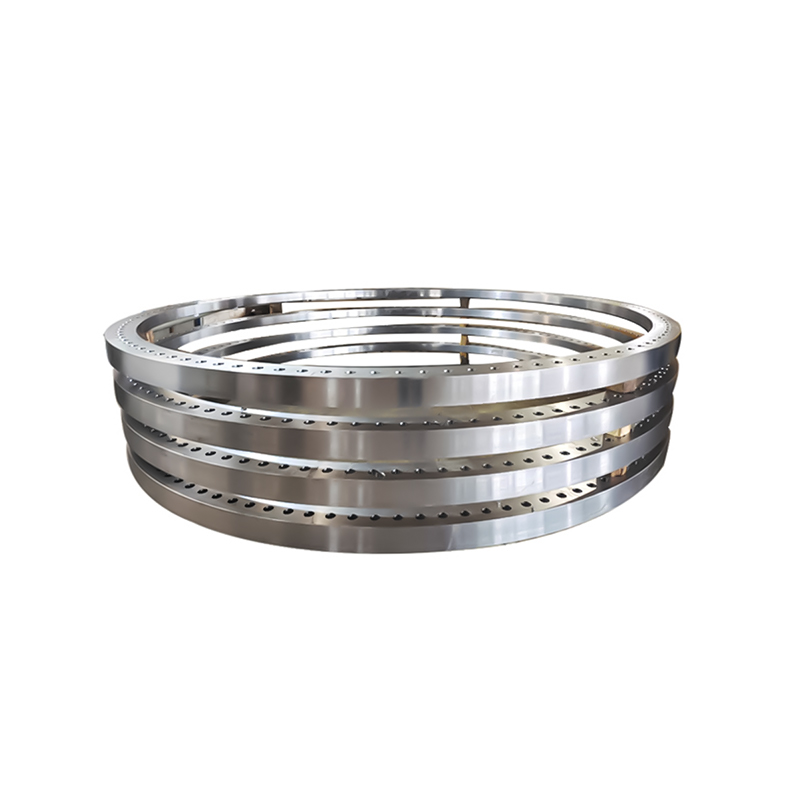
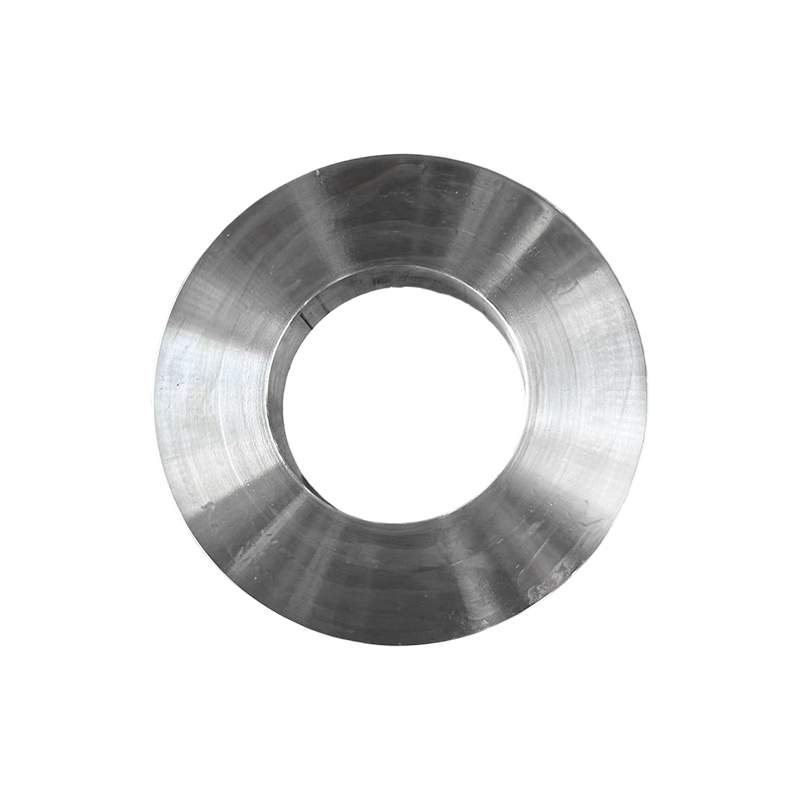
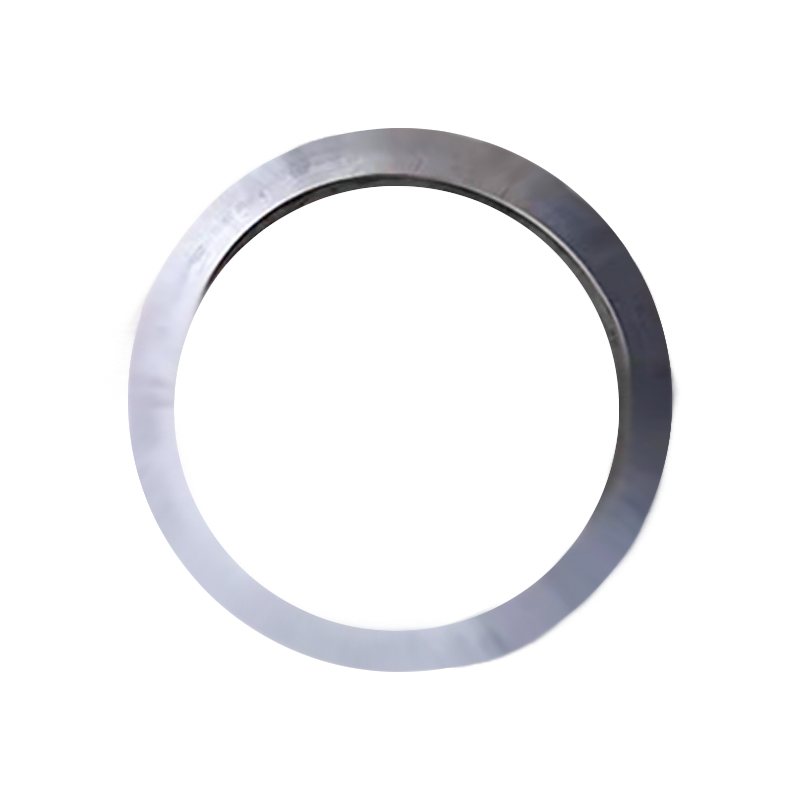
In the world of heavy industrial manufacturing, the integrity of circular components is paramount. Whether it is a massive bearing race for a wind turbine or a high-pressure flange for an oil pipeline, the method of production determines the component’s lifespan, safety, and performance. Seamless rolled ring forging has emerged as the premier solution for these critical applications. This process, which transforms a hollow metal preform into a precise, high-strength ring through controlled radial and axial pressure, offers mechanical advantages that traditional casting or welding cannot match. This guide provides an in-depth look at the technical nuances of the ring rolling process, material considerations, and how it compares to alternative manufacturing methods.
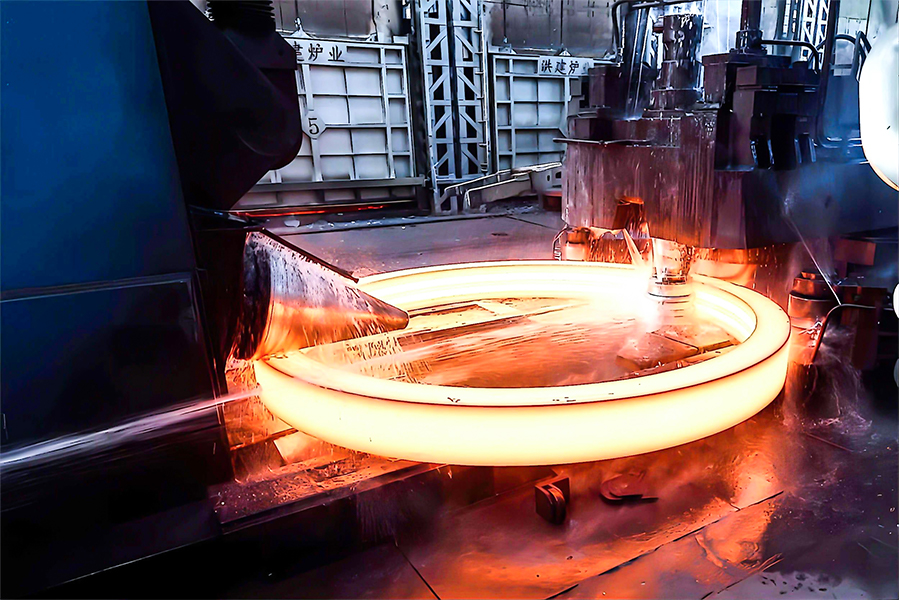
The production of a seamless rolled ring is a sophisticated exercise in plastic deformation. It begins with a starting billet, which is upset and pierced to create a “donut” shape, known as a preform. This preform is then placed onto a ring rolling mill.
The mill consists of several key components: the main drive roll, which applies pressure to the outer diameter; the mandrel (or idler roll), which exerts pressure on the inner diameter; and a pair of axial rolls that control the height of the ring. As the rolls squeeze the rotating preform, the wall thickness decreases while the diameter increases. This continuous rolling action does more than just shape the metal; it refines the internal grain structure, aligning it circumferentially along the curve of the ring. This tangential grain flow is the “secret sauce” of rolled rings, providing exceptional resistance to fatigue and impact.
Procurement managers often weigh the pros and cons of different manufacturing routes. Understanding the structural differences is essential for making an informed decision.
| Feature | Seamless Rolled Ring Forging | Metal Casting | Open-Die Forging |
|---|---|---|---|
| Grain Structure | Continuous, circumferential grain flow | Random, non-directional grain | Oriented but often interrupted |
| Internal Integrity | High density, no porosity | Risk of gas holes and shrinkage | High density |
| Strength-to-Weight | Superior; allows for thinner walls | Lower; requires over-engineering | Good |
| Material Waste | Minimal (Near-net shape) | Low | High (requires heavy machining) |
| Complexity | Limited to circular shapes | High (can cast complex geometries) | Simple shapes only |
While casting is cost-effective for complex, non-critical geometries, it inherently carries the risk of internal defects. Rolled ring forging eliminates these concerns by using solid-state deformation, ensuring the metal is 100% dense and free of voids.
The versatility of ring rolling allows for the use of a wide spectrum of alloys. The choice of material is dictated by the operating environment—specifically temperature, pressure, and corrosive exposure.
The unique properties of seamless rolled rings make them indispensable across several high-stakes sectors:
For international trade, compliance with global standards is the benchmark of a reliable manufacturer. Technical buyers typically look for adherence to ISO 9001 for general management, but product-specific certifications are even more critical. These include ASTM (American Society for Testing and Materials) standards for material properties and ASME (American Society of Mechanical Engineers) for pressure vessel components.
Non-destructive testing (NDT) is a standard part of the quality protocol. This includes:
Seamless rolled ring forging represents the pinnacle of circular metal component manufacturing. By combining material efficiency with unparalleled structural integrity, it provides a reliable foundation for the world’s most demanding industrial systems. For engineers and procurement professionals, choosing the right forging partner means prioritizing metallurgical excellence, rigorous testing, and a deep understanding of alloy behavior.
1. What is the maximum diameter achievable in rolled ring forging?
While capabilities vary by manufacturer, modern industrial ring mills can produce seamless rings ranging from a few inches to over 25 feet (approximately 8 meters) in diameter, with weights exceeding 50 tons.
2. Why is a forged ring better than a welded ring?
A welded ring has a heat-affected zone (HAZ) at the joint, which is a potential point of failure due to different grain structures and possible weld defects. A forged ring is seamless, meaning the grain flow is continuous and the strength is uniform throughout the entire circumference.
3. Does the ring rolling process save on material costs?
Yes. Because the process produces a “near-net shape” that closely resembles the final part, significantly less raw material is required compared to machining a ring from a solid disk or using open-die forging, leading to lower material and machining costs.
4. Can you forge rings with non-rectangular cross-sections?
Absolutely. Advanced ring rolling mills can use shaped rolls to create specific profiles, such as grooves, flanges, or tapered walls, directly into the ring during the rolling process.
5. What lead times should be expected for custom forged rings?
Lead times depend on material availability and the complexity of the heat treatment required. Generally, standard carbon steel rings can be produced in 4-6 weeks, while exotic alloys or rings requiring extensive NDT testing may take 8-12 weeks.

No.1317 Gangcheng Road, Daxin Town, Zhangjiagang, Jiangsu, China
WhatsApp:+86-151 5156 6388 Terry Huang
+86-151 5156 6388 Terry Huang
+86-138 1299 2607 Maggie Xia
Terry Huang -VP of Sales
[email protected]
Maggie Xia -VP of Sales
[email protected]

 Previous