
 English
 Español
 русский
News
Home / News / Industry News / Open Die vs Seamless Ring Forging for Aluminum Rings: Yield & Strength
In heavy-duty rotating and structural equipment, aluminum rings carry loads that ordinary machined parts cannot handle. The choice between open die forging and seamless ring forging affects not only dimensional accuracy and strength, but also how much of the expensive aluminum billet ends up in the finished component. This article compares the two processes specifically for heavy-duty aluminum rings, with a focus on material yield and mechanical strength.
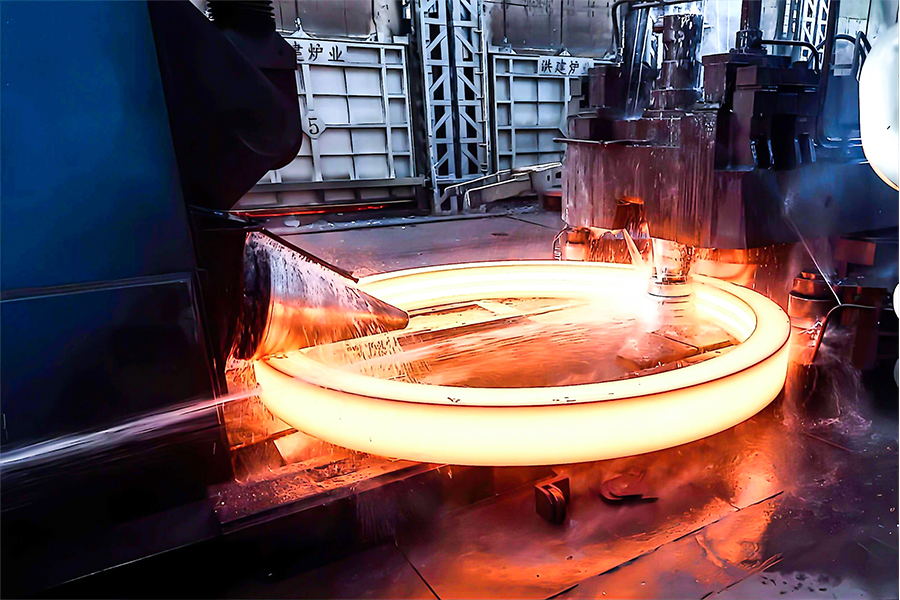
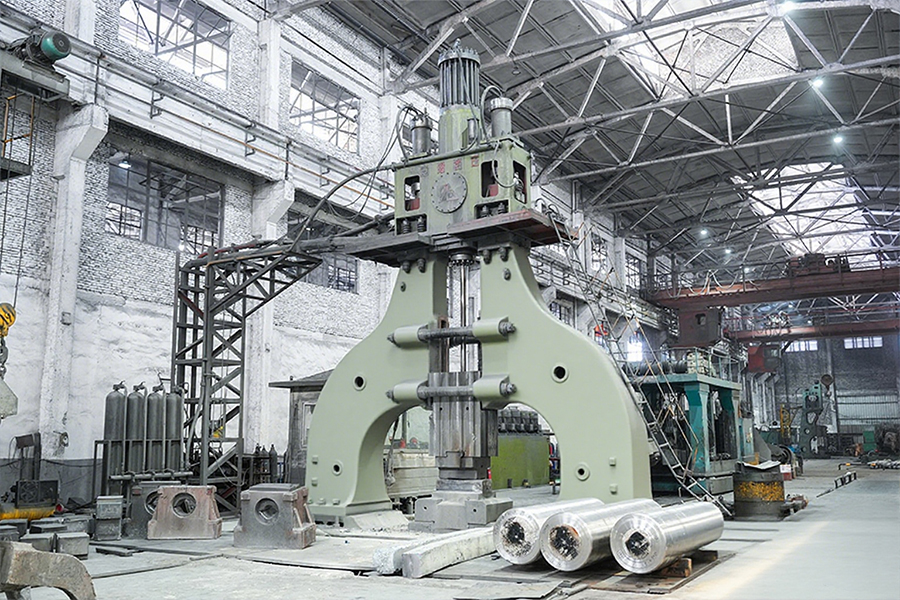
Open die forging, also called free forging, deforms a heated aluminum billet between flat or lightly contoured dies that never enclose the workpiece completely. The operator controls the geometry by positioning the billet, applying reductions, and moving along the length of the part. For rings, the typical sequence is upsetting, piercing, and mandrel stretching. The billet is upset to increase its diameter, pierced to create a central hole, and then stretched over a mandrel while upper and lower tools press the wall, expanding the ring toward the required outer diameter and thickness.
Open die forging is valued for its flexibility. It can produce rings with very large outer diameters, rectangular or customized cross-sections, and relatively simple tooling. Lead time is short because flat tools are used, which makes the process the first choice for prototypes, one-off components, and rings that exceed the capacity of ring rolling mills.
The cost appears in material yield. The starting billet is solid, and the pierced slug is a solid loss. In addition, the final cross-section of an open die forged ring is machined from a rectangular envelope, so the corner areas that do not belong to the finishing profile are removed as chips. Typical material utilization for aluminum rings produced by this route is in the range of 50 to 70 percent.
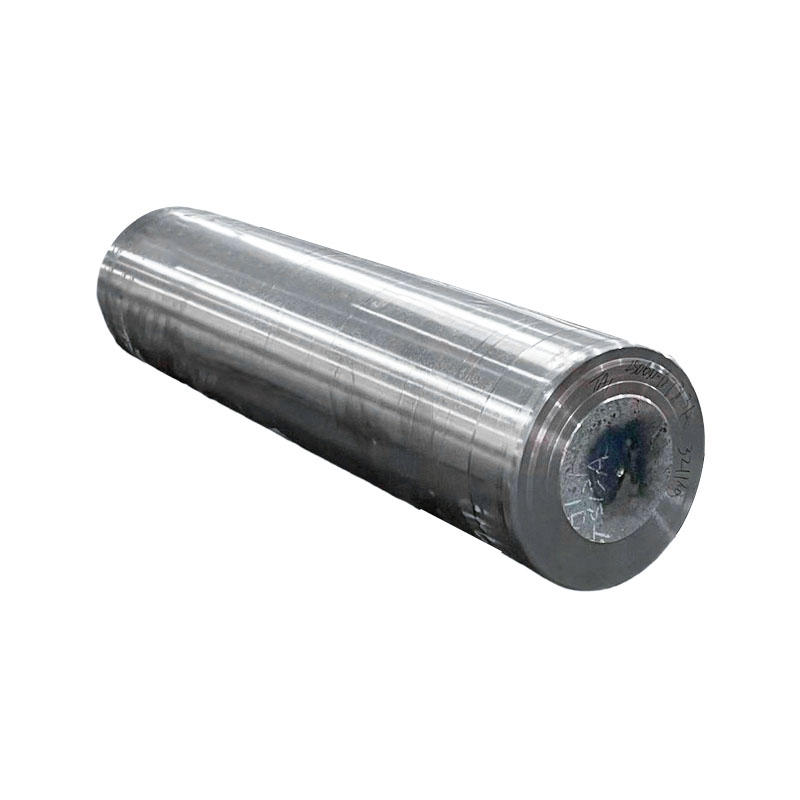
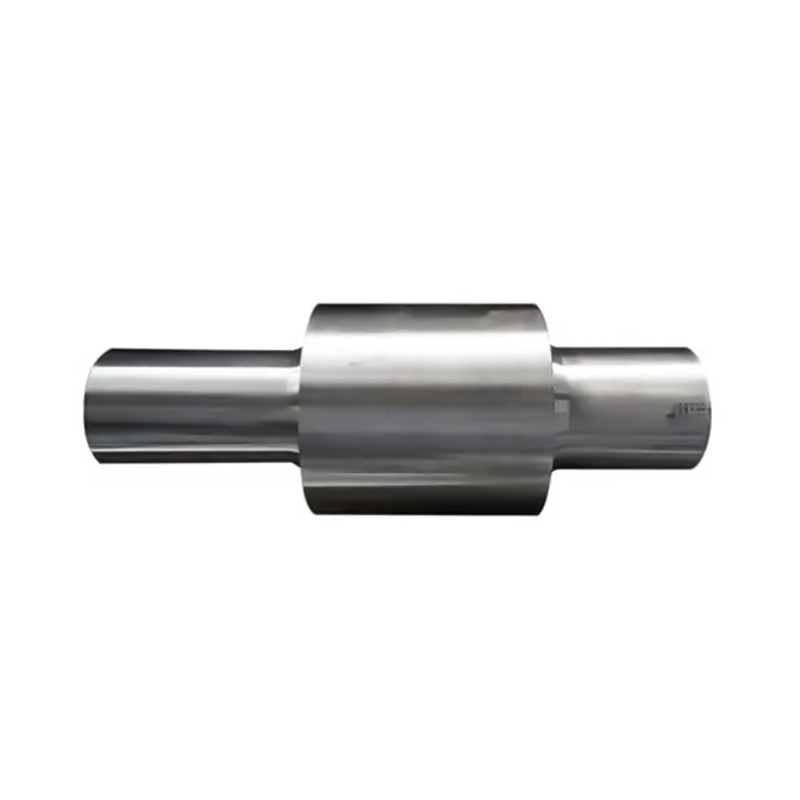 Open Die Forging Parts for Metallurgical, Energy, and Construction SectorsThis supplier offers open die forged shafts, gears, discs, and cylinders for heavy machinery. Relevant here because the previous paragraph discusses material yield trade-offs in open die ring production.View Product →
Seamless ring rolling starts with a forged and pierced preform, which is reheated and mounted on a mandrel roll. A main roll drives the preform while the mandrel moves inward under high force. The wall thickness is progressively reduced, and the displaced material flows tangentially to increase the ring diameter. Because the entire cross-section passes repeatedly through the rolling gap, the structure is worked uniformly and grain flow follows the circumference of the ring.
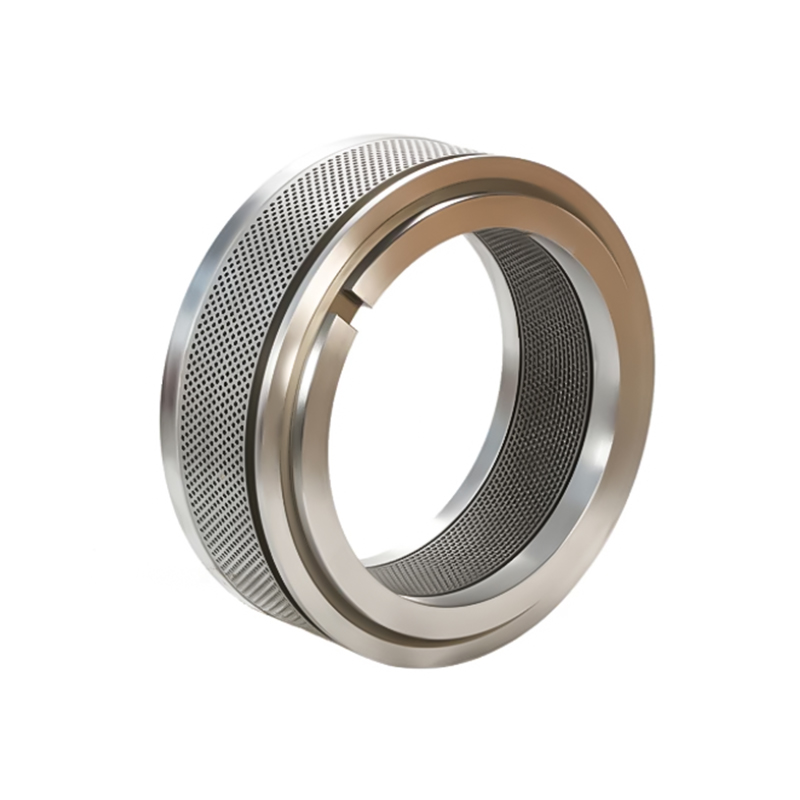
Ring rolling produces a near-net annular shape. Outer diameter, bore, and wall thickness are controlled within tight tolerances, usually with far less machining allowance than open die forging. For heavy-duty aluminum rings in quantities that justify the tooling, ring rolling reduces machining time, improves material flow, and delivers repeatable dimensional stability from piece to piece.
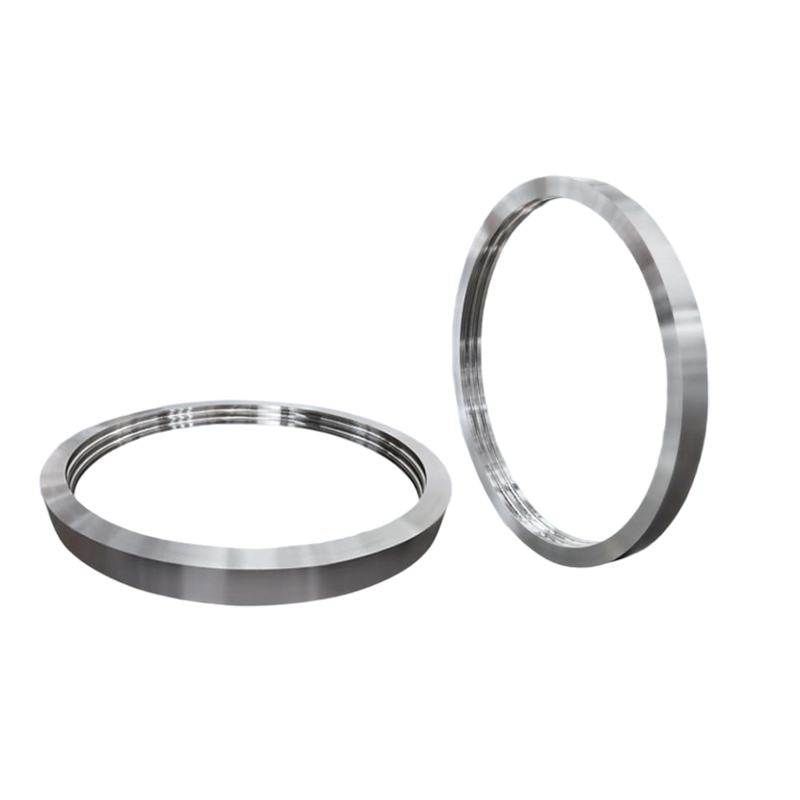 Rolled Ring Forging Factory for Pitch Rings, Flanges, and Pellet DiesRing rolling produces near-net annular shapes with tight tolerances and less machining allowance. The surrounding text highlights its material yield advantage for costly aluminum alloys, making this supplier pertinent.View Product →
Material yield is the most direct cost lever in aluminum forging. Because aluminum alloys cost considerably more per kilogram than structural steel, a difference of 20 percentage points in utilization can change the total cost of a heavy-duty ring more than the forging labour itself.
Where does the lost material go in open die forging? First, the pierced center slug becomes solid scrap. Second, the rectangular cross-section envelope leaves corner material that never belongs to the finished ring. Third, a larger machining allowance means deeper cuts, longer cycle times, and heavier chip loads. Aluminum chips are significantly less valuable than solid billet because re-melting consumes energy and causes melt loss.
In seamless ring rolling, the preform is already annular and rolling redistributes material into the final profile instead of cutting it away. The machining allowance can be held to a few millimeters per face. The combined effect is usually 15 to 25 percentage points higher material utilization than open die forging on the same ring drawing.
| Parameter | Open die forging | Seamless ring rolling |
|---|---|---|
| Typical material yield | 50-70% | 75-90% |
| Machining allowance per face | 5-15 mm | 2-5 mm |
| Main scrap form | Pierced slug and chips | Small turning chips |
Strength is directional. In an open die forged ring, grain flow is oriented by the stretching and flattening passes, mainly axial and circumferential but less uniform through the cross-section. The center of a thick wall may receive limited deformation, so through-thickness properties such as fatigue crack resistance can be lower than at the surface.
Seamless ring rolling recrystallizes the structure continuously as each section passes through the rolling gap. Grain flow follows the ring circumference, which is exactly the direction of the highest stress in bearing races, gear rims, flanges, and slewing ring components. For high-strength aluminum alloys such as 7075 and 6061, the tangential fatigue strength of a rolled ring is consistently higher than that of an open die forged ring with the same cross-section and temper.
This does not mean open die forging is inferior in every case. For rectangular-section rings carrying simple compressive loads, open die forging with sufficient reduction and proper heat treatment reaches specification with comfortable margins. The engineering decision should be based on the stress state, the cross-section geometry, the quantity, and the required certification.
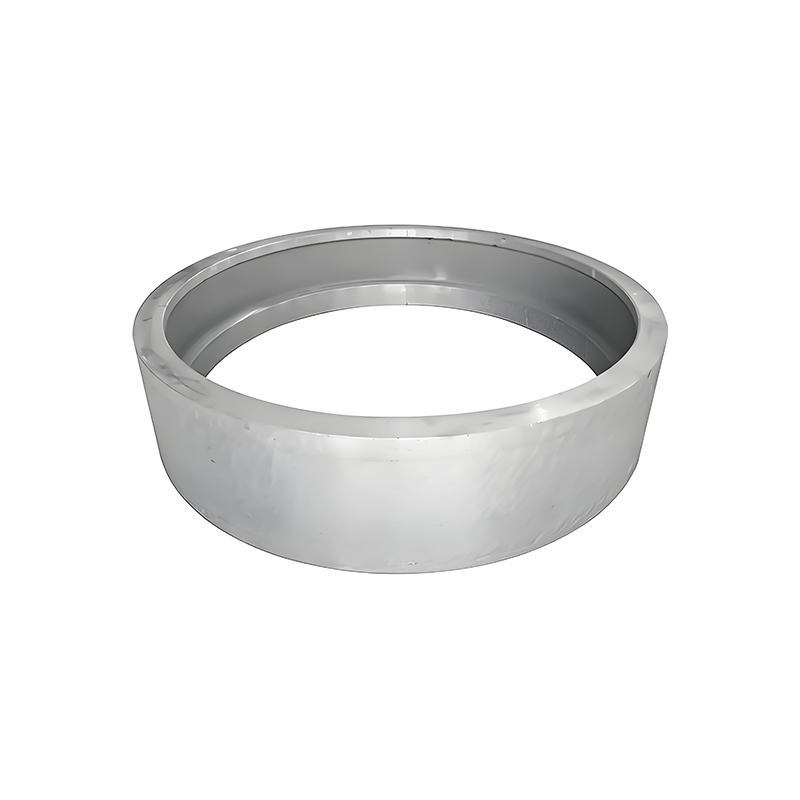 7075 Aluminum Alloy Forgings for High-Load Aerospace and Defense PartsThis product page covers 7075 alloy composition, aging treatments, and forging performance. It appears after a comparison of open die versus ring rolling, offering a high-strength option for critical applications.View Product →
Choose seamless ring rolling when:
Choose open die forging when:
Total cost includes billet, energy, tooling, machining, inspection, and scrap. Ring rolling requires a prepared preform and dedicated rolling tooling, so the break-even point compared with open die forging is usually reached at modest quantities. For very large rings produced in low volume, open die forging often wins on total cost despite lower material yield, because no expensive preform tooling is required.
When material yield and strength are the two dominant criteria and the part is an annular ring with tangential loading, seamless ring rolling is the process of choice. When the geometry is unusual, the ring is oversized, or the quantity is below the tooling break-even point, open die forging provides a robust and predictable route.
Seamless ring rolling typically achieves 75 to 90 percent material utilization, while open die forging usually stays between 50 and 70 percent. The difference comes from the near-net annular profile of ring rolling, which removes corner scrap and greatly reduces machining allowance.
In the tangential direction, a rolled ring generally shows higher strength and fatigue life because grain flow follows the circumference. However, strength in other directions and through-thickness properties depend on reduction ratio, temperature control, and final temper, so open die forging can still be the correct choice for many rectangular-section rings.
Yes. Open die forging is not limited by rolling mill dimensions. Using mandrel stretching on a hydraulic press, aluminum rings of several meters in outer diameter can be forged, which is why large bearing races and structural rings are often open die forged.
Choose ring rolling when the cross-section is annular, the quantity justifies preform tooling, and the ring is subjected to tangential loads, such as bearing races, gear rings, and wind power rings. If the geometry is rectangular or includes integral features, or if the quantity is very low, open die forging is usually more practical.
Selecting between open die and seamless ring forging for heavy-duty aluminum rings is guided by geometry, quantity, and stress direction. Open die forging provides flexibility and low tooling cost for large and unusual rings. Seamless ring rolling provides higher material yield, tangential strength, and dimensional consistency for annular components. A forging supplier that operates both open die and ring rolling lines can evaluate the drawing first and recommend the process that fits the service condition and the budget. If you want to understand the equipment-level differences in more detail, read our earlier comparison of ring forging vs open die vs rolled ring forging.

No.1317 Gangcheng Road, Daxin Town, Zhangjiagang, Jiangsu, China
WhatsApp:+86-151 5156 6388 Terry Huang
+86-151 5156 6388 Terry Huang
+86-138 1299 2607 Maggie Xia
Terry Huang -VP of Sales
[email protected]
Maggie Xia -VP of Sales
[email protected]

 Previous